Over the past decade, soy foods have become America's
favorite health food. Newspapers, magazines, and best-selling
health writers have proclaimed the "joy of soy"
and promoted the belief that soy food is the key to
disease prevention and maximum longevity.
The possibility that an inexpensive plant food could
prevent heart disease, fight cancer, fan away hot
flashes, and build strong bodies in far more than
12 ways is seductive. The truth, unfortunately, is
far more complex. Soy foods come in a variety of forms,
including many heavily processed modern products.
Even good forms of soy foods must be eaten sparingly
- the way they have been eaten traditionally in Asia.
Most important, many respected scientists have issued
warnings stating that the possible benefits of eating
soy should be weighed against the proven risks. Indeed,
thousands of studies link soy to malnutrition, digestive
distress, immune-system breakdown, thyroid dysfunction,
cognitive decline, reproductive disorders and infertility-even
cancer and heart disease.
Americans rarely hear anything negative about soy.
Thanks to the shrewd public relations campaigns waged
by Archer Daniels Midland (ADM), Protein Technologies
International (PTI), the American Soybean Association,
and other soy interests, as well as the Food and Drug
Administration's (FDA) 1999 approval of the health
claim that soy protein lowers cholesterol, soy maintains
a "healthy" image.

Nature's 'Whey'
This article is written for parents who need to know
the risks of feeding soy formula to infants, or soy
milk and other soy foods to growing children. It's
designed for prospective mothers and fathers who need
to know the links between soy foods, infertility,
and birth defects. Finally, it will serve anyone considering
soy as a preventive for menopausal symptoms, osteoporosis,
cancer, heart disease, or other ills.
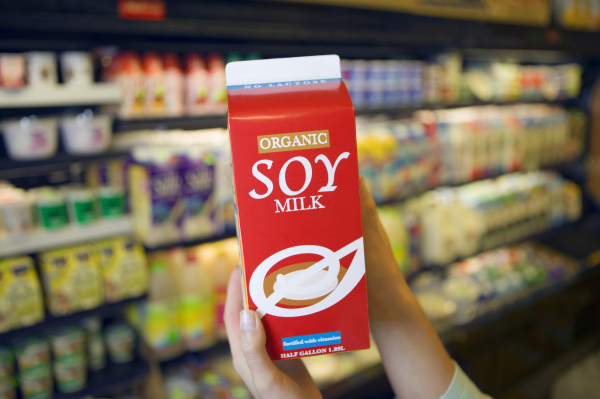
Nature's Why?
How Much Soy Do Asians Really Eat?
Those who dare to question the benefits of soy tend
to receive one stock answer: Soy foods couldn't possibly
have a downside because Asians eat large quantities
of soy every day and consequently remain free of most
western diseases. In fact, the people of China, Japan,
and other countries in Asia eat very little soy. The
soy industry's own figures show that soy consumption
in China, Indonesia, Korea, Japan, and Taiwan ranges
from 9.3 to 36 grams per day. That's grams of soy
food, not grams of soy protein alone. Compare this
with a cup of tofu (252 grams) or soy milk (240 grams).
Many Americans today think nothing of consuming a
cup of tofu, a couple glasses of soy milk, handfuls
of soy nuts, soy "energy bars," and veggie
burgers. Infants on soy formula receive the most of
all, both in quantity and in proportion to body weight.
In short, there is no historical precedent for eating
the large amounts of soy food now being consumed by
infants fed soy formula and vegetarians who favor
soy as their main source of protein, or for the large
amounts of soy being recommended by Dr. Andrew Weil,
Dr. Christiane Northrup, and many other popular health
experts.
What's more, the rural poor in China have never seen
- let alone feasted on - soy sausages, chili made
with Textured Vegetable Protein (TVP), tofu cheesecake,
packaged soy milk, soy "energy bars," or
other newfangled soy products that have infiltrated
the American marketplace.
The Right Stuff
The ancient Chinese honored the soybean with the name
"the yellow jewel" but used it as "green
manure" - a cover crop plowed under to enrich
the soil. Soy did not become human food until late
in the Chou Dynasty (1134-246 B.C.), when the Chinese
developed a fermentation process to make soybean paste,
best known today by its Japanese name, miso. Soy sauce-the
natural type sold under the Japanese name shoyu -
began as the liquid poured off during the production
of miso. Two other popular fermented soy foods, natto
and tempeh, entered the food supply around 1000 A.D.
or later in Japan and Indonesia, respectively.
Tofu came after miso. Legend has it that, in 164 B.C.,
Lord Liu An of Huai-nan, China - a renowned alchemist,
meditator, and ruler - discovered that a purée
of cooked soybeans could be precipitated with nigari
(a form of magnesium chloride found in seawater) into
solid cakes, called tofu. In Japan, as in China, tofu
was rarely served as a main course anywhere except
in monasteries. Its most popular use was - and is
- as a few bland little blocks in miso soup or fish
stock.
The Chinese almost never ate boiled or baked soybeans
or cooked with soy flour except in times of famine.
Modern soy products such as Soy Protein Isolate (SPI),
Textured Vegetable Protein (TVP), soy-protein concentrate,
and other soy-protein products made using high-tech
industrial processes, were unknown in Asia until after
World War II.
Contrary to popular belief, neither soy milk nor soy
infant formula is traditional in Asia. Soy milk originated
as a byproduct of the process of making tofu; the
earliest reference to it as a beverage appeared in
1866. By the 1920s and 1930s, it was popular in Asia
as an occasional drink served to the elderly. The
first person to manufacture soy milk in China was
actually an American - Harry Miller, a Seventh Day
Adventist physician and missionary.
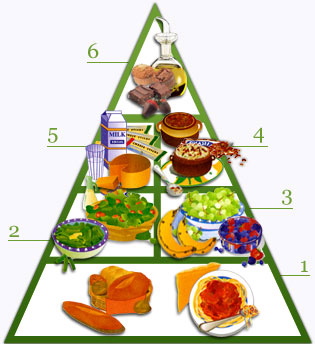
 Bread, cereal, rice, pasta group, 6-11 servings daily.
 Vegetable group, 3-5 servings daily.
 Fruit group, 2-4 servings daily.
 Dry beans, nuts, seeds, eggs, and meat substitutes
group, 2-3 servings daily.
Dry beans, nuts, seeds, eggs, and meat substitutes
group, 2-3 servings daily.
 Milk, yogurt, and cheese group, 2-3 servings daily.
 Fat, oils, and sweets, sparingly.
The first soy infant formulas in China were developed
in the 1930s and have never been widely used. Today,
babies in Asia are almost always breast fed for at
least the first six months, then switched to a dairy-based
infant formula. Orphans and others who cannot be breast
fed by a wet nurse are fed from birth on dairy formulas.
Claims that soybeans have been a major part of the
Asian diet for more than 3,000 years, or from "time
immemorial," are simply not true.
Processing Matters
Soy in the West has been a product of the industrial
revolution - an opportunity for technologists to develop
cheap meat substitutes, to find clever new ways to
hide soy in familiar food products, to formulate soy-based
pharmaceuticals, and to develop a renewable, plant-based
resource that could replace petroleum-based plastics
and fuels.
For years, the soy protein left over from soy-oil
extraction went to animals and poultry. Now that food
scientists have discovered inexpensive ways to improve
or disguise the color, flavor, "bite characteristics,"
and "mouth feel" of soy protein-based products,
soy is being aggressively marketed as a "people
feed." Although the newer refining techniques
yield blander, purer soy proteins than the "beany,"
hard-to-cover-up flavors of the past, the main reason
that soy foods now taste and look better is the lavish
use of unhealthy additives such as sugar and other
sweeteners, salt, artificial flavorings, colors, and
monosodium glutamate (MSG).
Soy now lurks in nearly 60 percent of the foods sold
in supermarkets and natural food stores. Much of this
is "hidden" in products where it wouldn't
ordinarily be expected, such as fast-food burgers
and Bumblebee canned tuna. Soy is also a key ingredient
in ersatz products with names like Soysage, Not Dogs,
Fakin Bakin, Sham Ham, and TofuRella, which have been
named after and made to look like the familiar meat
and diary products they are intended to replace.
There's nothing natural about these modern soy protein
products. Textured soy protein, for example, is made
by forcing defatted soy flour through a machine called
an extruder under conditions of such extreme heat
and pressure that the very structure of the soy protein
is changed. Production differs little from the extrusion
technology used to produce starch-based packing materials,
fiber-based industrial products, and plastic toy parts,
bowls, and plates.
The process of making Soy Protein Isolate (SPI) begins
with defatted soybean meal, which is mixed with a
caustic alkaline solution to remove the fiber, then
washed in an acid solution to precipitate out the
protein. The protein curds are then dipped into another
alkaline solution and spray-dried at extremely high
temperatures. SPI is then often spun into protein
fibers using technology borrowed from the textile
industry. These refining processes remove "off
flavors," "beany" tastes, and some
of the worst flatulence-producing components. They
improve digestibility, but vitamin, mineral, and protein
quality are sacrificed, and levels of carcinogens
such as nitrosamines are increased. SPI's appear in
so many products that consumers would never guess
that the Federation of American Societies for Experimental
Biology (FASEB) decreed in 1979 that the only safe
use for SPI's was for sealers for cardboard packages.
Anti-nutrients and Toxins in Soy
Scientists who have studied the use of soy protein
in animal feeds over the years have discovered a number
of components in soy that cause poor growth, digestive
distress, and other health problems. To list just
a few of these: Protease inhibitors interfere with
protein digestion and have caused malnutrition, poor
growth, digestive distress, and pancreatitis. Phytates
block mineral absorption, causing zinc, iron, and
calcium deficiencies. Lectins and saponins have caused
leaky gut and other gastrointestinal and immune problems.
Oxalates - surprisingly high in soy - may cause problems
for people prone to kidney stones and women suffering
from vulvadynia, a painful condition marked by burning,
stinging, and itching of the external genitalia.
Finally, oligosaccharides give soy its notorious reputation
as a gas producer. Although these are present in all
beans, soy is such a powerful "musical fruit"
that the soy industry has identified "the flatulence
factor" as a major obstacle that must be overcome
for soy to achieve full consumer acceptance.
Apologists for soy dismiss such claims, saying that
food processing and home cooking remove most of these
antinutrients. In fact, modern processing removes
most of them, but not all. The levels of heat and
pressure needed to remove all protease inhibitors,
for example, severely damage soy protein and make
it harder to digest. The trick is to eliminate the
most antinutrients while doing the least damage to
the soy protein. Success varies widely from batch
to batch.
For years, the soy industry tried to improve the quality
of animal feeds by finding better ways to get rid
of these undesirable antinutrients. Having failed,
they routinely supplement animal feeds heavily with
vitamins, minerals, and methionine, a sulfur-containing
amino acid that is low in soy. Even so, makers of
animal chows are still limited in the amount of soy
they can add without causing growth and fertility
problems. Food processors making soy-protein products
for people may or may not add these supplements. Generally,
calcium and vitamin D are added to soy milk so it
can compete with dairy products.
Today, the soy industry has switched tactics-from
trying to remove unwanted antinutrients to trying
to convince people that they are actually a good thing.
Protease inhibitors, saponins, and lectins are being
touted as curers of cancer or lowerers of cholesterol,
while phytates are being recommended for their ability
to remove toxic minerals such as cadmium and excess
iron from the body. Although some of these uses look
promising, it is important to note that researchers
are not achieving these successes using regular soy
foods. Most take carefully extracted components and
administer them in carefully measured and monitored
pharmaceutical doses. News headlines to the contrary,
there is no reason to think that just eating a lot
of soy foods will do the trick.
Soy Allergens
Soy is one of the top eight allergens that cause immediate
hypersensitivity reactions such as coughing, sneezing,
runny nose, hives, diarrhea, difficulty swallowing,
and anaphylactic shock. Delayed allergic responses
are even more common and occur anywhere from several
hours to several days after the food is eaten. These
have been linked to sleep disturbances, bed wetting,
sinus and ear infections, crankiness, joint paint,
chronic fatigue, gastrointestinal woes, and other
mysterious symptoms.
Soy allergies are on the rise for three reasons: the
growing use of soy infant formula (now 20 to 25 percent
of the formula market), the increase in soy-containing
foods in grocery stores, the possibility of the greater
allergenicity of genetically modified soybeans.
Although severe reactions to soy are rare compared
to reactions to peanuts, tree nuts, fish, and shellfish,
soy has been underestimated as a cause of food anaphylaxis.
Recently, after a young girl in Sweden suffered an
asthma attack and died after eating a hamburger that
contained only 2.2 percent soy protein, Swedish researchers
looked into a possible soybean connection. They concluded
that the soy-in-the-hamburger case was not a fluke,
and that minute amounts of soy "hidden"
in regular food had caused four of the total of five
deaths caused by allergic reactions in Sweden between
1993 and 1996. Of the children who suffered fatal
attacks, all had been able to eat soy without any
adverse reactions right up until the dinner that caused
their deaths. According to the Swedish Ministry of
Health and Social Affairs, children at highest risk
are those who suffer from peanut allergies and asthma;
parents of such children should make every effort
to eliminate all soy from their children's diets.
Soy and the Thyroid: A Pain in
the Neck
More than 70 years of human, animal, and laboratory
studies show that soybeans put the thyroid at risk.
The chief culprits are the plant hormones in soy known
as phytoestrogens or isoflavones.
The United Kingdom's Committee on Toxicology has identified
several populations at special risk: infants on soy
formula, vegans who use soy as their principal meat
and dairy replacements, and men and women who self-medicate
with soy foods and/or isoflavone supplements in an
attempt to prevent or reverse menopausal symptoms,
cancer, or heart disease.
Infants with congenital hypothyroidism need 18 to
25 percent higher doses of thyroxine drug than usual
if they are bottle-fed with soy formula. Likewise,
adults who boost their thyroid with drugs such as
Synthroid while also eating thyroid-inhibiting foods
such as soy put extreme stress on their thyroids.
Toxicologist Michael Fitzpatrick, PhD, points out
that this is the way that researchers induce thyroid
cancers in laboratory animals.
Soy and Reproduction: Breeding
Discontent
Scientists have known since the mid-1940s that phytoestrogens
can impair fertility. Fertility problems in cows,
sheep, rabbits, cheetahs, guinea pigs, birds, and
mice have all been reported. Although scientists discovered
only recently that soy lowers testosterone levels,65
tofu has traditionally been used in Buddhist monasteries
to decrease the libido, and by Japanese women to punish
straying husbands. Humans and animals appear to be
the most vulnerable to the effects of soy estrogens
prenatally, during infancy and puberty, during pregnancy
and lactation, and during the hormonal shifts of menopause.
Of all these groups, infants on soy formula are at
the highest risk because of their small size and developmental
phase, and because formula is their main source of
nutrient.
A crucial time for the programming of the human reproduction
system is right after birth-the very time when bottles
of soy formula are given to many non-breast fed babies.
Normally during this period, the body surges with
natural estrogens, testosterones, and other hormones
that are meant to program the baby's reproductive
development from infancy through puberty and into
adulthood. For infants on soy formula, this programming
may be interrupted.
Male infants experience a testosterone surge during
the first few months of life and produce androgens
in amounts equal to those of adult men. So much testosterone
at such a tender age is needed to program the body
for puberty, the time when a male's sex organs should
develop and he should begin to express male characteristics
such as facial and pubic hair and a deep voice. If
receptor sites intended for the hormone testosterone
are occupied by soy estrogens, however, appropriate
development may never take place.
To date, most of the evidence damning soy formula
can be found only in animal studies, because investigations
in which humans' sex hormone levels are lowered experimentally
cannot ethically be done. However, in the years since
soy formula has been in the marketplace, parents and
pediatricians have reported growing numbers of boys
whose physical maturation is either delayed or does
not occur at all. Breasts, underdeveloped gonads,
undescended testicles (cryptorchidism), and steroid
insufficiencies are increasingly common. Sperm counts
are also falling.
Soy formula is bad news for girls as well. Natural
estrogen levels approximately double during the first
month of life, then decline and remain at low levels
until puberty. With increased estrogens in the environment
in the diet, an alarming number of girls are entering
puberty much earlier than normal. One percent of girls
now show signs of puberty, such as breast development
or pubic hair, before the age of three. By the age
of eight, 14.7 percent of Caucasian girls and 48.3
percent of African American girls had one or both
of these characteristics. The fact that blacks experience
earlier puberties than whites is not a racial difference
but a recent phenomenon.
Most experts blame this epidemic of "precocious
puberty" on environmental estrogens from plastics,
pesticides, commercial meats, etc., but some pediatric
endocrinologists believe that soy is a contributor.
Of all the estrogens found in the environment, soy
is the likeliest explanation of why African American
girls reach puberty so quickly. Since its establishment
in 1974, the federal government's Women, Infants and
Children (WIC) program has provided free infant formula
to teenage and other low-income mothers while failing
to encourage breastfeeding. Because of perceived or
real lactose intolerance, black babies are much more
likely to receive soy formula than Caucasian babies.
Early maturation in girls heralds reproductive problems
later in life, including amenorrhea (failure to menstruate),
anovulatory cycles (cycles in which no egg is released),
impaired follicular development (follicles failing
to mature and develop into healthy eggs), erratic
hormonal surges, and other problems associated with
infertility. Because the mammary glands depend on
estrogen for their development and functioning, the
presence of soy estrogens at a susceptible time might
predispose girls to breast cancer, another condition
that is on the rise and definitively linked to early
puberty.
Recently, a team of researchers headed by Brian L.
Strom, MD, studied the use of soy formula and its
long-term impact on reproductive health. They announced
only one adverse finding: longer, more painful menstrual
periods among women who'd been fed soy formula in
infancy. Dr. Strom's conclusion that the results were
"reassuring" made newspaper headlines all
over the world, though the data in the body of the
report were anything but. Indeed, data left out of
the headlines and buried in the report revealed higher
incidences of allergies and asthma, and higher rates
of cervical cancer, polycystic ovarian syndrome, blocked
fallopian tubes, and pelvic inflammatory disease.
Although thyroid damage from soy formula has been
the principal concern of critics for decades, the
researchers excluded thyroid function as a subject
for study. Not surprisingly, this study was funded
in part by the infant-formula industry.
Most of the fears concerning soy formula have focused
on estrogens. There are other problems as well, notably
much higher levels of aluminum, fluoride, and manganese
than are found in either breast milk or dairy formulas.
All three metals have the potential to adversely affect
brain development. Although trace amounts of manganese
are vital to the development of the brain, toxic levels
accrued from ingestion of soy formula during infancy
have been found in children suffering from attention-deficit
disorders, dyslexia, and other learning problems.
Soy apologists sometimes argue that the plant hormones
in soy formula could not possibly be harmful because
Japanese women eat a lot of soy products and so must
have high levels of phytoestrogens in their breast
milk. Researchers, however, have measured the soy
isoflavones in breast milk and found them low even
in vegetarian women who consume copious quantities
of tofu, soy milk, soy protein shakes, and other soy
foods.
Limited evidence, however, suggests that vegetarian
women who eat a lot of soy foods during pregnancy
may put their infants at risk in terms of their future
reproductive health, fertility, and possibly increased
risk of breast cancer. All of the problems that have
befallen infants on soy formula, as well as estrogen-related
birth defects, have occurred (in animal studies, at
least) to the offspring of mothers who were given
high doses of soy during pregnancy. One of these birth
defects that has been linked to vegetarian diets in
humans is hypospadias, a developmental disorder in
which the opening of the penis is located on the underside
of the shaft.
Until soy estrogens are definitely linked to reproductive-tract
abnormalities, infertility, and other health problems
in humans, most health authorities recommend that
we "wait and see." This could be a terrible
mistake.
In the 1940s and 1950s, another estrogen, diethylstilbestrol
(DES), was widely given to Western women early in
their pregnancies in a misguided attempt to prevent
miscarriage. That fact is relevant not only because
DES bears a striking structural similarity to some
plant estrogens-including soy isoflavones-but because
it took more than 20 years before the full spectrum
of harmful effects was observed.
DES is 100,000 times more potent than soy phytoestrogens.
However, the large quantities of phytoestrogens in
soy products are more than enough to counteract their
lower potency. When the effects of isoflavones in
fetal and neonatal animals have been studied, they
have paralleled those observed in human infants exposed
to DES. Recent studies indicate that the soy isoflavone
known as genistein may be even more carcinogenic than
DES.
Yet the belief persists that soy hormones are "safe"
because they are "weak" and "natural."
Although the soy industry has claimed that soy estrogens
are anywhere from 10,000 to 1,000,000 times weaker
than the human estrogen estradiol, the correct figure
is only 1,200 times as weak. Though this still sounds
quite weak, it is not because of the quantity of these
estrogens ingested by infants on soy formula, and
by children and adults who eat soy every day. These
individuals consume far more soy estrogens than were
ever part of a traditional diet in Asia. The average
isoflavones intake in China is 3 milligrams, or 0.05
mg per kilogram of body weight. In Japan, the figures
range from 10 to 28 mg, or 0.17 to 0.47 isoflavones
per kg of body weight. In contrast, infants receiving
soy formula average 38 mg of isoflavones, which comes
to a shocking 6.25 mg/kg of body weight.
Compare that dose to the 0.47 mg/kg per day fed to
healthy Japanese adult men and women who experienced
thyroid suppression after just three months - or to
the 0.75 mg/kg of isoflavones fed to American women
who experienced hormonal changes sufficient to skew
their menstrual cycles after just one month. Although
children and teenagers are less vulnerable than infants,
their young bodies are still developing, and highly
vulnerable to endocrine-system disruption by soy.
And soy has been shown to pass through the placentas
of pregnant women to their unborn babies.
Meanwhile, the jury is still out on whether soy might
help alleviate menopausal symptoms or prevent osteoporosis
and breast cancer. The soy industry's top scientists,
convened at the Fifth International Symposium on the
Role of Soy in the Preventing and Reversing Chronic
Disease (held in Orlando, Florida, September 21-24,
2003), conceded that the data are confusing and contradictory,
with some studies suggesting that soy might be helpful,
and others showing that soy contributes to osteoporosis
and promotes breast cancer.
What's certain is that the levels of soy estrogens
that might possibly have a beneficial effect on hormonally
related diseases have been proven to jeopardize the
health of the thyroid. Likewise, the 25 grams of soy
protein per day touted by the FDA to lower cholesterol
is very likely to harm the thyroid, and thus increase
one of the risk factors for heart disease.
The bottom line is that the safety of soy foods has
yet to be proven, and that human beings have become
guinea pigs in what Daniel M. Sheehan, formerly senior
toxicologist with the FDA's National Center for Toxicological
Research, has called a "large, uncontrolled and
basically unmonitored human experiment." See
I Do Not Eat Dead
Animals. --
Editor's
Note: The editor knows of no vegetarian alcoholics.
Click
HERE for full notes and references.
Click
HERE to read letters in response to this article.


7 Surprising Signs of an Unhealthy Heart
10 Ways You Can Prevent a Hearth Attack
7 Things Your Hands Say About Your Health
| Recall Guide For Over 100K Medications |
The FDA Recall List |
| It's Risky Sleeping In Your Contacts |
Fibromyalgia Mystery Finally Solved |
| Rx
For Women: Water |
Prevent
Urinary Tract Infections |
| Experience Detached Awareness |
Dehydration Slide Show |
| Each Moment Is A Gift |
The 'Age' of Truth |
| The
Inner-Clean Diet |
Facts
For Feet |
| Women's Health: For Women Only |
What Is Native American Medicine? |
| About Your Hands |
Meditation For Protection |
| Herb
Encyclopedia |
Is
My Drinking Water Safe? |
| Kundalini
Yoga Classes |
More
About Women's Health |
| Massage...How Sweet It Is |
Cancer
Care Center |
| Calling
All Vegetarians |
Your
Birth Date Numerology |
| First
Aid And Safety |
First
Aid And Safety En Espanol |
| Association
For Honest Medicine |
Florida
Naturopaths May Return |
| Yoga
For Children |
A
Hug For Life |
| Transformations
For Women |
Kundalini
Yoga Basics |
| Ancient
Yogic Formulas |
Healthy
Happy Holy Organization |
| MediCare
Insurance Center |
Drink
Yogi Tea For Life |
| Awakening
A Body With Massage |
The Miracle of Pollination |
| Women's
Health Issues |
About
Bottled Water |
| Healthy
Liquid Assets |
Saliva
Testing |
| Men's
Health Links |
Women's
Health Links |
| For
Mature Women Only |
The
PregoPillow For Moms |
| Bubba's
'Meticul Turms' |
Herbal
Solutions |
| Water...Who Knew |
Corporations
Are Killing Consumers |
| Chiles
And Health |
Is
Alzheimer's Diabetes of The Brain? |
| Honey
And Cinnamon For Health |
Music
For Healing |
| Butter
Is Better For Health |
How
To Make Ghee (Clarified Butter) |
| Meditations
For Health |
Detox
Meditation |
| The
Heart Attack Grill |
Drunk,
Driving, Dead |
| The
Eyes Have It |
The
'Business' of Being Born |
| Read
This If You Drink Diet Sodas |
What
Your Optician Needs To Know |
| Back
Walking For Health |
What
About Ear Candles? |
| The
Diet Drink-MS Connection |
Anti-Reflection
Coating For Your Specs |
| Do
Doctors-Drugs Cause Dementia? |
About
Those Drug Prices |
| The
Steroid-Catatact Connection |
God's
Pharmacy |
| How
To Reverse Aging |
Read
Without Glasses? |
| Cell
Phones, Radiation And Health |
Driver
Vision Requirements By State |
Save
Your Gallbladder
|
Risky
Foods |
| What
Is Astigmatism? |
What
Is Myopia or Nearsightedness? |
| An
Amazing Underwater Birth |
Quit
Kissing My Ashes |
| Are
We The Real Dopes? |
Hemp
Is Back In North Dakota |
| Age
of Truth...Find Your Real Age |
Michael's
Naturopathic Programs |
| What
Is Hyperopia or Farsightedness? |
Why
Do I Need Bifocals? |
| BPA
Free Products |
The
Awareness Test |
| The
Appendix Is Useful After All |
The
'Heart Attack Burger' Song |
| Hair,
Hair, For Better Health |
Big
Eaters Have Smaller Feet |
| 'Meat'
The Culprit |
5 Uncommon Uses For Vegetable Oil |
| Just
Add Water |
Test Your Eyesight |
| The
Indigo Child |
Schools
For The Indigo Child |
| Reflexology
Foot Chart |
What
Is Reflexology? |
| The
Top Banana |
What To Do In An Active Shooter Situation |
| Another
Side of Soy-Protein Story |
Find
A Vegetarian Restaurant |
| The
Essence...You Are IT |
For
All Vegetarians |
| How
To Transform Fear |
For
Mental Control |
| Prostrate
Massage And Health |
Bacteria
Do Talk To Each Other |
| The
SuperHealth Meditations |
The
Magic of Touch |
| About
Kids With A Lazy Eye |
For
Kids Needing Vision Training |
| What's
In Your Milk? |
Watch
A Chemtrail Slide Show |
| ToServeIsToSucceed.com |
The
Eye Color Paternity Test |
| Arsenic-Water-Diabetes
Connection |
Do
Schools Kill Creativity? |
| Meditation
For Women |
The
Eye Library Video |
| How
Can I Recognize A Stroke? |
About
Enzymes |
| Native
American Recipes |
All
About Vegetarian Dining |
| Change
Your Body Chemistry |
Prostrate
Remedies |
| A
Knowledge Test For Opticians |
Real
Breast Control |
| Real
Dope On Drug Prices |
About
Death And Reincarnation |
| Health
By Da-Sign |
Art
& Science of Medical Intuition |
| How
To Make A Woman Happy |
Milk
Sucks |
| Opticians:
Vendors or Professionals? |
Canned
Foods Are Health Risk |
| Transformational
Properties of Gems |
Kundalini
Yoga Classes Online |
| Her
Last Cell Phone Call |
Drug
Wars - It's Our Money |
| Left
Brain - Right Brain Diversity |
Organic
Consumers Association |
| The
Enzyme Experts |
I
Do Not Eat Dead Animals |
| Breath Control |
Big
Eaters Have Smaller Feet |
| The
'Heart Attack Burger' Song |
Big
Freeze In The Big Apple |
| Atomic
Learning |
Be
Mindful of Breathing |
| BioChem
Antidotes |
All
About Vegetarian Dining |
| The
Eye Library Video |
Child
Safety |
| Security
Tips For Women |
Arsenic-Water-Diabetes
Connection |
| This
May Blow Your Mind |
Body
Mind Spirit Directory |
| Get
The Straight Dope |
PPA
- PhenylPropanolAmine Recall |
| Fantastic
Drink, Golden Milk |
A
Think Test |
| Drug Wars |
Women
Need To Know |
| Ready
For A Workout? |
Beware
of BPA Products |
| Popular
Indian Quisine Travel Guide |
Your
Personal Visual DNA Profile |
| Consumer
Alert: Chemtrails |
Back
To Basics Eyeglass Dispensing |
| Hands
On Opticianry |
The
Way To Happiness |
| The
Power of Touch |
The
Awareness Test |
| Opticians
For The People |
The
Super Health Meditations |
| The
Eye Color Paternity Test |
Systems
of Sight - Macular Degeneration |
| An
Amazing Underwater Birth |
Too
Many's Too Much |
| Are
U.S. Corporations Too Powerful? |
Do
Steroids Cause Cataracts? |
| The
Top Banana |
Anti-Cancer
Foods |
| How
To Reverse Aging |
How
To Become A Vegetarian |
| Life
On The Edge |
Pain-After-Shingles |
| Warning:
Chemtrail Aftermath |
Retail
Optical Advisory |
| Inspirational
Motivators |
Inspire
And Provoke Yourself |
| Have
A Happy Life |
What's
In Your Milk? |
| Is
This What's Behind Chemtrails? |
On-Site
Home Health Care |
| Watch
A Chemtrail Slide Show |
For
The Annoyingly Cheerful |
| Are
We The Real Dopes? |
Hemp
Is Back In North Dakota |
| About
Kids With A Lazy Eye |
For
Kids Needing Vision Training |
| What
Is Hyperopia Or Farsightedness? |
Why
Do I Need Bifocals? |
Meditation And Headaches
|
All
About Organics |
| A
Consumer Guide To Eyeglasses |
Male Circumcision Is Genital Mutilation |
| What
Is Astigmatism? |
What
Is Myopia Or Nearsightedness? |
| Driver
Vision Requirements By State |
Cocoons
For Low Vision Patients |
| Improve
Your Vision With Color By Irlen |
Alzheimer's
A Form of Diabetes? |
| The
Cancer Killer |
Natural
Treatment For Fuch's Syndrome |
| Read
This If You Drink Diet Sodas |
Consumer
Guide To Contact Lenses |
| Vegetarian Diet Reduces Fibromyalgia |
A
Guide To Protective Eye Wear |
A
Popular Nogales Dentist
|
Opticians
Are Healthcare Providers |
| Opticianry
Review |
The
Rap On Wrap-Around Eyewear |
Save
Your Gallbladder
|
Removing Heavy Metals Is Risky |
| Food
Can Do That? |
Eye
Disease Simulators |
| Canned
Foods Are Health Risk |
Keep
Your Gall Bladder |
| In
The Pink For Breast Cancer |
Why
You Need To Stay Married |
| A
Smokers' Lounge |
Overcoming
Psoriasis |
| How
To Tell You're Grownup |
Get
Deep Breathing App Here |
| The
Longevity Link |
New
Aspirin For Heart Attack |
| More
Than A Drop In The Bucket |
The
Best Canned Peaches |
| Pick
The Color of Your Mood |
The
Yike Bike |
| What
Real Life Looks Like |
Healthy
Tips And Treats |
| Test
Your Memory |
Healthcare
Starts Here |
Contact
Lens Care And Cleaning
|
Snapping
Hip And Bone Syndrome |
The
Human Body
|
The
Formula For Understanding Women |
Stop
Alzheimer's With Meditation
|
The
No-Phone Zone |
| Who
Killed The Electric Cars? |
Forecast
My Baby |
| The
Secret To Better Memory |
How
To Get Rid of Mosquitoes |
| What Happened To Fitting Glasses? |
What's
Lateral Thinking? |
Pompe
Disease
|
Index
of Esoteric Oils |
| 100
Reasons To Eat Dead Animals |
Swimming
Pools Can Make Us Sick |
| Always
Wear Your Seatbelt |
What
Happens When We Meditate? |
Study
Disputes Energy-Drink Claims
|
Why
Become A Vegetarian? |
| Makes You Want To Get A Massage |
Latest
CPR Guidelines |
| For
Garlic And Onion Lovers |
10
Alzheimer's Warning Signs |
| Contact
Lens Care |
A
Vegetarian Chili |
| Test
Your Eyes Online |
I
Do Not Eat Dead Animals |
| The
Wonders of Water |
What
Is A Molcajete Bowl? |
Alkaline-Forming
Food Chart
|
Acid-Forming
Food Chart |
| On-Site
Body Re-Alignment |
Rosacea
Facts |
| The
Gout-Uric Acid-Meat Connection |
The
History of Guacamole |
| More
Optical Courses |
Let's
Convert Plastic Back Into Oil |
| Pampered
vs Unpampered 'News' |
What's
Really In Your Food? |
| Zone Balancing Therapy |
What
Is The Breath of Fire? |
| Guacamole
Recipes |
Yoga
Kriyas For A Blissful Sex Life |
| What
is Sopa Seca Supreme? |
About
Charity Water |
| Need Help With Your Glasses? |
Why
Keep Your Beard And Hair? |
| Why
Is Your pH Balance So Important? |
What
About Gout? |
| The
Miracle of Hydrogen Peroxide |
What
Is A TIA? |
| Beware:
"No Added MSG" |
A
Guide To First-Aid Medical Care |
| The
Power And Magic of Touch |
The
Corporate Poisoning of America |
| Beware
of Canned Soups |
Tire
Facts: What You Need To Know |
| Benzoate
of Soda...Bad For Health |
Is
This A Cure For Malaria? |
| The
Appendix: Newly Discovered Organ |
Himalayan
Salt Is Healthier |
| Be
Warned If You're On Statins |
The
Health Benefits of Water |
| Hold
The Salt |
Take
This ADHD Screening Test |
| Think
Again About Eating Tomatoes |
Find
A Good Doctor |
| Are
Prescribed Drugs Making You Sick? |
Why
Does Hair Keep Growing Back? |
| Turmeric Tea Recipe |
More
About Gout |
| Lasik
Eye Surgery - FDA Warning |
If
Your Dad Doesn't Have A Beard |
| 6
Food Additives To Avoid |
Myths
And Truths About Polarized Lenses |
| Odd
Facts About Your Nose |
Drug
Interaction Checker |
| 366
Million People Have Diabetes |
Pick
Your Health Topic |
| Hot
Dogs Can Wreck Your Health |
High
Fructose Corn Syrup Is Very Bad |
| This Works For Muscle Spasms |
Conception To Birth By TED |
| Refined Sugar Is A Very Toxic Substance |
I Do Yoga |
| The Case For And Against Salt |
Texting-Driving-Dead |
| Tell The FDA |
The Burzynski Cancer Cure |
| Reach Out And Touch Somebody |
Therapists' Hands-On Therapy Is Banned? |
| Why You Should Avoid Taking Vaccines |
Foods That Help And Hurt Diabetics |
| The Oreo Dilemma |
Health And Nutrition Quiz |
| Let's Face It - You Do Have A Better Side |
Delicious Beet And Carrot Casserole |
| How To Make Great Guacamole |
What Is Face Blindness? |
| Extra-Dental Uses For Toothpaste |
The Aspartame Fibromyalgia Connection |
| Buying Glasses Online Not A Real Value |
Accredited Nursing Degrees |
| Get Healthy Using Mudras |
Remedy For Jet Lag |
| FDA Warn About False LASIK Claims |
Why You Have To Pee At Night |
| Latest Alzheimer's News |
Secrets of Super Memory |
| A Kriya For Developing Your Intuition |
A Closer Look At Buying Glasses Online |
| Glasses For Down's Syndrome Kids |
Jane Fonda - Life's Third Act |
| All About Beef |
Yoga In Our Schools |
| Corn Syrup Linked To Diabetes |
The Sexually Empowered Life |
| Photochromic Lenses 101 |
Bubba's
'Meticul Turms' |
| The
Eye-Color Paternity Test |
Change
Your Body Chemistry |
| Why The Patient Is King |
Transformational
Properties of Gems |
| Anti-Reflection
Coating For Your Specs |
Driver
Vision Requirements By State |
| Sticker Shock Specs From Luxottica |
Glasses For Down's Syndrome Kids |
| Whatever
Happened To Opticianry? |
Optical History: How Did We Get Here? |
| Why Consumers Buy Glasses Online |
Asymmetry Considerations For Opticians |
| Quiz: World's Most Expensive Eyewear |
Why Opticians Need Better Training |
| Texting And Driving Is Crazy |
Drinking Driving Dead |
| There's Stuff In McDonald's Fries |
Get A Free Numerology Reading |
| TED - The Power of Kindness |
A Treatment To End Macular Degeneration |
| Meditation Chanting Chart |
Real-Life Breastfeeding |
| To Women: First Teachers of Children |
Drinking Coke Is Linked To Depression |
| Health Benefits of Drinking Coffee |
What Is Shatavari? |
| Bananas Are Health Food |
Touching Essentials For Your Health |
| Dorothy Custer's Secrets To Longevity |
Medical Error Deaths Reach 400,000/Year |
| Did You Know Nature's Way? |
10 Ways To Prevent Heart Attacks |
| Eat Your Way Healthy With Detox Foods |
Is This A Breast Cancer Cure? |
| Do Not Dress Your Age |
Real Women In Lingerie |
| Kundalini Yoga Signature Exercises |
7 Things Your Hands Say About Health |
| 20 Reasons I Do Not Eat Dead Animals |
The Cure For Brain Freeze |
| Masculine Moments And Manly Memories |
7 Surprising Signs of An Unhealthy Heart |
| Stay Away From These Foods |
Custom Frames For Hard To Fit Patients |
| Eating Fat Helps You Find Your Keys |
How To Escape A Car Underwater |
| Treatment To End Macular Degeneration |
Find A Place For Your Mom |
| The Root Canal-Cancer Connection |
Drinking Coke Is Linked To Depression |
| Is This Your Idea of Security? |
Case Against The Hairless Genital Area |
| Love vs. Lust And Mating In Captivity |
Chair Yoga |
| Women Burning Calories In France |
Body Adjustments To Elevate The Spirit |
| Wearable Technology And The Law |
This Crap Is In Your McDonald's Fries |
| What Is Cold Depression? |
Daily Disposable Means Daily Disposable |
| Left Or Right Brain Predominant |
How To Fix Common Cooking Errors |
| Common Diabetes Myths |
Only Primates With Permanent Breasts |
| Opticians For Change On Healthcare |
Change Breathing, Change Your Life |
| Doctors Want Even More Say |
Protect Yourself - Wash Your Hands |
| Yogi Tea By The Gallon |
Foods That Are Not Foods |
| Here's Where Babies Come From |
Is Sex Addiction As A Disease A Myth? |
| Consumer Alert: No More Donuts |
Why The Patient Is King |
| Be Wary of "No MSG Added" |
Do You Really Need Deodorant? |
| Why Opticians Need Better Training |
What Turns Women On? |
| Don't Fork Around While Running |
What Is A Chalazion? |
| Americans: Breast Obsessed |
Should All Opticians Become Certified? |
| This Makes Man An Amazing Animal |
How To Check Your Acid-Alkaline Balance |
| How Money Changes The Way We Think |
How Thinking Impacts Your Health |
| Your Amazing Brain |
Women Are The First Teachers |
| Every Cancer Can Be Cured In Weeks |
Danger Lurks In Your Ice Cream |
| The Physiology of Facial Expressions |
Men...Be Grateful |
| Take The Facial Expressions Test |
Return To Life Reincarnation |
| Take The Cognitive Brain Test |
Data Predicts Injuries For Female Troops |
| Only The Dog Knows For Sure |
Substitute Coconut Sugar For Health |
| "I'm Doing Something Great" |
Disease Resistant Antibiotics |
| What Your Sleeping Position Says |
Totally Optical |
| Still Think 'Healthy Juice' Is Healthy? |
Acid Versus Alkaline Foods |
| The Power of Oil of Oregano |
The 3HO Solstice Diet |
| 11 Causes of Erectile Dysfunction |
7 Ways Enlarged Prostate Affects Men |
| New Gender Friendly ATMs |
Sugar Substitute Linked To Leukemia |
| Bush (Pubic Hair) Is Back |
Caramel Color In Soft Drinks Poses Risk |
| A Few Things You May Not Know |
Computer Maniacs Don't Die |
| More Benefits of The Alkaline Diet |
Dark Chocolate vs Milk Chocolate |
| Cutting Edge Bionic Contact Lenses |
Health Benefits of Hing |
| Notes From Your Liver |
The Importance of The Alkaline Diet |
| For Women Only: The Pink Lady |
Wearable Technology And The Law |
| How To Avoid Being A Glasshole |
Eye Health Quiz |
| U.S. Gun Laws State By State |
Health Benefits of Hing |
| Two Words Guys Do Not Want To Hear |
Table of Kitchen Conversions |
| Happiness Is The Rule |
The Dangers of Hairless Genitals |
| Fish Oil Treats Cerebral Palsy |
What Your Ear Wax Says About You |
| Time For Craftsmanship In Eyewear |
When Kids Leave Traditional Education |
| RamDas Singh's Path2Fitness.com |
All
About Turmeric |
| Womanhood Exploited |
Food That Kills High Blood Pressure |
| Know Who You Are - Know What To Do |
The Vagina University |
| The Grace of God Meditation |
What To Eat When You Have Diarrhea |
| Sugar: The Sweet Misery |
Sugar Is 8 Times As Addictive As Cocaine |
| Meditation Before And After |
Women's Health |
| What Your Ear Wax Says About You |
Bill Clinton On The Meatless Diet |
| Dedicated To Teaching Craftsmanship |
Remove Dark Spots From Your Skin |
| Are Smart Meters Safe? |
How To Drink Beet Juice |
| Yogi Bhajan On Marriage |
Yogi Bhajan On Pregnancy |
| Get A Physical Exam On Your iPhone |
Remove Dark Spots From Your Skin |
| New Continuous Compression CPR |
Essential Oils And Their Uses |
| Yoga Versus Drinking |
The Human Development Index |
| Mudras To Treat Diseases |
What To Eat If You Have MS |
| Solution For Pregnant Rape Victims |
Why Women Don't Have Fun In Bed |
| Rose Colored Glasses And Your Health |
The World Quality of Life Rankings |
| First Aid Basics For The Playground |
Here's What To Know About Fruit |
| Yogi Bhajan On Drug Use |
What Is Consciousness? |
| Real Health Risk At The Hair Salon |
Is Public Breastfeeding Taboo? |
| The Wonder of Human Life |
Habits To Avoid For Your Health |
| If Only For A Second |
Quit Sugar And Save Your Thyroid Gland |
| All About Garlic For Garlic Lovers |
Roasted Garlic For Garlic Lovers |
| A History of Nuclear Explosions |
Man To Man Advice On Marriage |
| How To Peel Garlic In 10 Seconds |
Wrong Way To Cut Your Cake |
| The Detox Summit |
16 Cancer Causing Foods |
| Foods That Make You A Mosquito Target |
Happiness Is The Truth ASL |
| Can This Be The Cause of IBS? |
To Shave Or Not To Shave |
| Why I Do Not Eat Chickens |
Pee Tea For Men's Urination Issues |
| Why Are Black Kids Sitting Together? |
The LSD Experience - 1956 Acid Trip |
| The Five Stages of Loss And Grief |
Do You Need Vitamin Sea? |
| Consumer Alert...Beauty Aids |
Vitamin D Versus Dimentia |
| Is Public Breastfeeding Taboo? |
Survival Tips Using Tampons |
| Yoga Versus Drinking |
What To Eat If You Have MS |
| All About Garlic For Garlic Lovers |
Roasted Garlic For Garlic Lovers |
| Used Yoga Mat For Sale |
Habits To Avoid For Your Health |
| Hitech Fashion Eyewear |
Why Women Don't Have Fun In Bed |
| Here's What To Know About Fruit |
Cucumber Tricks |
| How To Deal With Emergencies |
Happiness Is The Truth - Ready To Dance? |
| The Not So Masculine Moment |
The 'Sign' of Our Time |
| Essential Oils And Their Uses |
The Wonder of Human Life |
| Cancer Cure Protocols |
Mav Cure For Your Health |
| Carrots Can Cure Cancer |
The Case Against Milk |
| Roman Gladiators Were Vegetarians |
Consumer Alert: Smart TV |
| Ayurvedic Dosha Calculator |
How Is Your Wenus? |
| Burqus, Bikinis And Blow Jobs |
What Is Morgellons Disease? |
| The Ground-Breaking Marshmellow Test |
The Man Behind The Marshmellow Test |
| Yoga Poses That Improve Your Sex Life |
Learn How To Peel Garlic |
| Life After 1 Year With No Sugar |
Consumer Alert...Beauty Aids |
| The Art of Peace |
The Sleep Chart |
| Redheads Never Turn Gray |
The Cancer Tutor |
| Vitamin D Versus Dimentia |
The Detox Summit |
| Brum Hum For The Intuitive Mind |
To Shave Or Not To Shave |
| Who Needs The Negativity? |
Can This Be The Cause of IBS? |
| The Five Stages of Loss And Grief |
The Anti-Diarrhea Foods |
| Do You Need Vitamin Sea? |
Survival Tips Using Tampons |
| All About Garlic For Garlic Lovers |
Real Health Risk At The Hair Salon |
| Yoga Versus Drinking |
What To Eat If You Have MS |
| How To Deal With Emergencies |
Yogi Bhajan On Drug Use |
| GeoEngineering: Disaster In The Making |
How Wolves Change Rivers |
| What Your Tongue Says About You |
Medieval Hygiene Practices |
| Remedial Exercises For Carpel Tunnel |
Alan Watts On The Futility of Worry |
| What Is Intersex? |
See What Medical Industry's Not Telling |
| Nurses Are Not The Problem |
What The Heck Are You Eating? |
| How To Know Your ADD Type |
ADA And The Mercury Almalgam Irony |
| The GMO Journal - All About GMOs |
Find Right Dentist For Mercury Removal |
| The Female Orgasm - Why They Exist |
The Assisted Living Issue For Parents |
| Check Out Truth In Advertising |
Truth About American Parasite Ad |
| 3HO Kundalini Yoga Warmups |
Checklist For Thyroid Health |
| Corporations Poison Our Food |
Laboratory Grown Spinal Cords |
| Music To Soothe That Inner Tiger |
64% of U.S. Gun Deaths Are Suicides |
| Pass The Salt...Enough Said |
No Such Thing As A Vaginal Orgasm? |
| Super Salsa For Sopa Seca |
Hot
Dogs Can Wreck Your Health |
| Yogi Bhajan On Drug Use |
Horrific Solution For Rape Victims |
| Your Fingernails And Your Health |
Baking Soda vs Big Pharma |
| Big Soda's Latest Sugary Invention |
Food Additives You Should Avoid |
| Flash Dance Traffic Light Saves Live |
Why Sodium Benzoate Is So Scary |
| Natural Does Not Mean Natural |
Best Form of Magnesium For Your Health |
| Pros And Cons of Infant Circumcision |
Doctor Momma |
| Best Foods For Crohn's Sufferers |
No More Drug Treatments For Alzheimer's |
| Who Or What Are Colored Eyes? |
Who Or What Are White Eyes? |
| Cancer Breakthrough of The Century |
Who Or What Is An Optometrist? |
| 3HO Solstice Rice And Beans Recipe |
Antineoplaston Therapy For Cancer |
| Prostate Health Issues And Remedies |
Think Twice About Who You Get Into Bed |
| The Truth About Long Hair |
Take The Online Color Test |
| Don't Be An Askhole |
Take The Bathtub Test |
| Elvis Presley Died Full of It |
What Is Cognitive Dissonance? |
| Malnutrition Causes Most Diseases |
Cancer: The Forbidden Cures |
| Unsweetened Raisin Pie Recipe |
Can Vitamins Be Overdone? |
| We Fit But Where Are The Colored Eyes? |
Is Visible Pubic Hair All That Shocking? |
| Art of Choosing The Correct Contact Lens |
The Gerson Therapy Cure For Cancer |
| 400,000 Deaths A Year From Errors? |
What Are McFries' Ingredients? |
| Terrorism: Keep In Mind The Numbers |
Peppermint Is Good For Your Health |
| Aid And Attendance To Housebounds |
Sellers of Illegal Contacts Exploit Teens |
| The Human Was Created To Discriminate |
Kids And Contact Lenses |
| For Women Only: The Pap Rap |
The Fellowship of Reconciliation |
| Rootology For Health |
What's Your Birthstone? |
| Earth, We Are One |
The #1 Song On The Day You Were Born |
| FBI's Historic Literacy On Race Relations |
America's Terrorist History |
| Do You Have A Weak Vagina? |
My Childhood As A Native American |
| The Many Uses For Hydrogen Peroxide |
"WTF" Quantum Physics Scientist Says |
| Remain Grounded In The Aquarian Age |
Do You Have Leaky Gut Syndrome? |
| Which Keirsey Personality Are You? |
Stuff You Didn't Know Until Now |
| The Shades of Poop |
Health Benefits of Tea Tree Oil |
| Health Benefits of Coconut |
Marital Advice From A Divorced Man |
| How To Get Vajazzled |
Dealing With Male Hypocrisy |
| Make The Perfect Pasta |
The Female Eunich Summary |
| No Sugar Rice Crispy Treats |
More Evidence of Cell Phone Cancer |
| Don't Believe Everything You Think |
With A Little Help They Can Sit Up |
| Over Population And Over Consumption |
How Not To Get Waxed |
| My Penis And Everyone Elses |
The Perfect Vagina |
| Ten Things To Know About Dying |
Health Benefits of Bitter Melon |
| Vaginal Secrets |
Things To Know About Male Orgasm |
| Ego Eradicator Exercise |
Are Tampons Safe? |
| Exercises For Treating COPD |
Men's Change of Life |
| Bill's Favority Pie Recipe |
Who's Tracking Your Data? |
| What Is Security? |
Kundalini Yoga Ego Eradicator |
| All About Feminism |
Are Tampons Safe? |
| Male Circumcision Is Unacceptable |
10 Things To Know About Male Orgasm |
| Ancient Manly Advisory |
About Attitude |
| The Sign of An Accomplished Meditator |
What Was Your Past Life? |
| Meditation For Your Intuition |
My Apple Watch Has A Bug |
| A Real Live Underwater Human Birth |
What Color Is Your Aura? |
| Yogi Bhajan Defines Marriage |
Pubic Hair Has A Job To Do |
| The Circumcision Decision |
What A Million Calories Looks Like |
| How To Survive An Active Shooter |
The Benefits of Lemon Water |
| America's Original Sins |
The Cancer-Root Canal Connection |
| God's 11th And Final Commandment |
Can You Do The Plank? |
| What Is Maya? |
The Dynamics of White Fragility |
| Doctors Revolt Against Drug Prices |
Reading Writing And Required Silence |
| Finally A Generic Viagra |
Get Your Own Body Toxicity Score |
| Change Emotion To Devotion |
Life's A Gas |
| Foods That Kill Candida |
The Root Canal Risks |
| The Mahan Tantric Site |
A Real Live Underwater Birth |
| The Circumcision Decision |
Pubic Hair Has A Job To Do |
| Which Side of Car Is The Gas Refill On? |
This Could Happen Anywhere |
| How To Balance Yourself When Tired |
Comprehensive List of Optical Resources |
| Essential Oil User's Guide |
Essential Oil Chart |
| Even In Death All Is Well |
Top 9 Essential Oils |
| The Downside of Organ Donation |
Are You A Breast-feeding Hypocrite? |
| Wanna Grow A Thick Beard? |
What Color Is Your Personality? |
| 66 Positive Things To Say To Your Kids |
What Is Super Health? |
| Muscle Testing Basics |
Can You Pass The Color Test? |
| Watch 'Dying To Be Me' By Anita Moorjani |
How Tap Therapy Works |
| The Question For Eyewear Dispensers |
More Americans Are Killed By Toddlers |
| Racism Is A Mental Illness |
The Progression of Consciousness |
| In The Beginning God Just Added Water |
Subway Takes Out Azodicarbonamide |
| Inuit Elders Issue Warning To NASA |
Turmeric Lemonade Beats Prozac |
| Yogi Bhajan On Teaching Yoga 1990 |
Watch Out: The Robots Are Coming |
| Sugar: Pure, White And Deadly |
The Sugar Conspiracy |
| CPR Resources Guide |
Healthful Herbs And Foods Chart |
| A Nurses Guide To CPR |
The Apple Cider Vinegar Foot Soak |


 *Consultation
with a health care professional should occur before applying
adjustments or treatments to the body, consuming medications
or nutritional supplements and before dieting, fasting
or exercising. None of these activities are herein presented
as substitutes for competent medical treatment.
*Consultation
with a health care professional should occur before applying
adjustments or treatments to the body, consuming medications
or nutritional supplements and before dieting, fasting
or exercising. None of these activities are herein presented
as substitutes for competent medical treatment.

 EqualsHappiness.com
 Views
Views