Chile
History
For ten thousand years, cultures throughout the world have known
about the medicinal properties of chile peppers. In more recent
times, there has been a growing body of scientific and medical evidence
that indicates a correlation between the consumption of chile and
health benefits. In this page, we hope to bring forth the facts
so that you may discover for yourself a world of healthy living
while enjoying the delicious chile pepper.

Chile
Facts
 In the chile pepper diet study,
weight loss increased by ten-fold when chile peppers were added
to low-fat meals.
In the chile pepper diet study,
weight loss increased by ten-fold when chile peppers were added
to low-fat meals.
Chile peppers help you lose
weight by increasing your metabolism.
Chile peppers curb your appetite
- especially for fatty foods and sweets.
Chile peppers make you feel
good by releasing endorphins.
Chile peppers make it easier
to stick to a healthy diet because the food has more flavor.
Did
you know …
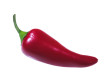

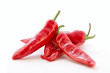
 Eating
chile peppers burns calories?
Eating
chile peppers burns calories?
Chile
has been found to speed up the body's metabolic rate by setting
off a thermodynamic burn which can lead to weight loss?
In fact, according to Dr. Bryant Stamford at the University of Louisville
at Kentucky, eating several small meals with chile peppers throughout
the day instead of the traditional three, can enhance this effect
on the metabolism, "spurring the body on to burn more calories."
Chile
peppers make you feel good in the same way that exercise gives you
“a high?”
Capsaicinoids
irritate the trigeminal nerve cells (the pain receptors in the mouth,
nose and stomach), releasing the chemical messenger Substance P?
This causes the brain to produce endorphins, the morphine-like natural
painkillers that give the body a sense of wellbeing. The “runners’
high” is caused by these same endorphins.


One teaspoon of red
chile sauce may provide 100% RDA for Vitamin A?
For
thousands of years, chile peppers have been used to combat a host
of stomach ailments like indigestion, upset stomach, colic and diarrhea?
Chile
peppers aid digestion by increasing blood flow, which improves efficiency,
reducing gas and increasing the absorption of nutrients?
Nutritionists
and health practitioners agree that eating a diet packed with vegetables,
fruits, whole grains, beans and lean proteins is the best strategy
for losing weight?
This style of eating also reduces your risk for degenerative diseases
such as heart disease, stroke, high blood pressure and diabetes.
However, if the idea of going on a low-fat diet makes you groan--thinking
you'll be eating bland, boring food--think again. Spicing up your
meals not only makes your food taste better… it helps you
lose weight!

The biggest stumbling
block to losing weight is feeling hungry?
In fact, most pharmaceutical approaches to weight loss have been
geared toward appetite suppression. Trouble is, most diet drugs
work on a short-term basis only. And these drugs have side effects.
The good news is, research has uncovered that chile peppers can
help you lose weight in two ways: Chile peppers decrease your appetite
and increase your metabolism.
Exactly
how chilies decrease your appetite remains unclear?
Research has shown that capsaicin, the substance that makes chile
peppers "hot", increases activity in the sympathetic nervous
system. This in turn ups your metabolism, and appears to curb appetite--especially
for fatty foods and sweets. Other scientists have found that nerves
in the appetite centers in the brain (hypothalamus) and pleasure
pathways (dopamine) respond to capsaicin. Moreover, chile peppers
(like fats and sugar) prompt the body to release endorphins. These
natural opiates promote a feeling of calm, and make you feel satisfied--a
key component often missing in low-fat diets. A feeling of satiety
helps us lose weight because the more satisfied we feel, the less
likely we are to go for second and third helpings simply because
a food smells, looks, and tastes good.
There
is scientific evidence that capsaicin revs up your metabolic rate
by 30 percent for several hours after you eat a meal?
This temporary metabolic boost helps you lose weight by burning
calories at a faster rate. However, to keep your metabolism running
in a higher gear, you need to eat 5 to 6 smaller chile-spiked meals
(rather than 3 large meals) per day. Also, caffeine will enhance
the metabolic boost derived from capsaicin. You can add a strong
cup of coffee, or a large glass of unsweetened ice tea (about 200
mg. of caffeine) to your chile-spiked, low-fat meals.
Although
the hotter the chile, the greater the effect - it’s best to
start slowly? The amount of chile “heat” you
can tolerate is determined by number of taste buds on your tongue
and your medical history. For instance, women tend to be “super-tasters",
which means they have more than the average amount of taste buds
per centimeter on their tongue. This in turn means they will be
more sensitive to hot chile peppers. In contrast, it’s usually
men that enter jalapeño-eating contests since they tend to
be “non-tasters” and have fewer taste buds. However,
anyone can increase their tolerance to chilies by eating them frequently.

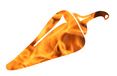
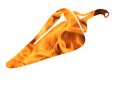
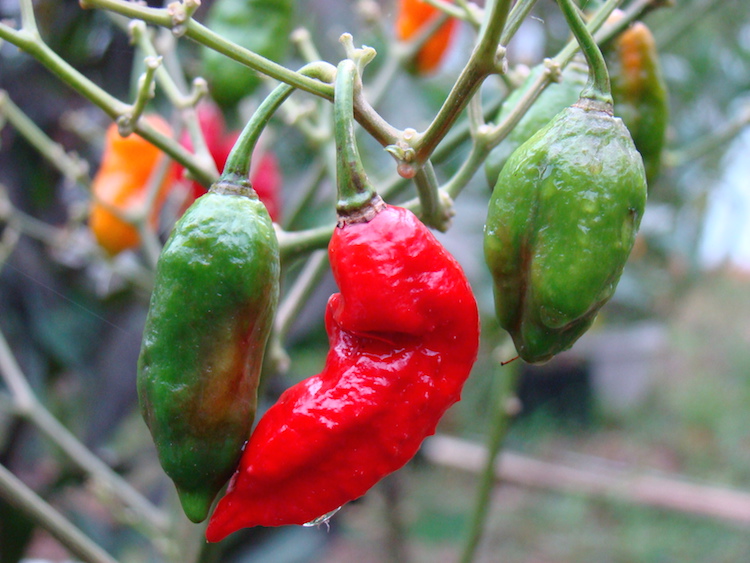
Ghost Peppers

Meet the Carolina Reaper, world's hottest pepper,
according to the Guinness Book of World Records.
Gradually
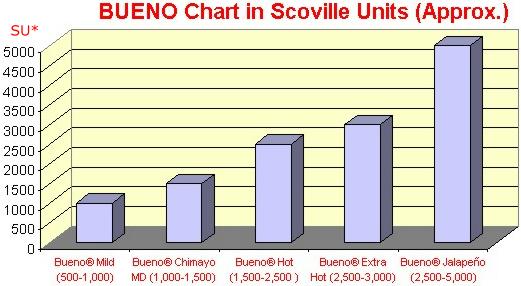
work your way up the Scoville scale to fiery jalapeños, New
Mexico (hot) chile peppers, etc. If you’re new, or sensitive,
to chilies, start with the mild, raisin-flavored ancho chile. There’s
no point in eating a meal that’s so hot you’re left
wondering if you taste anything but pain.
So ... between eating fewer calories and burning more, chile peppers
make that difficult task of shedding unwanted pounds a lot easier.
--
See Bueno Foods
See Chile Peppers
See The Pepper Scale
See Hotter Than Ghost Peppers






 EqualsHappiness.com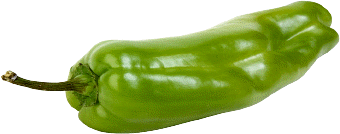









 *Consultation
with a health care professional should occur before applying
adjustments or treatments to the body, consuming medications
or nutritional supplements and before dieting, fasting or exercising.
None of these activities are herein presented as substitutes
for competent medical treatment.
*Consultation
with a health care professional should occur before applying
adjustments or treatments to the body, consuming medications
or nutritional supplements and before dieting, fasting or exercising.
None of these activities are herein presented as substitutes
for competent medical treatment.