| OpticianryReview.com Looking to 'humaneyes' prescription eyewear.
"Opticianry is defined by how well the eyewear makes contact with the patient. POINTS TO PONDER All Opticianry is local. It's time for direct, touch and feel, Hands on the Of
over 67,000 Opticians designing, manufacturing For the last few decades our collective After many years of failing to provide the public with It's
time to end the lecture-only-training of Opticians. Many
of today's Retail Optical Execs and Managers have We teach the art-craft of Hands on the Patient Opticianry to Eye If you will recall, Opticianry is ultimately defined by how well When
Opticians relate to Consumers as customers, it often has an adverse Capitalism as practiced in this the Age of Aquarius is hopelessly flawed.
It's time for three-dimensional dispensing, a time honored craftsmanship that includes: "When Opticians relate to consumers as Customers, it often has an adverse
"Many
optical outlets are 'ready-to-wear' stores where
"Optical dispensaries are healthcare facilities where Opticians practice Today's Focus
"Today,
Consumers can go online
to get the same dehumanized service they
PREFACE
The narrative, which follows, presents a 'Bird's eye' view of a) the business model in use today by many Retail Optical Dispensaries; b) the conflicted relationship between experienced Opticians and many Retail Managers and Executives; c) the retailing practices, which have led to a steep and steady decline in the practical design and up-close-and-personal, and on-the-face-delivery of custom-fitted, prescription eyewear; and d) practical remedies including transformational Hands on the Patient Workshops.* *NOTE:If you are a Practitioner who needs additional training or consultation, or you need assistance in order to regain market share and improve the profitability of your practice, please visit OpticalWorkshops.com and OpticalGuidelines.com, then click, or call Opticians For Change at 855-410-2700 to discuss and-or arrange a Workshop session for your staff. Click here if you want your name added to our mailing list. The genesis of the Open Letter below occurred after an optical retailer's outreach to its Staff for ideas about creating "America's ‘Premier’ source for Vision Care." What follows is based in part on a written response by a staff member, along with some additional observations. The opinions and conclusions that follow are based first, on our direct observation and experience, and second, on the first hand testimonials (see example below) of Patients with whom we have had the opportunity of serving. And they are presented optimistically with the belief that owners and managers, whether they are independent Eyewear Professionals or optical retailers, will resonate and be inspired and motivated to make appropriate changes to their business model in order to advance the status of Opticianry as a profession while enhancing their other objectives. See My Two Sense. See Our Letter to ECPs. NOTE: An abbreviated version of the following letter appears in the November 2009 edition of Eye Care Professional Magazine. From a Consumer:
I once tried to get new lenses in the glasses that you had adjusted for me. I came back to pick up the glasses and someone said to me that the Optician had straightened out the bent side pieces! I was so upset! I made the Optician come out and I explained what you had done for me, why you had done it and what a terrible disservice he had done by ‘straightening’ my side pieces and that he had to re-bend the side pieces back to where they had been. Needless to say, those glasses never fit the same again! After that I never changed lenses without speaking directly to the person making the lenses and making sure they knew not to change or adjust the side pieces. If you lived where I could get my glasses adjusted properly that is where I would go... -- From another Consumer:
So, this Consumer's experience suggests the reason for the proliferation of online prescription eyewear sales is not so much about lower prices as it is about adequate personalized hands on the patient services. There are only three things the optical industry can offer the prescription eyewear Consumer, SERVICE, QUALITY and PRICE. But most latter-years dispensaries currently ever offer ONLY TWO of these, simultaneously. Why can’t we offer SERVICE, i.e., HANDS-ON THREE DIMENSION DISPENSING, QUALITY PRODUCTS, and FAIR PRICING, all three simultaneously, like we used to? BTW: A colleague recently asked, "What does it say about the "soul" of our profession when the first "selling point" that comes out of a frame rep's mouth is, "Your cost is $9.95, but it's listed in Frame Facts for $79.95...so you can bill insurance higher. From a fellow Optician:
Any ophthalmic dispenser who is not practicing basic guidelines, see DispensingGuidelines.com, is just an eyeglass merchant, not an Optician. And this is the major reason why many of today's PRESCRIPTION eyewear Consumers purchase their eyewear online. If you are not practicing Opticianry with the application of 3D Dispensing, Discovery-Design-Delivery skills, i.e., a) Discovery of the Consumers REAL eyewear needs in an unbiased Comprehensive Lifestyle Interview, b) Using yesteryear skills in both the Design of eyewear, and Tactile, Touch and Feel Hands on the Consumer Delivery of prescription eyewear, let’s be honest, you are a big part of the cause of today’s proliferation of online sales. And only you can restore market share to the ECP industry, more skillful professional services for Consumers, and the lost craftsmanship skills. Also, we recommend across-the-board-charging of a realistic fee to Web-based Consumers who seek follow up attention for ill-fitting eyewear. (This is addressed in some detail elsewhere.) Of course, we must see to it that we have the hands-on skills to warrant our fees. Opticians have historically offered free lifetime service, but with the advent of the Internet, lifetime services can only be realistically offered to full-fee Consumers. Again, we must have the hands-on skills to warrant the fee. And for many Opticians, even many senior Opticians, this could be a real challenge. Where there is NO DIFFERENCE between the service offerings of a brick-and-mortar merchant and an online vendor, other than price, many Consumers understandably choose the online source. They are 7/24 accessible, cheaper, and they offer the same absence of direct human contact as a majority of today’s dispensaries. What’s not to like? And keep in mind that 7-11 stores are successful even though their prices are high. Why? Because Consumers mostly get the Service and Quality they want. There are only three things the optical industry can offer the prescription eyewear consumer, SERVICE, QUALITY and PRICE. But most latter-years dispensaries currently ever offer ONLY TWO of these, simultaneously. Why can’t we offer SERVICE, i.e., 1) HANDS-ON THREE DIMENSION DISPENSING, 2) QUALITY PRODUCTS, and 3) FAIR PRICING, all three simultaneously, like we used to do? This leaves the online providers with only their cheaper prices with no custom fitting skills for that segment of the market, and leave the remaining market (we’re talking mostly about full-time-wear prescription-wearing consumers, not those looking for plano sunwear or readers) to Eyewear Professionals. A big challenge now, is that the industry has devolved to the point of being extremely short on Multi-Dimensional Dispensing Technicians.
Speaking of Price...
The majority of prescription eyewear Consumers relates to and seeks customized Discovery, Design, Delivery, and Quality Products IF and WHEN these are available. The situation that has created online optical merchants is that Multi-Dimensional Dispensing skills are more the exception than the rule. We have served Consumers in recent years that were literally shocked to experience a tactile, hands-on, touch and feel, handcrafted frame fitting, having never previously seen nor experienced such service. Sad! Another Optician:
I consider him a gift to opticianry. I was not solicited to do this. I'm doing it because I believe in what he has taught me. I use it everyday, and most of my customers tell me that they have never had such a comfortable pair of glasses, ever. And if he comes back again to Florida I'm going to take the class. It really helps and I always learn something. Just because you're a seasoned and licensed optician doesn't mean you know it all. If you're a licensed optician there is always room to learn, there is always room to grow, and there is always the patient that will value what you do. Hang in there. Do everything and anything you can to promote your skill as an optician. Fight for your rights, fight for your needs, fight for promoting the best for your patients. We are for the public good. You've got to make your legislators know that. I'm thinking about relocating to Arizona. You can't let this (optician license) be taken away from you. You've got to fight. It's your livelihood. And it is for the public good. -- See Our Letter to ECPs. See ReachOutAndTouchSomebody.com And another Optician:
See Our Letter to ECPs. See ReachOutAndTouchSomebody.com And then there's this from a senior Optician:
And this question from another Optician:
You are correct re the training issue. Wages are proportionate to the quality and quantity of the services rendered. The low wages paid to today's Opticians is due to the steep and steady decline of sufficient application and-or training in the art and science of hands on the patient skills, ergo the inability of most dispensers to deliver adequate services. One-size-fits-all and dehumanized service reigns supreme in almost all retail optical venues except for a few independent, senior Opticians who are fast disappearing. So much so that Consumers now no longer expect or even remember that hands on the patient service used to be the norm, whereas their hairdressers, manicurists, dentists, massage therapists, etc., still provide hands-on, touch-and-feel service, to wit the optical market has now shifted to the Internet where Consumers suffer from the same dehumanized service, i.e., the absence of hands on the patient personalized design and customized fitting of their eyewear, but for less cost. Unfortunately, the Consumer has to then search out old-time, hands on the patient, touch and feel Opticians for a comfort fitting and-or the replacement and expense of properly designed and custom fitted eyewear. Most to no avail. As we have indicated in previous discussions, the entire industry from State's Boards, to optical retailers, to ophthalmic refractionists, i.e., Optometrists and Ophthalmologists, to schools, to frame and lens manufacturers, to optical labs, to dispensing furniture manufacturers, to even the Consumers themselves, have all played a part in today's lack of service. Mostly because we have all failed to demand and require excellence in the manufacturing, fabricating, design and delivery of prescription eyewear. Just as in our country's politics, only when we collectively decide the status quo is unacceptable and begin demanding excellence in services will much improvement occur. The causes of the decline in services, and some remedies are addressed more completely at OpticianryToday.com and OpticalWorkshops.com. -- Webmaster's Note: Most, if not all States, require Hairstylists, Manicurists, Massage Therapists, etc., to be licensed and regulated. A Special Note from Opticians For Change
Today's retail optical model favors the marketing of one-size-fits-all merchandise unlike an Optical Dispensary, which is like a Pharmacy or Healthcare Facility. An Optical Dispensary is where prescription eyewear is designed, custom fitted and serviced with skill and excellence. Opticians For Change aims to restore that excellence. Opticians For Change is devoted to the principle that Consumers are best served only when they receive competent, Three Dimension Dispensing services, i.e., in-depth Discovery, objective, bias-free Design, and hands-on Delivery of prescription eyewear from a skilled dispenser. In other words, a) a full-discovery lifestyle interview prior to discussing frame and lens options, b) a comprehensive design of lenses and frame without bias as to style and-or cost, and c) a hands-on, in place, on-the-face delivery of their eyewear including multi-dimensional handcrafted frame and lens adjustments. Anything less is unacceptable. NOTE:
As senior Ophthalmic Healthcare Practitioners, we are interested
in sharing our experience. If you are a Practitioner who recognizes
the decades-old decline in dispensing skills and you are in
need of additional training or consultation, or you need assistance
in order to regain market share and improve the profitability
of your practice, visit OpticianryToday.com
and OpticalWorkshops.com.
ECPs
should inquire here,
or An abbreviated version of the following Open Letter appears in the November 2009 edition of Eye Care Professional Magazine. The manager of a nationwide retail optical dispensary OPEN LETTER To
Whom It May Concern:
"Successful
dispensing requires the careful and thoughtful I) Many Optical Retailers are well positioned in the marketplace, but few are ready to be America's 'Premier' Vision Care Practitioners. Many of them employ a business model that works well for marketing general merchandise. But an Optical Dispensary is different. Like a Pharmacy or Health Clinic, an Optical Dispensary is a Healthcare Facility where prescription eyewear is designed, fitted and serviced. It is not a strictly mercantile sales facility. The comparison can be likened to the difference between a retail outlet where only stuff is sold to Customers versus a Health and Wellness Eye Care Service where precision-made, by-prescription-only optical devices are designed and custom-fitted on Patients. (The concept lost in today's retail market is that an Optician's mission is to also maintain an appropriate balance between Serving and Selling. See also The Coming Humanization of The American Economy and To Serve Is To Succeed.) An aspiring 'Premier' Vision Care Practitioner must focus on a) ongoing practical training of Staff, b) highest standards of care for Patients, c) inclusion of qualified Opticians in upper management positions, d) sensitivity to Patients' eye care needs, and e) realistic sales goals, which allow for excellence in the dispensing of eyewear.
More
and more eyewear is being purchased from eyewear
When's
the last time you saw or heard a retail optical II) There is an acute need for many Optical Dispensaries, including those associated with U.S. government agencies, to acquire: 1) Adequate workspace and staffing, and 2) Expanded and ongoing
training of staff that includes practical, i.e., Hands on the Patient
training, which includes:
"Many
of today's Retail Optical Execs and Managers have III) Some Executives and Managers within the retail optical industry, some with MBA's as their only prior experience, tend to make decisions that adversely impact an acceptable standard of vision care. Some are focused too exclusively on their career advancement as Managers, while promoting unrealistically excessive sales goals and requiring interminable amounts of paperwork and reports from subordinates. This in turn interferes with the training and practice of Opticianry, and the delivery of quality healthcare. See 1Plus1Equals11.com.
"The
conflicted relationship between Professional Opticians and IV) Retail Managers who are absent Opticianry skills need sufficient training, possibly even in-house certification, in subjects such as the Lifestyle Interview, Optics and Lens Design, and Custom Fitting and Delivery of prescription eyewear, including contact lenses, and Trial Lens and Frame use BEFORE they assume any policy-making or supervisory roles. Currently, most get on-the-job training only, and their actions and decisions reflect their inexperience to the detriment of acceptable service. Again, providing professional vision care, i.e., designing, measuring, and custom fitting prescription eyewear ON PATIENTS requires much more technical expertise and people skills than what is required to service mercantile CUSTOMERS. AGAIN: "The
customized fitting of eyewear involves far more than just
adjusting
Success
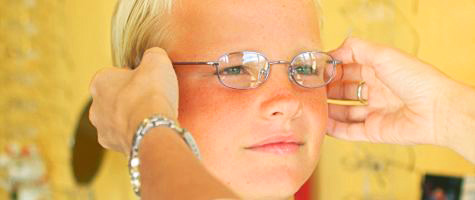
always follows good service. Patients deserve a pleasant experience. When Opticians do not touch the Consumer at the time When
Opticians relate to Consumers as Customers, The closer opticians get to a patient, i.e., laying their hands directly What
are the chances of today's eyewear consumers getting a Opticians are Eyewear Professionals. Opticianry Today's
Retail Optical paradigm needs to be upgraded to that of serving CONTACT LENS FITTING AND CONSUMER
The
number one complaint of brick-and-mortar store patrons... When
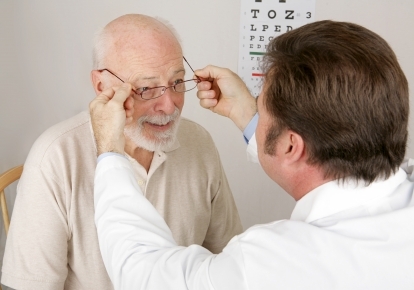
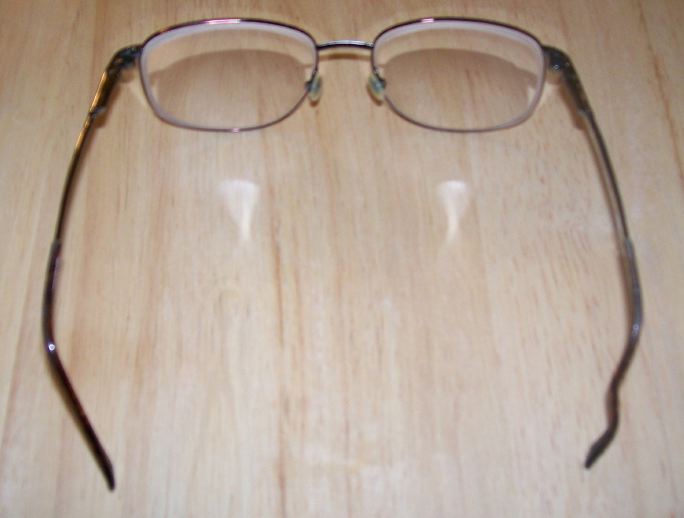
Opticians relate to Consumers as Customers, Every Patient deserves a fully personalized design and fitting of their eyewear. The fact that the frame lies on a flat surface squarely should never preclude fitting the frame directly on the Patient. This becomes obvious when after fitting a Patient with facial anomalies, the frame no longer fits squarely on a flat surface. Facial-cranial structure, the positioning of each eye and ear, the mastoid area behind each ear (see photo), all of these differ with each person. See Common Complaints and Causes. See GlassesOnlineWarning.com. See also The Final Fitting. "For
many Consumers, the personalized fitting of eyewear The manager of a nationwide retail optical dispensary
"Dentists, Manicurists and Hairstylists make direct, tactile contact with the Again, fitting a vision appliance on a Patient involves a different level of technical knowledge and people skills. Dispensing prescription eyewear includes many elements of craftsmanship, artistry, and Patient-Dispenser interaction along with significant technical skill and finesse in their application. All of these are key to the success of any Vision Healthcare Facility. A
well-known optical chain's list of expectations for 1)
Greet Customers in a friendly manner and 1)
Drive profitable store Sales by fostering a retail selling
culture Notice that these Eyewear Merchants rank Sales over Skill whereby 'Customers' are the focus. In contrast, a true Vision Healthcare Facility will emphasize Skill over Sales whereby 'Patients' are the focus, which produces higher levels of Patient satisfaction, fewer remakes and refunds, and subsequent increased profitability due to increased referrals. And
here's a personal profile submitted "Licensed
Optician focused on converting patients Again, the focus here is on a SELLING opportunity NOT a SERVING opportunity. Of course, merchandising is an important and necessary service, but all too often the healthcare delivery component of the Optician-Patient equation becomes secondary to the act of selling, i.e., in too many cases unrealistically excessive sales goals override the mission of providing professional healthcare, whereby personalized, custom fitting of eyewear is given only minor consideration, if any. The reality of this issue is clearly demonstrated by a steady albeit unfortunate number of unhappy Patients and the subsequent loss of revenue by way of return visits, remakes, refunds and fewer Patient referrals. See Testimonials. See Common Complaints and Causes. See Free Frame-Fitting Course. See DispensingGuidelines.com. SERVE PEOPLE WELL,
CLOSING WORDS Many Optical Retailers need to make significant changes if they hope to acquire anything like America's ‘Premier’ Vision Care title. Their business models and the services they provide fall short due to deficiencies in practical training and depth of dispensing experience. Much more investment in the training of people and in resources is needed. EXAMPLE: In-house training manuals lack the practical experience that direct hands on the Patient tasks afford. For an eye care facility to rely on manuals for training a Dispenser is like trying to teach an aspiring Surgeon how to become skilled in surgical techniques in the absence of a Patient. In addition, many dispensaries lack adequate dispensing tools, and visual aids, as well as sufficient training in their use. For instance, nose pad replacement is a frequently requested service. Many unskilled Dispensers use a snipe nose pliers to replace nose pad screws. Using this pliers requires excessive time for such a simple procedure. A practical solution is a specially designed self-closing tweezers that reduces the task to a minimum of time. The use of this tool alone can save an amazing amount of time for both Dispenser and Patient. NOW, HERE'S AN IDEA!
We urge Retail Executives to support certification and licensing of Dispensers, the funding of training schools, and higher wages in order to retain a well-trained staff. NOTE: Senior Dispensing Opticians are available to assist in the practical training of Dispensers and to explore pathways to more profitability. Click Here for free consultation.
Of
over 67,000 opticians designing, manufacturing Several well-known Retailers have a history of financially supporting all kinds of community activities and philanthropic gifts. Their investment in the ongoing training and advancement of their Opticians is a gift that will keep on giving. "Due
to their market share, the largest Optical Retailers are OPTICAL INDUSTRY LEGACY Much of the optical industry, as reflected in the media, is busy with commentary on things like frames, lenses, and sales promotions; how to pump up sales; how to sell extra pairs, etc. Very little, if any, of the mainstream media has much to do with issues like Service; how we put People first; how we put Serving before Selling. In other words the industry's emphasis is too much on THINGS, NOT PEOPLE. Because Opticianry is a very People-centered art and craft, Opticians and Managers must be more devoted to giving People conscientious and caring service. See The Humanization of The American Economy and Business. POINTS TO PONDER
"Hands on the patient
dispensing is a soon-to-be-lost art. If the trend
to "At
some point, direct, tactile, Hands on the Patient training
has to happen. For
a free consultation on ways to improve the conscientious
delivery of prescription eyewear while maintaining profitability or a Training Session,
contact Opticians For Change here,
or Respectfully
submitted, NOTES "Our
mission is to re-humanize the delivery of "There
is nothing wrong with people making money and "When
owners and managers discover that their people are their
"A
corporation's first purpose is to make money for *A) The written reply to management's request has been modified in order to make the points in the above open letter more current. So far, more than 2 years later, and following the departure of its author, the receipt of the original letter has never been formally acknowledged, and no remedial action has occurred. At least none has been observed. **B) Special note re Hands-on Handcrafted Custom Fitting: It seems the term 'hands-on' has different meanings among members of the optical community. Click here for our definition. For an example of what we call hands on the Patient, old-fashioned design and custom fitting of prescription eyewear, click here. And for those who are otherwise looking to improve the delivery of prescription eyewear in America, please contact us here. C) To be fair, the experiences of one Optician in a single optical outlet cannot be seen as reflecting that retailer's policy in its entirety. But if this open letter can be viewed minus a 'prism of bias,' perhaps Optical Retailers and aspiring Opticians can use it as a primer as to how well they measure up as a source of Genuine Healthcare in America. D) Too many Retailers have a 'bottom-line-is-all-that-matters' mind set along with an attitude in which they exist only to serve company goals, not the needs of the Consumer. They're not alone. Corporate America, in general, must soon deal with some heavy karma due to the public's current anger, and the public's demand for the return of more qualitative and thoughtful service with less emphasis on profits. The hope is that Optical Retailers can upgrade their thinking and focus on becoming genuine Healthcare Practitioners. See The Coming Humanization of The American Economy. E) Large-scale change always seems daunting. We want simple routines that we can easily and automatically follow. If Opticians and Managers adopt the steps presented herein, success will follow. See Letter To Eye Care Professionals.
HANDS ON THE PATIENT
Books, lectures and tests can take an Optician's skills only so far.
It is time for direct, touch and feel, Hands on the Patient training.
It is time for touch-and-feel, Hands on the Patient training. "Handcrafted frame fitting, i.e., touch and feel, hands-on dispensing, HANDS ON THE PATIENT
WORKSHOP TRAINING AVAILABLE
HERE
ABO, American
Board of Opticianry accredited, and Florida
State Board approved CE "The job of a teacher is to poke, provoke, confront and elevate." -- Yogi Bhajan More Web 'Sights' by
OpticiansForChange.com 
 More Web sites by
KhalsaWebMasters.com OpticianryReview.com © All rights reserved. Grateful
appreciation is hereby expressed to
|
|
|
ABOUT US CONTACT US DISCLAIMER HOME PAGE NEWS AND VIEWS SEARCH UNIVERSITY OF DIVERSITY |


 There are a number of conflicted forces at work within the ophthalmic dispensing industry, which keep us from making progress. The two biggest are:
 .) We have not yet effectively dealt with the reality that the majority of current dispensers are woefully under trained and extremely challenged when it comes to handcrafting prescription eyewear. For instance, I know senior Opticians who attend
  .) There's also a lot of what I call professional

 . Wouldn't this change the way we relate in terms of time and kind of
 . Aren't optical dispensaries supposed to be genuine healthcare facilities where we





 Having
you fit my glasses on my face, ears, nose and under my
Having
you fit my glasses on my face, ears, nose and under my 



 Coming
from an old fashion world of Opticianry, it really saddens me
that today is all about the sales. Gone are the days of one
on one, fitting and guiding the patients through the process.
I have even come across people who never even knew they were
wearing progressives!! This is totally outrageous. They tell
me they were told they will now be able to see up close with
their new glasses but never explained what they were getting.
This has happened more than once.
Coming
from an old fashion world of Opticianry, it really saddens me
that today is all about the sales. Gone are the days of one
on one, fitting and guiding the patients through the process.
I have even come across people who never even knew they were
wearing progressives!! This is totally outrageous. They tell
me they were told they will now be able to see up close with
their new glasses but never explained what they were getting.
This has happened more than once.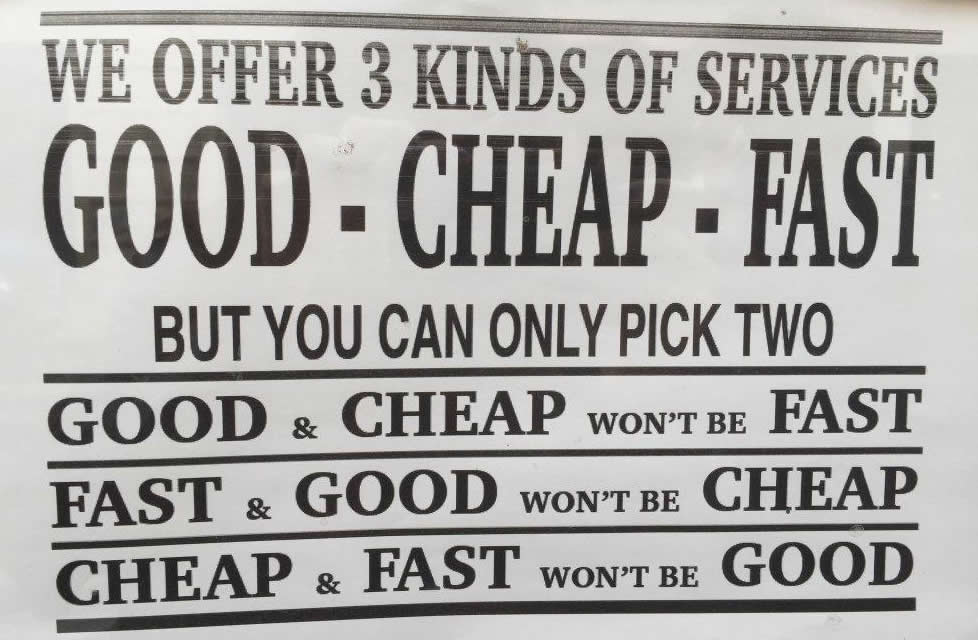


 855-410-2700 to arrange a







 EXAMPLE:
Newly purchased eyewear, including
EXAMPLE:
Newly purchased eyewear, including 


 Factoid