EyewearProfessionals.com
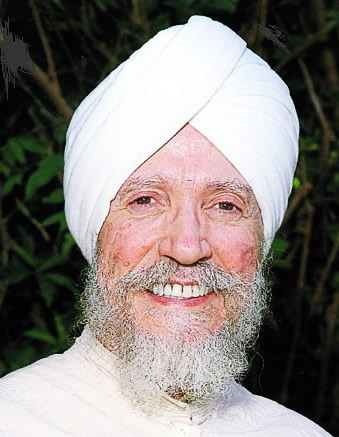
Hari S. Bird, Optician
and Eyewear Genie
"To serve is to succeed."
"It's time to shift our thinking.
It's time to get our shift together.
It's time for eyewear professionals
to become agents of change going forward;
it's time to return to the days of providing full service;
to improve our hands-on craftsmanship skills; it's time
for those who know to teach those who do not know; and
it's time for those who do not know to surrender their ego."
A
Brief Personal History
I
am an octogenarian native of the Midwest. I am also a Sikh minister and chaplain.
My career as an optician began following active duty with the U.S.
Marine Corps and subsequent employment with an American Optical
Company Branch Laboratory in 1958. I spent more than two years in
all phases of Laboratory operations as a Lab Technician, which included
hand surfacing, power generation, hand stone and automatic edging,
bench work, finishing, final inspection and hands on the Patient custom
fitting. At that time AO and B&L, Bausch and Lomb, laboratories
dispensed eyewear to the public at the request of MD's and OD's. (See OpticianryToday.com for additional background. See My Two Sense. See EyewearGenie.com.)
I
then became the Manager of an AO Branch Laboratory, and later a Sales
Rep for American Optical lenses, frames, and ophthalmic instruments.
I subsequently returned to Ophthalmic Dispensing with a joint MD-OD
practice. I hold active optician licenses in Florida and Arizona.
I am also ABO, American Board of Opticianry, and NCLE, National Contact
Lens Examiners certified. I am affiliated with POF, Professional
Opticians of Florida, as an instructor. I have several years experience as the
owner of an independent, privately operated Ophthalmic Dispensary,
and more recently as a licensed optician for a retail optical chain. I currently teach workshops in the skillful art of handcrafting and form-fitting eyewear directly on the patient.
"The real challenge for any optician is to take a symmetrically 4-point
squared device and handcraft it to fit an asymmetrically shaped surface."
I
am a passionate advocate of a) the resurgence of the optician as a
genuinely skilled Eyewear Professional as opposed to today's Dispensers who are trained mostly as eyeglass
merchants, b) resurgence of the Full Discovery and Disclosure Life-style
Interview and Design of prescription eyewear, c) conscientiously handcrafted,
Hands on the Patient delivery of prescription eyewear, and d) more effective handcrafted Hands on the Patient in-residency training for
aspiring opticians in the custom design of lenses and the art and craft of handcrafting eyeglass frames to fit.
See My Two Sense. See TimeForCraftsmanship.com. See OpticalGuidelines.com. I am an Optician Training
Consultant, and I am also a KRI certified teacher of Kundalini Yoga. BTW: Any skilled optician interested in teaching their dispensing skills can contact me at LinkedIn.com. 
"For the last few decades our collective
mindset has manifested as, 'Divided we stand...
united we fall.' We must shift to, 'United we stand...
divided we fall,’ as our paradigm." See 1Plus1Equals11.com.
"The mere act of teaching implies that one wishes the world well." Roger Rosenblatt
"It is incumbent on those who know to teach those who do not know." Hari Singh Bird
See My Code of Ethics. See TimeForCraftsmanship.com. See EyewearGenie.com. See Optical
Workshops.com. See DispensingGuidelines.com. See EyeExaminationOnline.com. See Shift Happens. See GlassesOnlineWarning.com. See SikhsShine.com. See Who Are Sikhs on CNN.)

POINTS TO PONDER
Opticianry is defined by how well the eyewear makes contact with the patient.
"All Opticianry is local. Eyeglass consumers need and deserve the following:
a) Optician-assisted, in-depth lifestyle interview;
b) Optician-assisted, design and selection;
c) Handcrafted, form-fitting eyewear;
d) Free lifetime adjustments and
minor repair services, none of
which are available online."
OpticalGuidelines.com
All Opticianry is local. 
"Service
is any human activity which
contributes to the well-being of another, i.e.,
anything we do that lightens somebody's load."
"An
optician's first purpose is to serve as a
highly skilled Health and Wellness Professional."
"It's
time to end the lecture-only-training of opticians.
It's
time for opticians to get hands-on, tactile training in
order to re-humanize
the dispensing of prescription eyewear,
thereby reducing outsourcing of the Rx to Web-based providers."
"More
and more eyewear is being purchased online.
The number one complaint of brick-and-mortar
patrons ...
'Nobody adjusted my glasses. They just handed
them to me.'
So, for these consumers there's little difference between the service
they receive in many of today's dispensaries and buying glasses online."
"Opticianry
is ultimately defined by how well the eyewear makes
contact with the patient, not by the number of customers served.
Therefore, a conscious, precise, and personalized process
of frame
selection, lens design, and in-place, hands-on fitting is required. In too
many cases obsessive and unrealistic sales goals override
the optician's
mission of providing skillful hands-on health care, whereby
the personalized,
custom fitting of prescription eyewear is given only minor consideration,
if any."
"The
customized fitting of eyewear involves more than just adjusting
a nose
piece or bending a temple. It has to include the reshaping,
bending, stretching,
twisting and artful sculpting of the frame components in order
to personalize the
eyewear. Anything less will most likely compromise the patient's
visual comfort
and long term wear-ability. The difference between adjusting
and customizing
is
what's different between today's eyewear merchants and yesterday's
opticians."
"If you will recall, Opticianry is ultimately defined by how well
the eyewear fits the Patient. So, the real issue for opticians and
Consumers to consider, is not whether prescription eyewear can be
purchased in stores or online. The real issue is the current deficiency
in the delivery of eyewear due to the absence of the craftsmanship
and skills required to dispense form-fitting eyewear to the Consumer.
The real challenge for any optician is to take a symmetrically 4-point
squared device and handcraft it to fit an asymmetrically shaped face.
The answer is hands-on training, hands-on training, hands-on training.
It's time for those opticians who know to teach those who do not know.
And it is time for any opticians who do not know to surrender their egos.
It's been predicted that if opticians fail to practice customizing eyewear to
fit the Patient, Opticianry will become irrelevant as a healthcare profession."
"Dentists, Manicurists and Hairstylists make direct, tactile contact with the
consumer. Likewise, opticians must make direct contact with
the Patient.
Hands on the Patient Opticians, can determine by sense of touch how a
frame feels even in lieu of asking the Patient. Only an eyeglass merchant
routinely hands over prescription
glasses with no hands-on assessment,
nor appropriate ‘touch and feel’
required to customize and
fit the eyewear."
Opticians must assume responsibility for loss of market share.
Our gradual drift from hands-on services over several decades is
what has contributed directly to our loss of market share, today. We
can't be any more disconnected from hands-on service than the Internet.
The consumer didn't demand or cause this outcome. Opticians abdicated
their direct connection, vis-a-vis insufficient form-fitting eyewear training.
Opticians traded away direct, personal contact as providers of health care
services to PATIENTS for marketing merchandise to CUSTOMERS. Our focus is
now more on Selling than it is on Serving. Opticians must regain the lost balance.
The future of Opticianry is quite literally and figuratively in the hands of opticians.
It's incumbent on those skilled opticians who know to teach those who do not know.
And it is just as equally incumbent on those who do not know to surrender their ego.
A
SPECIAL NOTE
As
a senior Ophthalmic Healthcare Professional and founder of EyewearGenie.com, Optical
Course.com, Optical
Workshops.com, and OpticalGuidelines.com, I am interested in sharing my experience in the
dispensing of handcrafted prescription eyewear. If you are a Practitioner who
needs additional training or consultation, or you need assistance
in order to regain market share and improve the profitability
of your practice, please visit OpticianryToday.com and DispensingGuidelines.com, then click,
or call Opticians For Change at 855-410-2700 to discuss and-or arrange a Workshop session for your
staff.

FREE ONLINE COURSES
For Eyewear Professionals
By Opticians For Change



 Whatever
happened to old-fashioned
Whatever
happened to old-fashioned
Hands on the Patient Opticianry?

Contact
Lens Care and Compliance
Eyewear For Hard-To-Fit Patients
NCLE No Fee CEs For Opticians
The
Rap on Wrap-arounds
Sunwear
Is Not An Option
About Professional Egos
Time For Craftsmanship





Books,
lectures and tests can take an Optician's skills only so far.
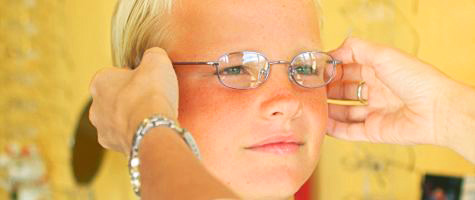
It is time for touch-and-feel, Hands on the Patient training.
Only one on one craftsmanship training provides this.
Craftsmanship cannot be learned virtually.
"Handcrafted frame fitting, i.e., touch and feel, hands-on dispensing,
cannot be outsourced to lectures or virtual sources. It is an art form,
which requires actual and multi-dimensional contact with the patient."
HANDS ON THE PATIENT
WORKSHOP TRAINING AVAILABLE
HERE
"It is incumbent on those who know, to teach those who do not know.
It is incumbent on those who do not know to surrender their ego."

American
Board of Opticianry accredited and Florida
State Board approved CE hours
for Intermediate and Advanced
Level Opticians in Handcrafted
Frame Fitting are
currently offered under the sponsorship of POF,
the Professional Opticians of
Florida. Click or Call 855-410-2700 to arrange for Training Session.
"The job of a teacher is to poke, provoke, confront and elevate." -- Yogi Bhajan
"It is incumbent on those who know to teach those who do not know. It is
incumbent on those who do not know to surrender their ego." -- Hari Singh
Web 'Sights' designed by
Hari S. Bird Khalsa, Optician





















 ®
®
Khalsa
WebMasters.com
© All rights reserved.