 |
ABOUT
US CONTACT
US DISCLAIMER HOME
PAGE NEWS
AND VIEWS SEARCH UNIVERSITY
OF DIVERSITY Serving
Patients THE BOOMING EYE CARE INDUSTRY "Of
the over 67,000 opticians designing, manufacturing The eye care industry in America is booming. The rapid growth, fueled by the ageing "Baby Boom" generation, and the dwindling number of hands-on skilled Opticians has created what is becoming a shortage of adequately trained Opticians nationwide. This large segment of the population, those born between 1946 and 1963, are entering their fortieth year and beyond. At approximately age 40, corrective lenses for reading and other near vision activities are commonly prescribed. This condition, known as presbyopia, is a normal function of the ageing process and affects nearly the entire population. See Before and After photos. The result: an increasing number of people are requiring the services of Eye Care Professionals each year, a trend that will continue well into this century. According to a study conducted by the U.S. Department of Labor, the number of Opticianry jobs is predicted to increase by some 35% during this period of unprecedented growth. See before and after photos of Astigmatism, Hyperopia and Myopia corrections here. SO, WHERE DO WE GO FROM HERE? The
industry's challenge is to upgrade Once
the Retail Optical paradigm is upgraded to that of serving FIRST, the Retail Optical Industry's attitude and business paradigm must be upgraded from its current Retail Merchant model to that of a true Health Care Provider. The reality and importance of the Skilled Optician's role in the health care delivery system must be more clearly defined and nurtured. SECOND, Ophthalmic Industry Members must step up with their collective resources, to close the "knowledge gap" with the ways and means for each generation of Opticians to "recognize the strengths and value of all colleagues," to improve the quality of service at all levels, and to provide, protect, and preserve the increasingly rare Hands on the Patient skills of "Mature Generation" Opticians in the interest of serving the health and wellness of their current and future base. NOTE: For
a free consultation on ways to improve the conscientious
delivery of prescription eyewear while maintaining profitability or to schedule a Training Session, please
click or call *American Board of Opticianry accredited and Florida State Board of Opticianry approved CE hours for Hands on the Patient frame fitting workshops are currently being conducted in Florida under the sponsorship of the POF, Professional Opticians of Florida. Any Eye Care Professionals interested in attending similar workshops should inquire here. The Florida Board of Opticianry is an entity within the Florida Department of Health, which has jurisdiction over Florida Health Care Providers. See Florida Board of Opticianry Required Equipment and Tools. "The
conflicted relationship between Professional Opticians and HANDS-ON FRAME FITTING WORKSHOPS A) Full Discovery Lifestyle Interview, i.e., an objective and unbiased assessment of the Patient's real needs, as well as a full Disclosure of lens and frame options, and costs. B) Design and Delivery of Eyewear using in-place, on-the-face assessment and hands-on frame-fitting skills. See Intermediate Level and Advanced Level Workshop Overviews. C) Managing an Optical Dispensary as a Health Care Facility. D) Improving the Dispensary layout. DISCOVERY, DESIGN AND DELIVERY "Eyewear consumers need and deserve the following:
The 'Dispenser' will advise the 'Patient' of ALL the available lens-frame options and costs, and conclude the interview with specific recommendations, whereby the Patient can make a fully informed decision as to their purchase. Trial Frame and Lenses are to be used to demonstrate variables in lens designs. See Intermediate and Advanced workshop overviews. NOTE: It is the absence of a) the Lifestyle Interview and its subsequent disclosures, and b) on-the-face, in place, hands on the patient, handcrafted frame fitting services, that has resulted in complaints, returns, remakes, refunds, the loss of the Patient's good-will referrals, and the subsequent proliferation of Internet merchants to wit, consumers find it more convenient to receive their eyewear in their mail box. See The Danger Independent Opticians Face. See GlassesOnlineWarning.com. See Is This The Reason Consumers Are Buying Glasses Online?
"You
are fitting a Patient for comfort,
If
you do not touch the consumer at the time It's
time to end lecture-only venues for CE credit
hours.
Chronic
discomfort issues can be eliminated or at least minimized.
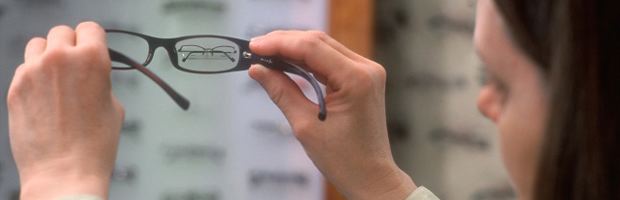
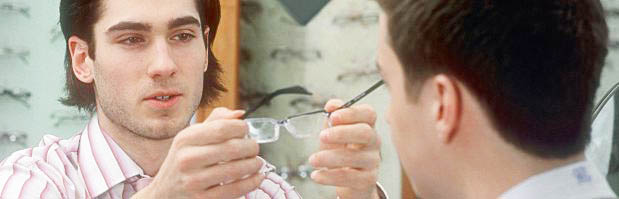
A well executed hands-on, in-place, on-the-face assessment, as well as a touch and feel frame fitting procedure obviously requires some direct physical contact along with the appropriate communications between the Dispenser and the Patient. A proper hands-on frame fitting involves the repeated removal and re-placement of the frame on and off the Patient by the Dispenser until such time as the fitting is completed, which depends of course on the experience of the Dispenser, any asymmetric features of the Patient, and the type and design of the eyewear. See example. The Dispenser must not rush the procedure. Much time is saved in the long run when the fitting is done with sensitivity and patience, thereby reducing the necessity for return visits. Click here to discuss a hands-on dispensing demonstration. NOTE: It is how well ophthalmic eyewear, whether it be eyeglasses or contact lenses, makes contact with the Patient that ultimately defines Ophthalmic Dispensing. HOW TO MANAGE AN OPTICAL DISPENSARY "Just
about anybody can casually hand over a pair of "Many
of today's Retail Optical Executives are skilled Merchandisers
"Once
the Retail Optical paradigm is upgraded to that of serving
"Due
to their market share, some Optical Retailers are SPECIAL NOTE: The emphasis herein with respect to the importance of Hands on the Patient, in-place, and on-the-face, touch and feel delivery of ophthalmic services may seem somewhat overstated, but Patients who experience the results of such skilled service are known to make more referrals and give testimonials as to the improvement to their long-term visual comfort and frame wearability using words such as "significant," even "profound." This level of personal service has the power to transform any Ophthalmic Consumer into a life-long Patron. And complaints, remakes and refunds are significantly reduced, as well. Thought For Today: Opticians exist for the purpose of SERVING people, NOT SELLING things. See ToServeIsToSucceed.com. "Serve people first, and more will follow."
Whereas personal service can be defined as any human activity by which people's lives are made better, i.e., easier, happier and-or more comfortable, happy Customers are the very best way of advertising goods and services just as portrayed in the inspirational narrative of 'Johnny's Story.' Happy Patient's promote good will, and the serendipitous word-of-mouth-advertising is free! See More Specific Details. IMPROVING THE DISPENSARY LAYOUT "Inadequate
equipment and tools contributes to
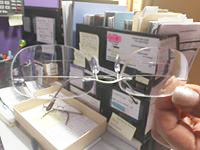
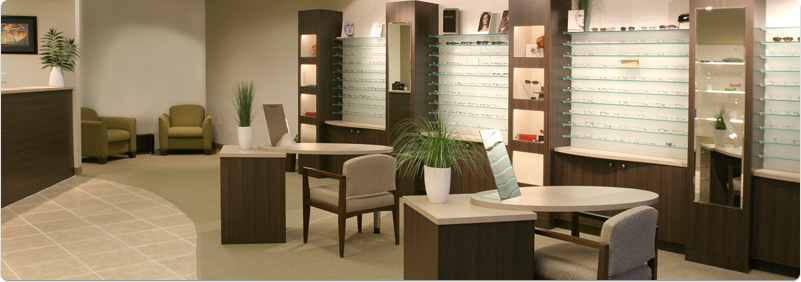
The floor plan and workspace of many of today's Dispensaries are laid out in such a way that they do not support or encourage qualitative dispensing practices or Patient comfort. We see too many Dispensaries in which the pace of activities is so fast, and the environment so noisy and unpleasant that it is difficult for us to associate them with the health and wellness industry. In this respect, the training of skilled Opticians, the functional performance of Dispensers, and especially the delivery of health care services to Patients, is adversely affected, even discouraged. Today, as mentioned previously (click here), we see dispensing tables that are not made with much thought of enabling close, direct contact between the Dispenser and the Patient. See Custom Frame Fitting here.
Hands-on-the-Patient dispensing is a soon-to-be-lost art. If today's trends toward the narrow and strictly retail approach to ophthalmic services continue, the marketing of ready-to-wear, over-the-counter eyewear will continue to flourish, Internet sales will proliferate, hands-on dispensing skills and services will disappear, Patients will continue to suffer from substandard quality of service, eyewear will continue to be delivered by an increasing number of unskilled Dispensers, and everybody will lose something in the real value, quality and satisfaction of life. The current retail paradigm for dispensing prescription eyewear needs to be overhauled. IN CONCLUSION THE GOLDEN RULE OF COMMERCE
It is presumably the intention of all Ophthalmic Dispensers to conscientiously practice the art of dispensing and delivery of eyewear with the optimum of skill and service whereby both the gross and subtle aspects of fitting a frame are applied. But while the majority of today's Dispensers are familiar with Basic Frame Alignment, the subject of Subtle Frame Adjustments fails to resonate in conversations with many industry members to wit, a rather blank, even puzzled facial expression is often visible in response to the broaching of the issue. Hopefully, the views presented in this discourse will resonate with industry members as a call-to-action with the result that they will work to avoid or discontinue today's all too common practice whereby a Dispenser casually, and absent any skillful attention to details, hands over prescription eyewear, and concludes the occasion with a statement such as, "How do they feel?" or "Shake your head and see if they're loose!" Everybody deserves eyewear, which has been conscientiously personalized to their maximum benefit, comfort and satisfaction. Unless the industry makes upgrading the skilled delivery of services a top priority, Internet eyewear merchants will continue to proliferate. -- NOTE: It seems the term 'hands-on' has different meanings among members of the optical community. See our definition. For an example of what we call Hands-on-the-Patient, old-fashioned design and custom fitting of prescription eyewear, click here. And for those who are otherwise looking to improve the delivery of prescription eyewear in America, please contact us here. What's wrong with these pictures?
About Hari S. Bird, Optician Experience: Mr. Bird's career as an Optician began following his active duty with the U.S. Marine Corps and subsequent employment with an American Optical Company Branch Laboratory in 1958. He spent more than 2 years in all phases of AO Laboratory operations as a Lab Tech, including hand surfacing, hand stone and automatic edging, bench work, finishing, final inspection, and hands on the Patient custom fitting. (At that time AO and B&L, Bausch and Lomb, labs dispensed eyewear to the public at the behest of eye care providers, i.e., MD's and OD's. See more.) He became the Manager of an AO Branch Laboratory, and later a Sales Rep for American Optical lenses, frames, and ophthalmic instruments. Shortly thereafter, he returned to Ophthalmic Dispensing with an MD-OD joint practice and later his own private practice. Although currently retired, he holds active Dispensing Optician licenses in Florida and Arizona. He is also American Board of Opticianry and National Contact Lens Examiners certified. His history includes experience as the owner of a private-practice Ophthalmic Dispensary, and more recently as a Licensed Optician for an optical retail chain. Goals: Mr. Bird is a passionate advocate of a) a resurgence of the Optician
as a Health Care Provider as opposed to today's Dispenser acting mostly
as a purveyor of merchandise, b) a resurgence of the Full Discovery
and Disclosure Lifestyle Interview and Design of prescription eyewear,
c) the conscious Hands on the Patient design and delivery of prescription
eyewear, and d) more practical training of aspiring Opticians in the
art of custom designed lenses and the custom fitting of eyeglass frames. See articles from fellow ECPs. A
SPECIAL NOTE As
senior Ophthalmic Health Care Providers, we are interested in sharing
our experience as Dispensers of prescription eyewear. If you are a
practitioner who recognizes the decades-old decline in dispensing
skills, and you wish to share your experience and-or you need guidance
in order to improve the profitability of your practice, please visit OpticiansForChange.com for
TAKE
THE COURSE!
FREE TRAINING COURSES
Books, lectures and tests can take an Optician's skills only so far.
It is time for touch-and-feel, Hands on the Patient training. "Handcrafted frame fitting, i.e., touch and feel, hands-on dispensing, HANDS ON THE PATIENT
WORKSHOP TRAINING AVAILABLE
HERE
ABO, American
Board of Opticianry accredited, and Florida
State Board approved CE ARE YOU A GENUINE OPTICIAN OR
More Web 'Sights' by
KhalsaWebMasters.com 
Grateful
appreciation is hereby expressed to
 More Web sites by
KhalsaWebMasters.com OpticalCourse.com
|
|
| ABOUT US CONTACT US DISCLAIMER HOME PAGE NEWS AND VIEWS SEARCH UNIVERSITY OF DIVERSITY |

 Selling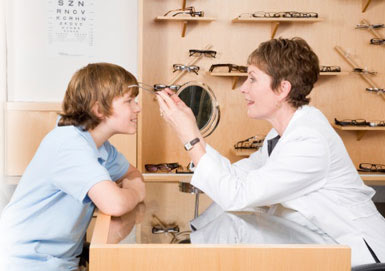
 Profits
 855-410-2700.
 Workshop Attendees, in the presence of a skilled hands-on Optician, will
participate in an alternating 'Dispenser' and 'Patient' role-playing
episode in which the all-important Full Discovery and Disclosure Lifestyle
Interview, is conducted. Full Discovery and Disclosure means that
the Optician conducts a comprehensive and objectively unbiased interview of the
Patient in order to discover ALL aspects of the Patient's visual habits
and actual needs.
Workshop Attendees, in the presence of a skilled hands-on Optician, will
participate in an alternating 'Dispenser' and 'Patient' role-playing
episode in which the all-important Full Discovery and Disclosure Lifestyle
Interview, is conducted. Full Discovery and Disclosure means that
the Optician conducts a comprehensive and objectively unbiased interview of the
Patient in order to discover ALL aspects of the Patient's visual habits
and actual needs. 

 The Dispenser
OBSERVES a
The Dispenser
OBSERVES a 

 There are a number of conflicted forces at work within the ophthalmic dispensing industry, which keep us from making progress. The two biggest are:
 .) We have not yet effectively dealt with the reality that the majority of current dispensers are woefully under trained and extremely challenged when it comes to handcrafting prescription eyewear. For instance, I know senior Opticians who attend
  .) There's also a lot of what I call professional