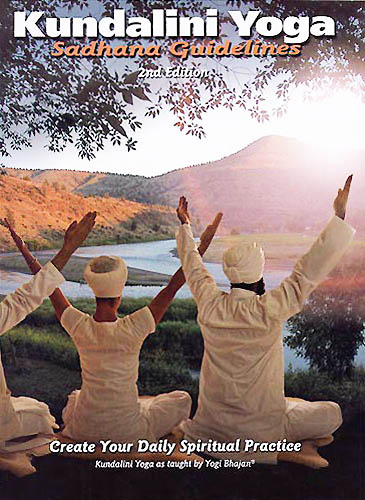
Kundalini Yoga Technology of Consciousness
As taught by Yogi Bhajan ® All rights reserved.
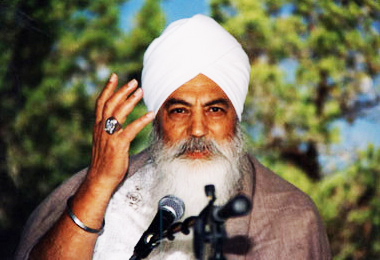
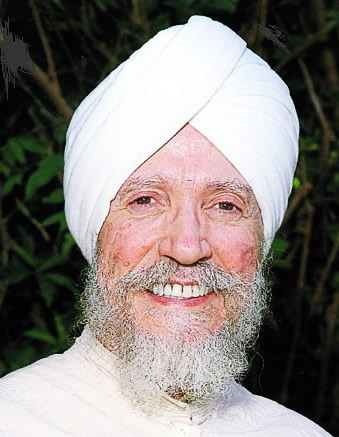
Yogi
Bhajan
Kundalini Yoga is not a religion. Religions come out
of it. Kundalini Yoga is not a fad, and it's not a cult. It
is a practice of experience of a person's own excellence,
which is dormant and which is awakened. -- Yogi Bhajan
Kundalini Yoga is the uncoiling of the being. It is the potential of
creativity of the Infinite in the finite. It is the widening of behavior,
and it is ultimate happiness in life. It is super-humanly human. It
is intelligence. It is grace. It is utmost compassionate being. It is
classic Truth, which radiates in every facet of life. It is a scientific
technology which can be learned and taught. It is taught; it is not a
momentary diversion to look unusual or feel unusual. It is the central
nerve system we are talking about which extends the grasp of the brain
to imagine Infinity in its totality, and then it is a gradual process to work for
that experience. It is a scientific technology for happiness. -- Yogi Bhajan
The purpose of all our efforts is simply to extend your awareness in
your consciousness so you can have this foundation in experience and
a base in positive habits. Then you can smoothly plan your life to any
extent you like. You can radiate creativity and Infinity in all aspects
of your life. That is the practical result of yoga. It is the capacity
and right to live a healthy, happy, and holy life. -- Yogi Bhajan
There is no progress if there are no challenges;
there is no progress if there are no calamities; there
is no progress if there are no mishaps. -- Yogi Bhajan
If
you want to learn something, read about it.
If you want to understand something, write about it.
If you want to master something, teach it. -- Yogi Bhajan
The teachings are never for sale, and a teacher never has a price. -- Yogi Bhajan
Kundalini Yoga*
The Ultimate Self-help Program
The how-to for relating to your Infinity
The means by which you can become Intuitive
Sat Nam. For
thousands of years yogis preserved and carefully guarded the knowledge
of the inner and outer workings of a human being, very cautiously
revealing the technology, selectively passing it down verbally from
Master to chosen disciple. They were selective because knowledge gives
power, and power can corrupt. Kundalini Yoga was always kept very
secret. It was never taught publicly until 1969, When Yogi Bhajan
challenged the ages-old tradition of secrecy.
The word kundalini literally means "the curl of the lock of hair
of the beloved." It is a metaphor, a poetic way of describing
the flow of energy and consciousness which already exists within each
one of us. The practices enable you to merge with or "yoke"
with the universal Self. This merging of individual consciousness
with universal consciousness creates a "divine union" called
"yoga." The technology of Kundalini Yoga applies its science
to our bodies and minds, and is aimed at spirit which has no boundaries,
no discrimination. Therefore it is for everyone. It is universal and
nondenominational. See Cautionary Notice. See The Kundalini Yoga Documentary.
FACTOID
The
frequent practice of Kundalini Yoga,
especially
the breathing exercises, combined
with a healthy
meatless* diet, has been shown to greatly assist
those who wish to quit smoking and-or drinking.
MySense
Hari Singh Bird
*Speaking of a meatless diet, as a seasoned septuagenarian and raised as a flesh-eater, I recommend the following gem of wisdom as a guide to healthful living. It can be found at Dieterata.com.
"In
each and every environment, good health and sustained wellness is dependent on the rapid removal of waste. In
terms of your personal health, you need to void solid waste two to three times a day, or once between each meal, without straining, in order to sustain health and wellness. Toxins are rendered harmless if removed from the body quickly. Sustainable health and wellness is defined as those human conditions wherein the rapid removal of waste is the norm."
I have maintained this system-currency since becoming a vegetarian (one who does not eat dead animals) for the past 50 years.
In my personal experience and by my observations of meat-eaters, family members and associates especially, eating dead animals causes excessive levels of toxicity-acidity to accumulate and be retained in the GI tract much longer than is healthful, i.e., constipation is the rule. My advice has always been to paraphrase Yogi Bhajan, "Eat dead animals, if you must, as long as it makes you feel better."
My take: The fool will persist in his folly until he becomes wise.
BTW: Yogi Bhajan told me that as a youthful experimenter and life-long vegetarian, he went on a flesh-eating diet for some time until he suffered a "heart attack." He always promoted vegetarianism as long as I knew him from 1969. See IDoNotEatDeadAnimals.com.
Kundalini Yoga is a yoga for householders, for people who have to cope with
the daily challenges and stresses of holding jobs, raising families,
and managing businesses. It gives results in the shortest possible
time. It does not require you to leave your home, become an ascetic
or sit in a cave. Kundalini Yoga is designed to give you "hands
on" experience of your highest consciousness. It teaches a method
by which you can achieve the sacred purpose of your life. In 1969,
when Yogi Bhajan saw the condition the young people were in from having
taken drugs, his compassion impelled him to teach them Kundalini Yoga.
He knew it was the fastest way to heal their bodies and minds, and
give them the spiritual awakening they were seeking.
"Kundalini
Yoga is a science, i.e., it is a technical practice that results
in a predictable and reliable outcome or experience." Hari
Singh
Kundalini Yoga deals specifically with the most powerful thing in
the universe, the basic life energy, prana. Prana is the sub-atomic
energy, the life force. Kundalini Yoga is the path of discovery of
the source of the prana in us and teaches us how to use it. In Kundalini
Yoga we harness the mental, physical and nervous energies of the body
and put them under the domain of the will, which is the instrument
of the soul. Kundalini Yoga perfects the finite life while connecting
it to the infinite experience.
What is Prana?
Prana is not like any energy science has investigated so far. Prana is the vital or etheric force which pervades the whole Cosmos. It is in all things, whether animate or inanimate; it is in stones, insects, animals and human beings. Though closely related to the air we breathe, it is not exactly the same thing. Prana is more subtle than air and can be defined as the energy essence that is within everything in the universe”.
Prana is the medium by which thought activity is carried on in the brain and involved with the impulses in the nervous system. This enhanced Prana operating in the brain can lead to high states of consciousness and create mystical experiences, psychic abilities and others. Kundalini is the mechanism, and at the same time, the flow of energy that is to reach the brain for our awareness to awaken.
Yogi Bhajan said that Prana is the most powerful and most creative thing God ever created, because out of prana came life. -- AtmaroopSource.
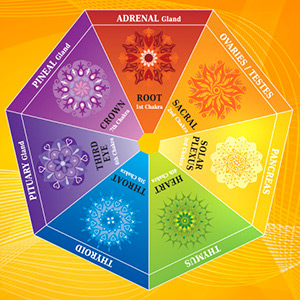
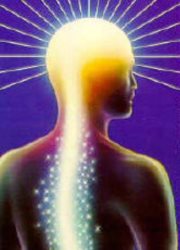
The practice of Kundalini Yoga also balances the glandular system, strengthens the nervous system and enables us to harness the energy
of the mind and the emotions, so we can be in control of ourselves,
rather than being controlled by our thoughts and feelings. Of all
the technology and wisdom that Yogi Bhajan could have taught from
his vast storehouse of mastery, he chose to teach Kundalini Yoga because
it is so effective, comprehensive, and so "do-able."
The Glands
No matter what we achieve, what success in the world we have, it ends
up being hollow unless we fulfill the soul’s yearning to bring
higher consciousness into our daily lives. Kundalini Yoga is much
more than just a system of physical exercise. It is a dynamic, powerful,
tool for expanding awareness. Approach it with respect, with reverence,
and openness. See Yoga Classes In Your Area. See The Power and Dangers of Practicing Kundalini Yoga.
Kundalini
Yoga Basics
NOTES
FOR BEGINNERS
Don't
make life changes too complicated. Just begin.
"When the breath of life becomes short, you
become short-tempered. When the breath of life becomes
long and deep, you understand who you are." Yogi Bhajan
"The
side effects of practicing Kundalini Yoga and Meditation
can be increased sensitivity - heightened awareness. It's not like
Kundalini Yoga 'creates problems' - it sheds light on 'problems' that
have
been there all along - just buried deep within the psyche." Hari
Bhajan Singh
"The
effects of practicing Kundalini or White
Tantra Yoga are legion and many.
I have seen and heard many folks weeping in the Tantra lines. I have
heard them
laughing hysterically (me, for one). I have seen transformations within
24 hours of
doing White Tantra or Kundalini Yoga. Many symptoms can occur no
matter what
when we participate on a powerful spiritual path. If your symptoms
seem to be of an
extreme nature talk with your teacher. Talk with your doctor or counselor.
Talk to a
partner, spouse or fellow traveler on the path. Symptoms are just
that, evidence of
some underlying event in your life that must be dealt with. Keep the Nam flowing
on your tongue and your iPod. Chanting and breathing deeply are excellent first aid
for any threatening events. Sadhana is best of all! Bless you." 3HO
Legacy Teacher
CLASS
FORMAT
As
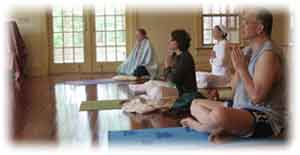
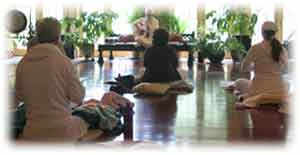
a beginning Kundalini Yoga student, you should go at a pace that suits
your flexibility and endurance. Practice at home - a one-hour morning
practice will prepare you for your day. If you can practice at the
same time each day, you will find that you improve rapidly. Take one
to three yoga classes a week and one workshop a month to establish
a firm foundation for an effective program that fits your needs, goals,
capacity and lifestyle.
Wear loose comfortable clothes to class, preferably of cotton or other
natural fiber. Bring an exercise mat or towel to sit on if you desire.
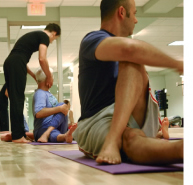
It is very important to make sure you go to the bathroom before class, and not during. Getting up in the middle of class is very disruptive
to the class-group energy. Remember to turn off your cell phone. It is also
important to try to stay still and not fidget during class, i.e.,
drink water, roll neck, etc., especially during meditation and when the teacher is speaking. This helps you to stay present and
have a deeper experience. It also demonstrates respect for the teacher. See Tips For KY Teachers.
Kundalini Yoga as taught by Yogi Bhajan
Student and Teacher Resources
IMPORTANT: Kundalini Yoga participants begin each
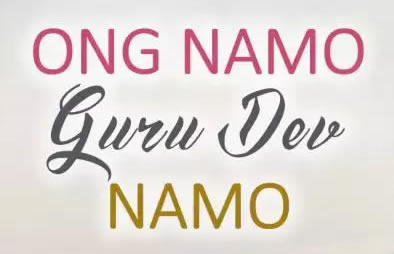
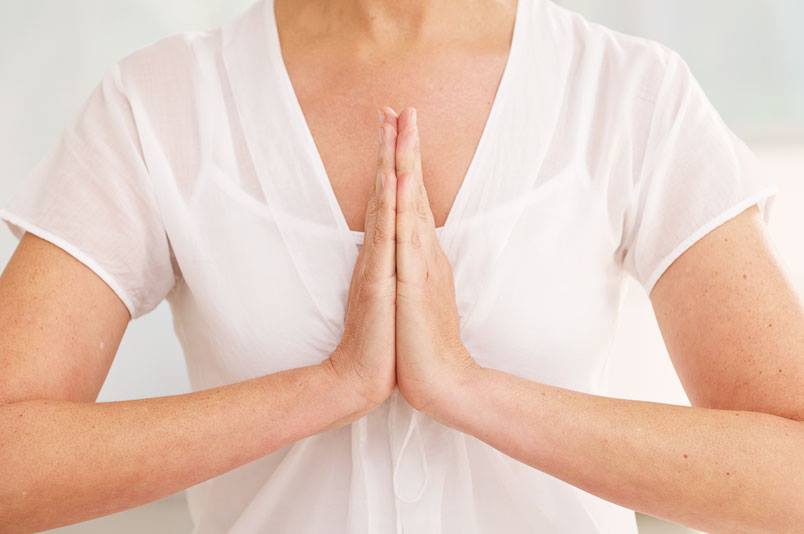
session by 'Tuning In'. Step 1) Rapidly rub your palms together for 5-10 seconds in order to stimulate the nervous system. Step 2) Chant the Adi Mantra, ONNNNG ... NAMO ... GURU ... DEV ... NAMO, three to five times, with your hands
in Prayer Pose, thumbs against the sternum.
"Do not just sing or otherwise express this mantra.
Consciously chant the words in such a way that your cranium resonates as if you are striking a Gong."Hari Singh Khalsa
"The Gong is the first and last instrument for the human mind. There is only one thing that can supercede and command the human mind, the sound of the
Gong. It is the first sound in the universe, the sound that created this universe. It's the basic creative sound. To the mind, the sound of the Gong is like a mother and father
that gave it birth. The
mind has no power to resist a Gong that is well played."Yogi Bhajan
Mantra is vibration. Energy vibrates. There’s a particular vibratory
frequency corresponding to every sound in the universe. By vibrating
a particular combination of sounds (syllables), you tune in to different
levels of your intelligence-consciousness.
Adi Mantra: The starting point of the Kundalini Yoga class-session, as indicated above, can be read as: "I open myself to
the experience beyond my limited self. Let my unlimited spirit and
consciousness guide me. I call on the subtle knowledge of my own highest
mind to uplift me with what I learn," or "I bow to the Creator,
to the Divine Teacher within."
Themeor Topic: Yoga has collected many practical guidelines to keep your life vital. Nutrition, exercise, proper sleep, meditation, breathing, body awareness,
and the relationship you have with your emotions are the basis of
some of these teachings. (Get
Deep Breathing app here.)
Warm-up exercises for 5 to
20 minutes usually follow.
Kriya, or exercise series, begins.
Kriya: A specially designed sequence of yoga exercises, each lasting
from one to three minutes (or longer in the case of White
Tantra Yoga). This series will "work out" a
certain component of your mind and body system -- be it your glandular
system, your nervous system, your organs or your muscular system.
At the end of the series, you will be consolidated in a new physical
and mental state. See How White Tantra Yoga Works.
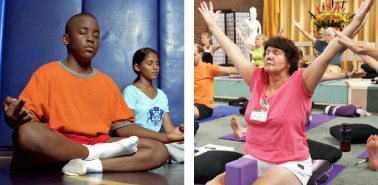
Meditation: Your
body will be transformed as a result of the kriya; your mind and emotions
will now be made calm and clear by directing the attention. You will
sense and develop your quiet mind, your ability to concentrate and
project. Meditation can be either silent
or chanted, sometimes accompanied with music. NOTE: It can last from five
to eleven minutes in a beginners' class; eleven to thirty-one minutes
in an advanced class.
Deep relaxation: It
is just as important to relax as to exercise vigorously. The exercises
and meditation will allow you to attain a deeper healing relaxation
than usual. It is an antidote for stress. Let your body become light
and beautiful. Let your mind become open and imaginative. Feel free
and joyous!
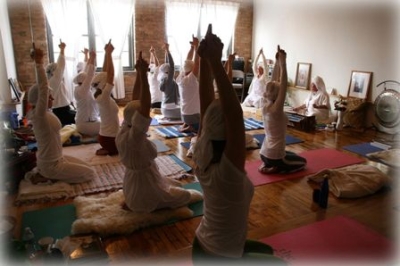
Class ends with group projection: After raising our energy and spirits, we now project this experience to the
whole world and to all those we love and care for. To do this, we sing
this song:
"May the long time Sun shine upon you ... all love surround you
... and the pure light within you ... guide your way on." See May The Long Time Sun history.
MySense
Hari Singh Bird
Check out these kriyas from the
Yogi Bhajan Library of Teachings. Note: Registration is required for access.
We
know consciousness can be lost when
you suspend breathing. What happens to your
consciousness when you expand
your breathing?
POINTS TO PONDER
"When
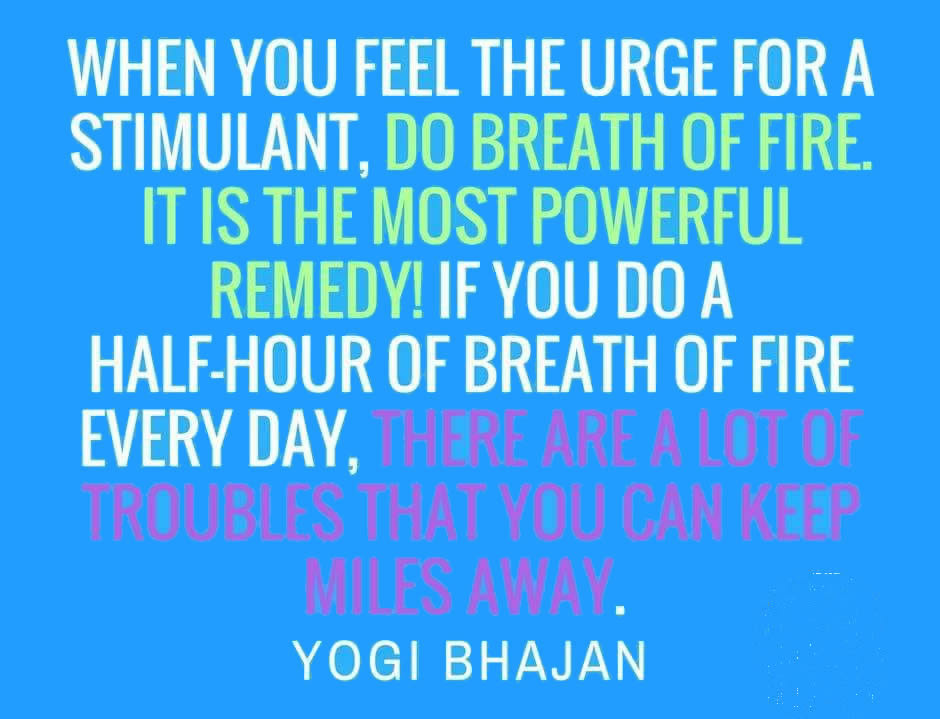
the breath is shallow, all problems come in.
Caffeine, nicotine, all these drugs are the problem
of the shallow breath. All those who crave sugar
and sweets are shallow breathers." Yogi
Bhajan
"Left
nostril breathing gives you self-endurance, self
effectiveness and self respect. Right nostril breathing
gives you projection, sacrifice, power to attach, power
to penetrate and power to exert. That is why God
has given you both nostrils." Yogi
Bhajan
"In
my experience as a teacher of Kundalini Yoga,
I have observed many people, young and old, with
poor breathing habits. The practice of Kundalini
Yoga (inclusive of the Breath of Fire, Long Deep
Breathing, Stretching, Internal Massage, etc.), and
other aerobic exercising, can provide additional
and much needed oxygen for oxygen starved
cells, especially in the brain." Hari
Singh
BREATH
OF FIRE
Benefits of Breath of Fire
) Cleanses the blood, the mucous lining of the lungs, and all the cells ) Expands lung capacity ) Strengthens all 72,000 nerves in the body ) Warms the body, activates the brain, and increase oxygen delivery ) Brightens the aura
Breath
of Fire is a commonly used breath in the practice of Kundalini Yoga. It is
done by pumping the navel point in and out while breathing rapidly
through the nose. On the inhalation, the navel point is extended. On the exhalation, the navel is pulled in towards the spine.
Note: At first it is easier to focus
on the exhale and start at a slow rhythm. Eventually you want to have
a rapid, equal and consistent breath. This breath strengthens the
nervous system, purifies the blood and energizes the body. See Cannon, Lion, and Whisper Breaths. See Video. See All
About Breathing.
THE
BANDHAS
The
Bandhas -- gateways to developing core strength, sensitivity, and subtlety
-- are fundamental to Kundalini Yoga.
Bandhas, or locks, are fundamental to Kundalini Yoga. Learning and
developing the skill and internal awareness necessary for the practice
of the three body locks bring both depth and effectiveness to yoga
practice. The locks, specific contractions of core areas of the body,
are indicated in many Kundalini Yoga meditations and kriyas (sequenced
yoga exercise sets). Applying the body locks properly will help you
clear blockages that impede the open flow of energy through your physical
body, Chakras, and subtle bodies. With a steady flow of energy, you
can bring harmony and balance to your life, you can have access to
your core values, and you can express yourself with integrity. Applying
the body locks heightens your awareness. See
video.
ROOT
LOCK Mul (Mool) Bandh
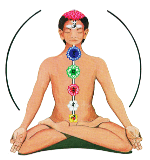
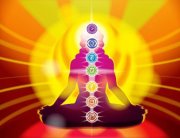
Root Lock is frequently used and closes off the lower 3 chakras and allows
the kundalini energy to rise.
To apply Root Lock: Contract the muscles
of the rectum, the sex organ and the navel point ... Pulling simultaneously in-and-up on the navel. See video.
NECK
LOCK
Jalandhar Bandh
Neck Lock is a basic lock applied throughout Kundalini
Yoga exercises unless you are moving the head, as in neck rolls, or
are otherwise instructed. Apply the neck lock during most pranayam,
breath control, practices and meditations, and while chanting. See
video.
To
apply Neck Lock: Sit comfortably with a straight
spine. Lift your chest and sternum
upward. Stretch the back of your neck
gently straight by pulling the chin in toward the back of the neck. Keep your head level and centered
without tilting forward or to either side. Keep the muscles of your face,
neck, and throat as relaxed as you can.
Neck Lock is automatically applied by the shift of relative position
between the chin and chest. Do not force your head forward or down. It is common for new yoga students to stretch the neck when other
parts of the body are not flexible. When you apply the neck lock,
you allow your neck to be open and maintain its natural structure,
which helps you maintain better spinal posture in general. The neck
lock also "seals" the energy that is generated in the upper
areas of your brain stem, so it becomes easier to focus and meditate.
Note: Jalandhar Bhand, applied consciously and correctly,
is said to help "untie the Knot of Shiva." This 'knot'
or gateway is located at your brow point. When the energy of this
knot is untied and flowing, you feel free of time and space. You associate
yourself with the timelessness and non-duality of the soul and the
Divine essence.
DIAPHRAGM
OR NAVEL LOCK
Uddiyana Bandh
Diaphragm Lock: Here, your
diaphragm muscle forms both a physical and energetic barrier between
your heart and your lower torso. Below this barrier are your lower
Chakras, the ones that relate to behaviors that are more unconscious
or reactive. Above this barrier are your upper Chakras, the ones that
relate to behaviors that are more conscious and aware. See
video.
To
apply Diaphragm Lock: Be sure you do not have a full
stomach. Apply this lock only with your
breath fully exhaled - holding your breath out. Sit comfortably with a straight
spine. Inhale deeply and exhale completely
through the nose. Hold the breath out. Pull your entire abdominal
region, especially the area above your belly button, back toward your
spine. Keep your chest lifted and
do not allow your chest to collapse downward. Press the lower thoracic spine
forward gently. Keep the lift strongly applied
for 10-60 seconds, according to your ability, without strain, and
maintain a concentrated sense of calm. See Cautionary Note. Release the lock by relaxing
your abdomen and gradually inhaling.
Diaphragm Lock, Uddiyana Bandh, helps to strengthen your digestion
by increasing the fire element, the element of transformation in your
abdominal region. This helps your heart center - your Heart Chakra
- to open and flow with energy. When your Heart Chakra is open, you
have the ability to be sensitive, compassionate, and kind.
Note: Uddiyana Bandh correctly and consciously,
it is said to "untie the Knot of Vishnu," The knot of Vishnu
is located at the Heart Chakra, the area of your rib cage, heart,
lungs and thymus gland. When the energy is no longer knotted at this
center, but is flowing and open, it is said you can feel the playfulness
of your life, and the larger cosmic plan with perspective and relaxation.
VIDEOS OF THE BASICS
THE LOCKS
Guru Prem Singh demonstrates the Mool Bandh
Root Lock as taught by Yogi Bhajan
Guru Prem Singh demonstrates the Uddiyana Bandh
Navel Lock as taught by Yogi Bhajan
Guru Prem Singh demonstrates the Jalandar Bandh Neck Lock as taught by Yogi Bhajan
Guru Prem Singh demonstrates the Breath of Fire
Pranayama as taught by Yogi Bhajan
SPINAL FLEX
Guru Prem Singh demonstrates the Spinal Flex
as taught by Yogi Bhajan
*NOTE: Pranayam or pranayama, is a Sanskrit word meaning "restraint
of the prana or breath". The word is composed of two Sanskrit
words, "Prana", life force, or vital energy, particularly,
the breath, and "ayama", to suspend or restrain. It is
often translated as control of the life force (prana). When used
as a technical term in yoga, it is often translated more specifically
as "breath control".
Things come out of you in three ways: in anger, in love and in your tiredness. Mostly you mess up when you are tired. When your energy is weak you have no defenses and you fall apart. You are suppose to have 21 percent oxygen in your blood. Normally you live on 15 to 16 percent. You don't do pranayam or Breath of Fire. You are supposed do do it every 3 or 4 hours, just for a minute or two, to oxygenate your blood and balance yourself so that you don't have to do this: "Oh my God!" -- Yogi Bhajan 7/12/1989
MySense
Hari Singh Bird
CAUTION
About Shakti Pad
Sat Nam! Yogi Bhajan frequently warned about the inevitable drift of many students away from Kundalini Yoga as he was taught and as he taught us. The emergence of Shakti Pad is a normal consequence of 'riding the tiger,' the Path. However, students, as Yogi Bhajan points out, must be alert to its signs and take appropriate actions.
The worst case scenario is to fall into the trap of convincing yourself and others that either you know a better way, or that the old way needs to change, going forward. Beware of the tiger's bite! Check out the commentary below and be well! --
"Spiritual Practice at a Plateau? You may be at Shakti Pad.
Are you feeling withdrawn from your practice or from the people in your yoga community? Feeling that you have outgrown the teachings? Feeling like you are better than others? Doubting your spiritual path?
Then you may be in Shakti Pad. This is a natural stage on the spiritual path. This is a very critical part as this is the fork in the road for many. Some will fall away from their spiritual practice here, others will stay here and then there are those that will transcend to higher stages.
Shakti Pad, as Yogi Bhajan taught, is a stage where the student has gained some power from their spiritual discipline. This power could be deeper intuitive awareness, control over the subconscious mind, a stronger sense of yourself, etc. Now you are feeling like you made it. You think that you are a “Master.” This feeling is the glitter at the bottom of the ladder as Yogi Bhajan has said. You are very much caught up in how important you think you are, that you cannot see beyond your own limited self. This is where people can start to think they are God’s gift to yoga and that they are better than others. The teachings are much bigger than any one individual. See Antidote.
Every spiritual master has gone through Shakti Pad.* It is an important step along the way. It is a major test too. Can we let go of ourselves to something bigger? When we think we know it all, then we shut ourselves off from new information. There is so much to learn and we can want to control the little we think that we know.
*WEBMASTER'S NOTE: For assistance in crossing safely and successfully through Shakti Pad, chant this mantra.
Ardas Bhaee Amar Das Guru,
Amar Das Guru Ardas Bhaee,
Ram Das Guru Ram Das Guru,
Ram Das Guru, Sachee Sahee.
Guru Amar Das hears the prayer and Guru Ram Das confirms it.
Remember when you first started your practice? Everything was fun, new and exciting. However there was no real responsibility. You can show up when you want to and don’t have to commit to anything. However like in any relationship, the honeymoon period ends. You begin to deepen your practice and everything isn’t so new and exciting. It is actually hard work. The deeper you go, the harder it gets because your awareness is that much greater. Your responsibility grows. Many get discouraged at this point because there is a misconception that the deeper you get, the easier it gets. If reality was easy, the world wouldn’t be running away from it.
With Shakti Pad comes the challenge of responsibility. You know and therefore you are responsible. When first starting out in the practice, a student is dependent on the teacher. Shakti Pad is the period where the training wheels start to come off. You now must trust in the teachings and follow through on them. What you have learned are no longer just “cool ideas” but have to be applied.
This is the stage where we have to remain committed and faithful in the bigger picture to our practice.
Yogi Bhajan gave a meditation to help get past Shakti Pad called, “The Complete Adi Mantra for Individual Meditation” which can be found in the Aquarian Teacher Training Manual.
Mudra: The hands are in Gyan Mudra with the thumbs touching the index fingers. The sides of the left and right hands are touching. The elbows are at the rib cage and the palms are open and held at a position around the heart center, upwards, and towards the face.
Mantra: Chant the full Adi Mantra 3-5 times per breath.
Using a recording helps to deepen your practice and take you further into the Naad. It’s like a performance enhancing tool. There's a recording you can use with your practice to help you chant along. See Ignite Your Light by Sat Kirin Kaur Khalsa." -- Source. See Science of Mudra. See Science of Mantra.
SIGNATURE
EXERCISE OF KUNDALINI YOGA
Stretch Pose with Breath of Fire
Enhances Endurance and Self-Control
Strengthens Naval Point and Pelvic Floor
“The
pelvic bone is where the breath of life is triggered and where
the breathing power of the pranic body is found. The lungs are
the
cleansing processors, the diaphragm is an aid to that process,
and
it is through the spinal column that the energy flows.“ --Yogi Bhajan
Stretch Pose
One posture unique to Kundalini Yoga and used frequently is Stretch Pose. Although it can be challenging, when done correctly it has a tremendous effect on the entire body. Stretch Pose activates the third chakra. By working on the navel point, stretch pose resets the entire nervous system and strengthens the abdominal area. In conjunction with Breath of Fire, it is calming, rejuvenating, and it purifies the blood. By working on the third chakra, it boosts resolve and self-esteem.
Lie on your back. Raise your head and heels 6 inches off the floor. Focus the eyes on the toes and stretch the toes so they point away from you. Place your arms either above your thighs with the palms facing down but not touching the legs, or along side your legs with the palms facing your body but not touching. Fix the gaze on the toes. Begin Breath of Fire.
In many sets, this posture is held for 1-3 minutes. Most people can muscle through the first 30 seconds or so, then the body may start to shake and the face may go into contortions, and then collapse into relaxation mode. Beginners are not expected to hold this posture for the 3 minutes.
Mastering the Posture: First, understand that even though this posture takes some physical strength, it isn’t physical strength that keeps you up. It’s the navel center and the breath that gets you through. If you engage proper technique it takes less, not more, effort to go the distance.
The Lower Back and Legs: To create better stability in the posture, press your lower back into the floor as you raise the legs and apply a slight root lock. This action draws the navel center in and keeps the lower back in constant contact with the floor. It also brings the focus of the exercise to the navel center and provides the necessary base for the posture. Keep your toes pointed and feel the stretch from the navel center all the way down to your feet.
The Chest and Head: To raise your chest and head, first lengthen the back of your neck and bring the chest and head off the floor at the same time, then pull the chin into the throat into neck lock. This brings the heart center off the floor and creates a counter stretch from the navel center to the top of the head. If your head comes up too far, you put pressure on the heart and make it harder to keep your lower back on the floor. Mindfully lengthening your neck will help counter this tendency. Your upper body is stretching toward the top of your head and your lower body is stretching toward your feet. The navel center becomes the balance point or fulcrum of your body.
The
Breath: Your
breath doesn’t need to be overly rapid; it should remain
at a steady pace throughout the exercise. Notice that breathing
faster doesn’t make the time go by faster. Maintain a rate
of 2 to 3 breaths per second and mentally chant the mantra Sat
Nam or God and me, me and God are one. If you can focus on the
breath and the mantra, and relax the muscles that aren’t
needed, the time will fly by! See GodAndMeMeAndGodAreOne.com. See All
About Breathing.
As you get more proficient in the posture, investigate different areas of your body and discover the muscles you don’t need to use to maintain the posture and relax them. For example, the muscles in the face are not holding up the legs, so try relaxing them; try a little smile. The energy released from the face can be used by the muscles that are actually needed to maintain the pose. As in all postures, be relaxed yet focused.
Finish: Inhale deeply, exhale, and relax completely in dead man's pose, letting go of any stress or tension points, for at least the same amount of time as the exercise.
Stretch Pose Tips: For beginners, 3 minutes of Stretch Pose is likely close to impossible. Here are some simple techniques to gain confidence:
Place your hands underneath your buttocks, this gives support to the low back and makes it easier to keep the legs up. Raise one leg at a time, and then switch after a minute or so. Or try bending your knees slightly.
You may want to start with alternating 10 seconds in Stretch Pose and 10 seconds resting. Build up your time slowly and rest for 1-3 minutes when you finish. As you feel yourself getting stronger, increase the hold time and decrease the rest time.
In other words, and for the sake of clarity.
Place your hands underneath your buttocks, this gives support to the low back and makes it easier to keep the legs up.
Raise one leg at a time, and then switch after a minute or so. Or try bending your knees slightly.
You may want to start with alternating 10 seconds in Stretch Pose and 10 seconds resting. Build up your time slowly and rest for 1-3 minutes when you finish. As you feel yourself getting stronger, increase the hold time and decrease the rest time.
Finally, allow your body to work into the posture, experimenting with these suggestions until you have built up the necessary strength of body and mind.
Benefits of Stretch Pose:
Adjusts and strengthens the navel point, your power center Tunes-up your nervous and digestive systems Strengthens the reproduction organs and glands
Contraindications for Women: Stretch Pose puts extra pressure on the female reproductive organs. Do not practice Stretch Pose in the following circumstances:
After first 120 days of pregnancy Under any pregnancy complications During the first few days of woman’s moon cycle
SIGNATURE EXERCISE OF KUNDALINI YOGA Ego Eradicator with Breath of Fire
Energy Booster and Aura Builder
Practice this exercise in early AM, at mid-day, or before meditating.
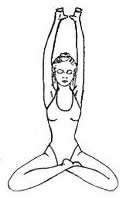
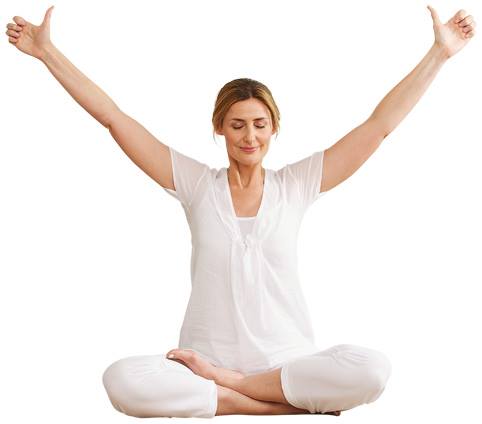
NOTE: In this Ego Eradicator posture, the thumbs are pointing straight up, fingers scrunched on the pads of hands at the base of the fingers, with the thumbs at a 90 degree angle to the rest of the fingers, and the knuckles are pointed out to the sides.
Posture: Sit on heels, in Rock Pose, or with legs crossed in Easy Pose, or sit on a chair with your feet flat on the floor.
NOTE: With Shakti Pad comes the challenge of responsibility. You know and therefore you are responsible. When first starting out in the practice, a student is dependent on the teacher. Shakti Pad is the period where the training wheels start to come off. You now must trust in the teachings and follow through on them. What you have learned are no longer just “cool ideas” but have to be applied. This is the stage where we have to remain committed and faithful in the bigger picture to our practice.
Yogi Bhajan gave a meditation to help get past Shakti Pad called, “The Complete Adi Mantra for Individual Meditation”, which can be found in the Aquarian Teacher Training Manual.
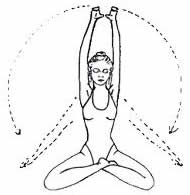
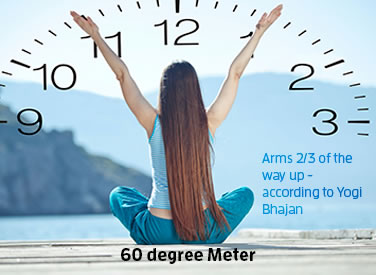
Apply the Neck Lock. Keep arms straight and lift the arms up to an angle 60 degrees. Draw the shoulder blades down over the back of the ribs, so the shoulders are pressed away from the ears. Curl the fingertips onto the pads of the palms, with the Thumbs stretched Straight UP above the head. Thumbs DO NOT point at each other. Breath of Fire for 1-3 minutes with eyes closed.
Finish: Inhale deeply, hold the breath, concentrate on the spot one feet above the head as you touch the thumb tips together above your head. Exhale while slowly sweeping the arms down to your side. Relax.
Do's and Don't's:
Do not bend the elbows. Stretch up from the shoulders. Do not arch the spine. Check the angle of the arms. There's a tendency to hold the arms lower than 60 degrees.
SIGNATURE EXERCISE OF KUNDALINI YOGA Archer Pose
Gain Steadiness and Courage
Develops the qualities of a Warrior
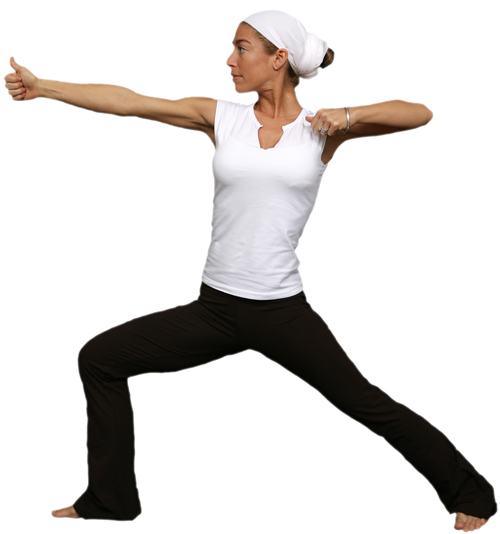
From a standing position, bring the right foot about 2 to 3 feet in front of the left foot. Turn the left foot outwards 90 degrees so it is at a right angle with the right foot. Keeping the right knee over the right ankle, draw the navel back towards the spine, strengthening the lower abdominals and elongating the lower back. This position opens and strengthens the hips. From the balanced position of the hips, the torso stays perpendicular to the ground. Keep the left leg straight.
Curl the fingers of both hands into the palms, stretch the thumbs upward, a yogic thumbs up sign. As if you were holding a bow with your right hand, stretch the right arm out in front of you feeling a connection to the chest, then pull back on the left hand as though you are pulling back on the string of a bow, bringing the hand alongside the back shoulder, keeping the elbow parallel with the hand, you may feel a stretch across your chest and in your armpit.
Elongate the spine by using root lock (mul bandh) to root the spine and neck lock (jalandar bandh) to draw the straight, the chest will lift, shoulder blades move away from the ears, and the chin draws back allowing the spine to open at the base of the skull. Then turn the head to focus at the right thumb. This posture is repeated on both sides.
Duration: 1 to 3 minutes
Benefits: Strengthens the nervous system Builds power in the legs and navel Opens the hips, allowing for deep core strength Devlops steadiness and focus Devlops courage
SIGNATURE EXERCISE OF KUNDALINI YOGA Yogi Bhajan has called Sat Kriya one of the
most powerful in all of Kundalini Yoga.
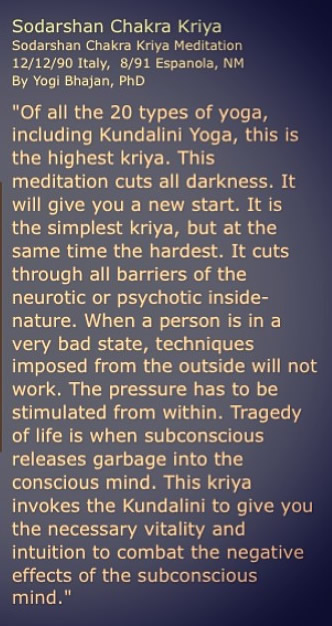
SODARSHAN CHAKRA KRIYA To Cut Through All Darkness
Posture: Sit with a straight spine.
Block yout right nostril with your right thumb. Inhale slowly and deeply through your left nostril. Hold the breath. Mentally chant, “Wha Hay Guroo” 16 times. Pump the navel point 3 times with each repetition, once on “Wha,” once on “Hay” and once on “Guroo” for a total of 48 unbroken pumps.
Unblock the right nostril.
Block off the left nostril with the right index finger (pinkie can also be used) and exhale slowly and deeply through the right nostril.
Continue.
Eyes: Fix gaze at the tip of the nose.* (NOTE: Sodarshan Chakra Kriya is NOT to be done with the eyes closed.)
Finish: Inhale deeply, hold 5-10 seconds, and exhale. Then stretch and shake every part of your body for about 1 minute so that the energy can spread.
Time: No specific time, no place, no space, no condition is attached to this mantra. Each garbage pit has its own time to clear. If you are going to clean up your own garbage, you must estimate and clean it as fast as you can, or as slow as you want. You have to decide how much time you have to clean up your garbage pit, but start practicing slowly - the slower the better. Start with five minutes a day, and gradually build the time to either 31 or 62 minutes. Maximum time is 2 1/2 hours for practice of this meditation.
*Note: "When your two eyes concentrate on the tip of the nose, the mind stops
flirting around." Yogi Bhajan
KRIYA To Develop Your Hidden Greatness
PART ONE
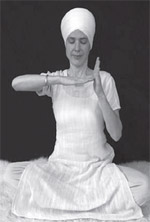
Mudra: Sit straight. Left hand comes under the chin palm down, forearm
parallel to the floor; the right hand comes to meet the middle finger
of the left hand at the center of the palm, fingers pointing up to
the sky (hands make a T). Hands are long and straight, fingers together.
You are bifurcating the angles.
Eyes: Gaze at the tip of the nose.*
Breath: Long Deep Breath; breathe from the lower area of the belly;
breathe out through a round mouth. Yogiji demonstrates a very long
inhalation, from the lower belly to the collar bones. You expand with
the breath about an inch and a half. Continue for 20 minutes. This
is the most sacred exercise in Kundalini Yoga and gives people the
entire Universe.
*Note: "When your two eyes concentrate on the tip of the nose, the mind stops
flirting around." Yogi Bhajan
PART TWO
Switch
hands: Right hand comes under the chin palm down, forearm parallel
to the floor; the left hand comes to meet the middle finger of the
right hand at the center of the palm, fingers pointing up to the sky
(makes a T). Hands are long and straight, fingers together.
Mudra: Bring the thumbs just above the eyebrows at either side of
the Third Eye Point. Press the thumbs into the brow and allow the
hands to be in Prayer Pose or Anjali Mudra.
Eyes: Tip of the nose.
Mantra: Chant with Ong Namo by Nirinjan Kaur. Continue for 1-1/2 minutes.
Whistle with the breath. Continue for 1-1/2 minutes.
Maintain Mudra: Begin Long Deep Breathing and exhale through the
rounded mouth, as in Part One. Continue for 3 minutes. Then...
Begin Breath
of Fire. With arms at 60 degrees, hands open and palms facing the sky. Use the strength of the navel. Continue for 30 seconds. Inhale deeply and put both hands in the lap, right hand resting in the
left. Relax the breath. Become thoughtless. No thought.
"I forgive
my thoughts; I forgive the Universe; I forgive my friends." Forgiveness
should override everything. Whatever is bothering you, whatever you
ate, whatever you don't like, right now just feel an angel is before
you and you are willing to go with him and merge in infinity. Are
you afraid? Just drop the fear and proceed. All negativity, all negative
thoughts must go thoughtless.
"I am pure; I am divine; I am human:
I am a creature of god. My faculties are divine." Continue for 2 minutes.
Finish: Inhale deep. Squeeze. Exhale Cannon Breath (powerful breath
through open mouth). Do this 3 times. Squeeze everything, ears, eyes,
everything.
As taught by Yogi Bhajan on May 14, 1997
FIRE KRIYA
Beginning
in 2008, we entered a 5-year sequence, featuring the tattvas so that
we could balance them as we entered the Aquarian Age together. This
year we are exploring the Fire Tattva. The Fire Kriya shown below
creates tapa (internal “heat”) which purifies so that
your energy is clear, your body fit, and your eyes bright. In the
spring of 1978, Yogi Bhajan said that the Fire Kriya, “is a
powerful, absolutely sacred, secret meditation. It will take you as
far as you take it.”
Posture: Sit straight in a meditative posture with neck lock.
Eyes: Eyes are closed except for small slit to let in some light
(99% closed).
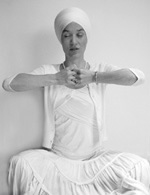
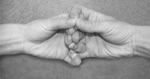
Mudra: Reverse Finger Lock—interlace the fingers so that both
the fingers and the palms point toward the chest. Keep the fingers
as straight as you can; bring the fingers together so that the pads
of the fingers are touching. Right index finger on top; left little
finger on bottom, the thumb tips touch lightly. The mudra is held
with the elbows at natural shoulder level so that the fingers point
toward the body, at the level of the throat, above the heart. The
shoulders should feel relaxed as you keep the elbows, forearms and
hands parallel to the floor.
Mantra: Inhale deeply and chant four times on the breath in a steady
tone: Sat Naam Sat Naam Sat Naam Sat Naam Sat Naam Sat Naam Whaa-Hay
Guroo.
Finish: Inhale deeply, stretch the arms over your head, shake your hands, exhale, and relax.
. Sit in easy pose, take four long deep breaths. On the fifth, turn the chin over the left shoulder and hold briefly, exhale quickly and turn the chin over the right shoulder and hold briefly. Continue without the long deep breaths you started with for 1 minute. Extend to 3 minutes with practice.
. Still in easy pose, stretch one leg straight out and bring the other foot flat on the floor and hug the knee close to the chest with both arms. Inhale deeply and lift the straight leg up as high as possible, exhaling slowly as your lower leg. Do this no more than 50 repetitions. Switch sides and repeat.
. Stand up and raise alternate knees to the chest 20 times, each leg, synchronizing powerfully with the breath, touching each knee to the chest. Stimulates the pituitary gland.
. Cat and Cow. On your hands and knees, powerfully arch the spine in both directions as you inhale (spine down, head back and up) and exhale (spine up, head down). Redirects sexual energy from the lower to the higher chakras.
.Sat Kriya for at least 3 minutes - can be built up to 11 minutes. To finish, inhale deeply, hold, apply rootlock, bringing the diaphragm towards the spine, neck straight, arms stretched toward the sky, hold, release, 3 times.
How much of a Kundalini Yoga wizard are you? Pick the response you think answers the question.
. Which two polarities combines to generate Kundalini? ) Shakti and Bhakti ) Yin and yang ) Body and soul ) Nerves and glands ) All the above
. Where does the process of Kundalini begin? ) Navel Chakra ) Thousand-Petal Lotus ) Heart Chakra ) Root Chakra ) All the above
. What are chakras? ) Energy distribution centers ) World views ) Spinning vortices of prana ) Nodes in the nadi network ) All the above
. Enlightenment is: ) A deep breathe ) Remembering to remember ) Service with a smile ) An attitude of gratitude ) All the above
. Why has the previously secret practice of Kundalini Yoga been taught openly in the last 45 years? ) People are greatly in need of something, which works ) History is coming full circle (See Signs of Kali Yuga.) ) The Powers That Be are Spiritual Santa Clauses ) Spirit finds a way ) All the above
. What's the number one meditation in Kundalini Yoga? ) Sodarshan Chakra Kriya ) Inhale Sat exhale Nam ) Laya Yoga chanting ) Trishula Kriya ) All the above
. What's the goal of Kundalini Yoga? ) To be firing on all cylinders ) To be healthy and happy ) To fine tune your frequency ) To be a better citizen ) All the above
. Kundalini is the yoga of: ) Self-Reliance ) Awareness ) Nerve Strength ) Life as we know it ) All the above
. Kundalini was-is practiced by: ) Guru Nanak ) The Nath Yogis ) 3HO Foundation ) Sikhs ) All the above
Answers: . Shakti is energy. Bhakti is devotion. Yin and Yang are Universal constants in an eternal dance of delight. Body and soul need to be reconciled for a life well lived.
. The Navel sends energy to the base of the spine. Cosmic energy flows in through the solar center at the top of the head. When our finite identity relates to Infinity everything unfolds.
.Chakras are simultaneously: energy warehouses; the frequency at which we perceive the world; doorways to dimensions; the automatic transmission for the vehicle of life. (See You Have 10 Bodies.)
. Enlightenment is not an absolute, but it is influenced after the fact by our legacy and by the choices we make.
. In the Aquarian Age "secret," practices are no longer necessary.
. Every meditation is the Number One Meditation in Kundalini Yoga. It's not the technique, which matters so much as the intention, devotion, execution, mastery, and energy you bring to it.
. The goal of Kundalini Yoga is to help us live in our natural state everyday. We were designed to be bountiful, beautiful and blissful.
. Kundalini Yoga is the yoga of inner toughness and stamina, and outer compassion and grace.
.Guru Nanak revived Kundalini Yoga in the 1400's and taught it to people just like us. The Nath Yogis were traditionally the R and D yogis of the yoga world. --
NOTICE
CAUTION: After you have the physical movements of pranic breathing down... one cautionary note before you begin: If you have high blood pressure, you should not hold your breath longer than one second. Although pranic breathing stimulates the navel, which is the body’s primary storehouse of prana, it also stimulates the Meng Mein Chakra, which is located opposite the navel on the back. The meng mein controls blood pressure. Thus, for people with hypertension, a longer breath retention could increase their blood pressure beyond their safety range. Master Stephen Co
Hari Singh's career as an Optician began in 1958 following his active duty with the U.S.
Marine Corps. Although currently retired, he holds active Optician
licenses in Florida and Arizona. He is certified by the American
Board of Opticianry (ABO), and National Contact Lens Examiners (NCLE).
Hari Singh is a passionate advocate of a) the resurgence of Opticians as highly skilled Health Care Professionals as
opposed to today's Dispensers who are trained mostly as eyeglass merchants,
b) resurgence of the Full Discovery and Disclosure Life-style
Interview and Design of prescription eyewear, c) the conscientious
and tactile Hands-on-the-Patient design
and delivery of prescription eyewear, and most importantly, d)
the soon-to-be-lost hands-on training of aspiring Opticians in the art of custom designed lenses and the custom fitting of eyeglass
frames and contact lenses.
Note: Hari
Singh taught the first-ever Kundalini Yoga and Meditation prison classes to inmates at the Orange County jail in Orlando, Florida, 1971-1972; followed by the first-ever classes at the Florida State Prison in Bushnell, Florida; followed by the first-ever classes at the Colorado State and Federal prisons in the mid-70s.
QUOTES
"A daily Sadhana practice is a must for any yoga teacher. Yogi Bhajan is consistently insistent on the practice of daily
Sadhana. This daily practice must however, be sustainable. It must
include the exercises, pranayam, meditation and duration that conforms
with the individual's ability to accomplish the practice each and every day.
A regimen, which isn't sustainable, is worthless. One's commitment to Sadhana
must be steadfast, but realistic...a doable, sustainable challenge." Hari
Singh
"In
my experience as a teacher of Kundalini Yoga, I have observed many
people, young and old, with poor breathing habits. The practice of Kundalini
Yoga (inclusive of Breath
of Fire, Long Deep Breathing, Stretching, Internal
Massage, etc.), and other aerobic exercising, can provide additional and much
needed oxygen for oxygen starved cells, especially in the brain." Hari
Singh
"It is incumbent on those who know to teach those who do not know." Hari
Singh
"The
mere act of teaching implies that one wishes the world well." Roger
Rosenblatt
"In
each and every environment, good
health and sustained wellness is dependent
on the rapid removal of waste. In
terms of your
personal health, you need to void solid waste two to
three times a day, or once between each meal, without
straining, in order to sustain health and wellness. Toxins
are rendered harmless if removed from the body quickly.
Sustainable health and wellness is defined as a human condition
wherein the rapid removal of waste is the norm." Dieterata.com
“It
is the job of a spiritual teacher to
poke, provoke, confront and elevate."
"May
I tell you something? There is only one
thing you should know. Conquer yourself."
"The
more Prana (breath of life) the
body consumes, the more wealth comes.
It's a simple law: inhale the entire Prana,
and push out all the weakness and disease."
“When
the breath of life becomes short, you
become short-tempered. When the breath of life
becomes long and deep, you understand who you are."
"Yoga
is the science to unite the finite with Infinity,
and it is the art to experience Infinity in the finite.
So all those who practice Kundalini Yoga don’t have to
create different definitions. This is it, straight and simple."
"Discipline
should never be rigid. Discipline should be
self-acknowledging, so that you can go along with it."
"You
must know reality by intuition, not by knowledge."
"No
matter how good the diet is, we tend to exceed the
self cleaning capacity of our bodies. Uric
acid, (a by product of meat consumption), calcium crystals,
and many other wastes
and poisons get stored in tissues and joints. They make us stiff and
may cause many diseases. In Kundalini
Yoga, muscle stretching
along with internal massage brings waste back into circulation so
that the lungs, intestines, kidneys
and skin are able to remove it."
"When
your breath is eight times a minute you are near God.
When it is four times a minute you are the perfect image of God.
When you breathe one breath per one minute you are the living God."
"If
you do not breathe consciously for 11 minutes a day, you lose 40%
of the vitality of life. This 40% you cannot recapture by any medicine
or any exercise. But if you do breathe consciously for 11 minutes
and make it very long, deep and slow, that can do exactly what no
miracle can do, because your life is based on the breath of life."
"Your
thinking pattern is based on what you normally speak.
If you speak the word of God, your thinking patterns will
become divine. The nerves create the patterns of the
brain function by the movements of the tongue."
"The most precious thing in the human body is the breath.
A meditation which cannot bring normalcy and equilibrium to your
breathing is useless, because the rate and length of the breathing will
determine the rate of secretion of your glandular system, and that secretion
will give you physical stability. Physical stability will then give you mental
stability, and mental stability will project the radiance of the spirit, the soul in
you. And when the spirit becomes radiant and healthy, you will look spiritual."
"The
two most important things in your body are the upper palate, which
is the base of the hypothalamus, because the hypothalamus controls
the entire nervous system, and the tip of the tongue, which affects
the
central nerve channel, shushumna.
That controls your entire psyche."
"Brush gums and tongue and then take your finger or brush and press
the back of the tongue to make a gag and bring up mucus from the monkey glands. This mucus has to come out; otherwise it will
go back into body and pollute your system. Rinse and smile!" Quotations from Life According To Yogi Bhajan
*Consultation
with a health care professional should occur before applying adjustments
or treatments to the body, consuming medications or nutritional supplements
and before dieting, fasting or exercising. None of these activities
are herein presented as substitutes for competent medical treatment.


 FACTOID



 Adi Mantra: The starting point of the Kundalini Yoga class-session, as indicated above, can be read as: "I open myself to
the experience beyond my limited self. Let my unlimited spirit and
consciousness guide me. I call on the subtle knowledge of my own highest
mind to uplift me with what I learn," or "I bow to the Creator,
to the Divine Teacher within."
Adi Mantra: The starting point of the Kundalini Yoga class-session, as indicated above, can be read as: "I open myself to
the experience beyond my limited self. Let my unlimited spirit and
consciousness guide me. I call on the subtle knowledge of my own highest
mind to uplift me with what I learn," or "I bow to the Creator,
to the Divine Teacher within." Theme or Topic: Yoga has collected many practical guidelines to keep your life vital.
  Warm-up exercises for 5 to
20 minutes usually follow.
Warm-up exercises for 5 to
20 minutes usually follow. Kriya, or exercise series, begins.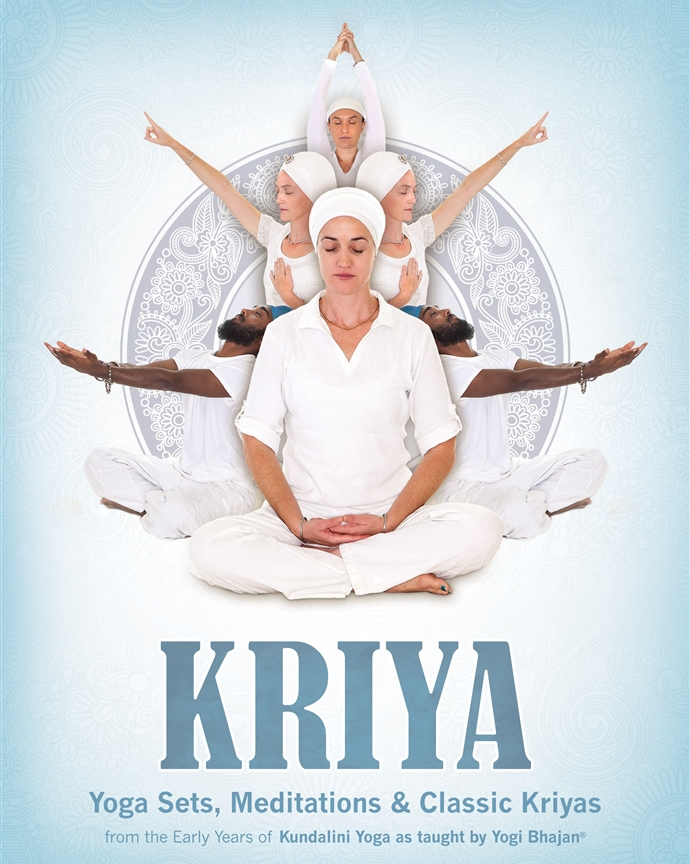
 Meditation: Your
body will be transformed as a result of the kriya; your mind and emotions
will now be made calm and clear by directing the attention. You will
sense and develop your quiet mind, your ability to concentrate and
project.
Meditation: Your
body will be transformed as a result of the kriya; your mind and emotions
will now be made calm and clear by directing the attention. You will
sense and develop your quiet mind, your ability to concentrate and
project. Deep relaxation: It
is just as important to relax as to exercise vigorously. The exercises
and meditation will allow you to attain a deeper healing relaxation
than usual. It is an antidote for stress. Let your body become light
and beautiful. Let your mind become open and imaginative. Feel free
and joyous!
Deep relaxation: It
is just as important to relax as to exercise vigorously. The exercises
and meditation will allow you to attain a deeper healing relaxation
than usual. It is an antidote for stress. Let your body become light
and beautiful. Let your mind become open and imaginative. Feel free
and joyous! Class ends with group projection: After raising our energy and spirits, we now project this experience to the
whole world and to all those we love and care for. To do this, we sing
this song:
"
Class ends with group projection: After raising our energy and spirits, we now project this experience to the
whole world and to all those we love and care for. To do this, we sing
this song:
" Ajna Stimulation Kriya
 ) Cleanses the blood, the mucous lining of the lungs, and all the cells
 ) Expands lung capacity
 ) Strengthens all 72,000 nerves in the body
 ) Warms the body, activates the brain, and increase oxygen delivery
 ) Brightens the aura
 Contract the muscles
of the rectum, the sex organ and the navel point ...
Contract the muscles
of the rectum, the sex organ and the navel point ... Things come out of you in three ways: in anger, in love and in your tiredness. Mostly you mess up when you are tired. When your energy is weak you have no defenses and you fall apart. You are suppose to have 21 percent oxygen in your blood. Normally you live on 15 to 16 percent. You don't do pranayam or
  --
-- 


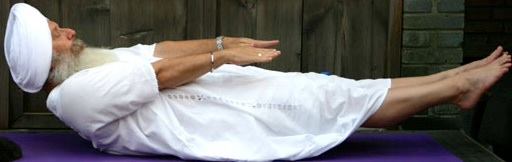
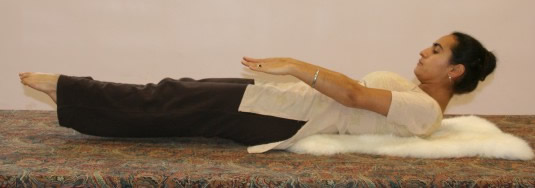

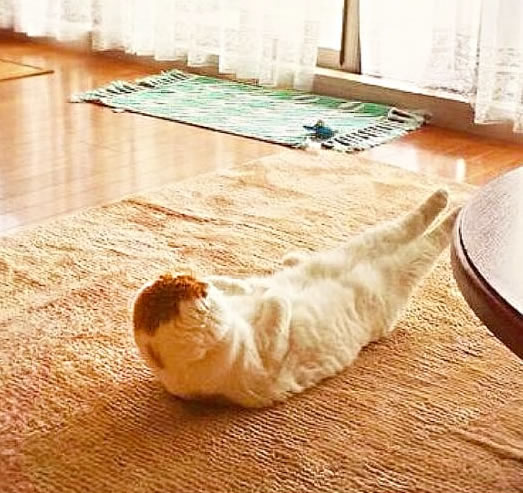
 Focus the eyes on the toes and stretch the toes so they point away from you.
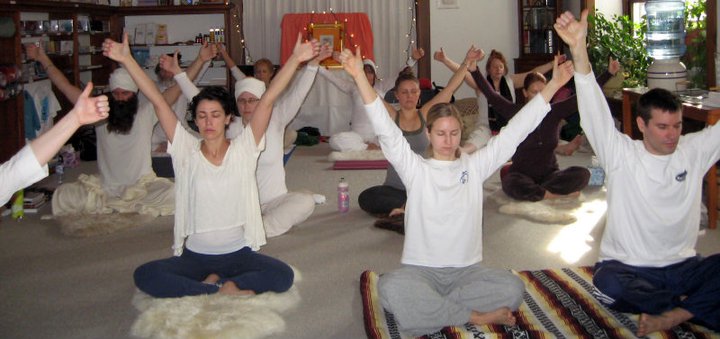
 Posture: Sit with a straight spine.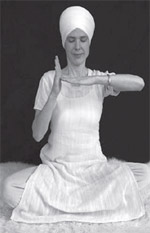

 ) Shakti and Bhakti
 ) Yin and yang
 ) Body and soul
 ) Nerves and glands
 ) All the above
 . What's the number one meditation in Kundalini Yoga?
 . What's the goal of Kundalini Yoga?
 . Kundalini is the yoga of:
 . Kundalini was-is practiced by:
  CAUTION: After you have the physical movements of












 *Consultation
with a health care professional should occur before applying adjustments
or treatments to the body, consuming medications or nutritional supplements
and before dieting, fasting or exercising. None of these activities
are herein presented as substitutes for competent medical treatment.
*Consultation
with a health care professional should occur before applying adjustments
or treatments to the body, consuming medications or nutritional supplements
and before dieting, fasting or exercising. None of these activities
are herein presented as substitutes for competent medical treatment.