|
If I took an apple and injected it with aluminum, phenol, thimerosal (mercury), acetone, and billions of bacteria and viruses...WOULD YOU EAT IT? If you answered NO...how can doctors justify INJECTING it into your muscle, which gets into your blood, which circulates around the body, which exposes all your major organs and tissues to everything in the vaccine? Common sense tells us this is NOT SAFE! So, ask your doctor the next time he/she wants to inject your kids with a vaccine. Here's why A study in the Archives of General Psychiatry that reportedly disproved the mercury-autism link may have had financial ties to vaccine manufacturers. See Vaccines NOT Vindicated. See Are Prescribed Drugs Making You Sick? Blackout Gridlock India July 2012 A Farm Kid Joins The Marine Corps Stevie Wonder's 'Happy Birthday To Ya' Americans Get An 'F' In Religion "We
are not all on the same one path to the same one God ...
"If
you think Sunni and Shia are the same because they're March
8 -- Sometimes dumb sounds cute: Sixty percent of Americans can't name
five of the Ten Commandments, and 50% of high school seniors think Sodom
and Gomorrah were married. (In the latest Pew Poll, Christians come
in dead last in their knowledge of other world
religions. Atheists and agnostics come in first.) "It
remains true today, in the ancient tradition of ignorance, See George Carlin, irreverently, on religion. America's Generation Gap
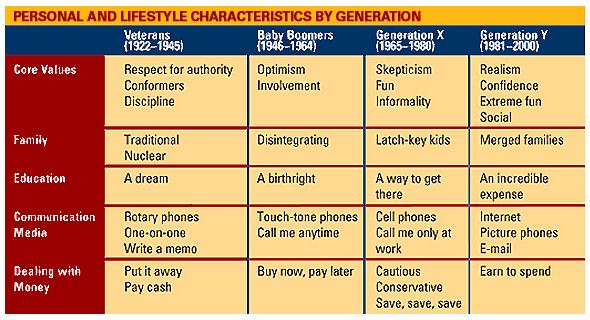
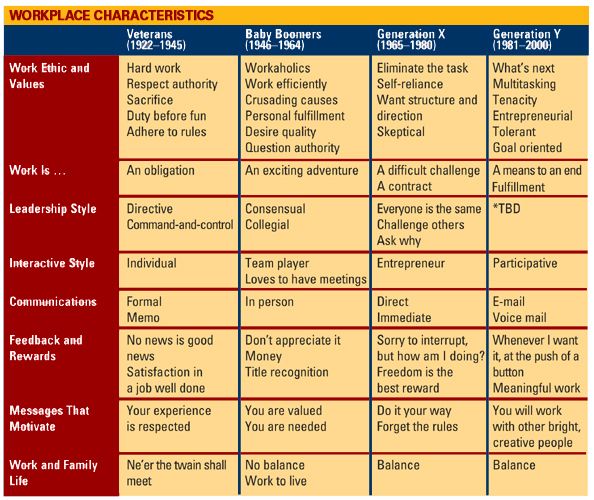
In an article appearing in the Orlando Sentinel, Harry Wessel reports that there's a generation gap in America's workplace that's serious enough to cause a big brain drain in coming years. According to Randstad USA, an Atlanta-based employment-services company; "U.S. businesses risk a shortage of skilled labor -- not because of the lack of manpower in the wake of retiring baby boomers, but because of the limited transfer of knowledge. According to a Harris Interactive survey, there is little interaction among the four generations of U.S. employees. It defined the four Generations as the Mature Generation (those born before 1945), the Baby Boomer Generation (born 1945-1964), Generation X (born 1965-1980) and Generation Y (born 1981-2000). The different generations rarely interact with one another and often do not recognize each other's skills or work ethic. Employers should help close the knowledge gap by instituting ways for each generation to recognize the strengths and value of all colleagues."
The four Generations share the same objectives but not the same experience. Their respective perceptions have to do with diversities in background and life experience. Thus each of the Generations must simultaneously appreciate the skills, and tolerate the shortcomings of all colleagues in order to move forward successfully.
See Opticians' Generation Gap. Some Possible Cancer Answers
"Low
oxygen levels in cells may be Excerpts From 'Cancer Answers'* "There
are several reasons cells become poorly oxygenated. An overload of toxins
clogging up the cells, poor quality cell walls that don't allow nutrients
into the cells, the lack of nutrients needed for respiration, poor circulation
and perhaps even low levels of oxygen in the air we breathe. Some Personal Observations In
each and every environment, good a) In my experience as a teacher of Kundalini Yoga, I have observed many people, young and old, with poor breathing habits. The practice of Kundalini Yoga** (inclusive of the Breath of Fire, Long Deep Breathing, Stretching, Internal Massage, etc.), and other aerobic exercising, can provide additional and much needed oxygen for oxygen starved cells, especially in the brain. "No
matter how good the diet is, we tend to exceed the self b) Cow's milk contains lots of lactic acid.*** For some interesting and thought provoking words about Kundalini Yoga and our consumption of milk, water, and flesh food, see these links. **KundaliniYogaByYogiBhajan.com
Whatever
Happened To Old Fashioned The
Generation Gap
Hands-on,
in place, on-the-face dispensing, "For
the truly skilled Optician, the standard of care must include It is apparent to many of today's senior Ophthalmic Patients and other industry observers that there's little connection between the applied dispensing skills, i.e., the 'hands-on' assessment, design, adjustment and delivery techniques of "Mature Generation" skilled Opticians of yesteryears, and the practices of many of today's Retail Dispensers and Managers. Through no fault of their own, due to the absence of multi-generational connections, many of today's Dispensers, especially Retail Managers, are seen to provide and-or oversee only the most casual delivery of prescription eyewear as if it were ready-to-wear clothing or over-the-counter general merchandise, with little or no attention being given to the all-important Full Discovery and Disclosure Patient Interview, or to the subtler frame-fitting details as practiced by their hands-on-skilled predecessors. Unfortunately, their attention is now preoccupied almost entirely with quantity-over-quality issues, such as daily sales goals, sales reports and other marketing efforts to the detriment of Patient satisfaction, which of course, adversely impacts sales as well as referrals. Consequently, many of today's Ophthalmic Retailers are chronically struggling with high rates of returns and refunds. "The
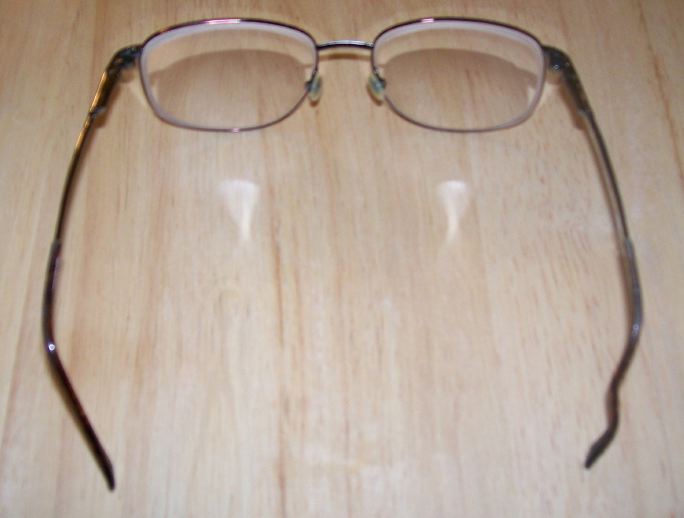
most perfect ophthalmic Rx can be compromised if the And if any hands-on skill is applied, it may amount to no more than a slight adjustment of the frame's nosepiece and-or a sharp and short ninety-degree bend of the frame's temples at the junction of the ears. In other words, no reshaping of the temples to follow the lines of the skull occurs, in the mistaken belief that it is the temples-to-ears contact that holds the eyewear in place. Of course, it's the temples-to-skull contact, NOT THE EARS, that actually holds the eyewear in place. See example here. In fact, many of today's Dispensers only require the delivered eyewear to look straight or "cool," never mind that it does not fit the asymmetric facial or cranial contours of the Patient. It's as if they are fitting a one-dimensional, flat-surfaced counter top instead of a multi-dimensional, contoured human face and skull. Some have been known to go so far as to 'fix', i.e., remove, any previously applied skull-conforming configuration, albeit more comfortable for the Patient. "In
order to excel as a Dispensing Optician, one must first have Through no fault of their own, today's Dispensers are unaware of the decades-old decline of applied hands-on, in-place, on-the-face fitting skills. This situation has produced at least two generations, "Generation X" and "Generation Y" Opticians, including many latter generation Board Certified Opticians, who have never witnessed any demonstrations of these hands-on skills. Furthermore, it's uncertain if any of today's Schools of Opticianry are teaching dispensing skills to this same degree. And as a result, many latter day Dispensers have come to believe, after practicing a couple of years of their method of 'delivering' eyewear, that they are sufficiently skilled and are in need of no additional training in the art and craft of dispensing eyewear, and worse, that they have little to learn from more skilled colleagues. As an example, a Patient recently reported their experience whereby they were just handed their new eyeglasses at an Optometrist's office by a Dispenser with 20 years of experience, whereupon no adjustments to the eyewear were offered and the Patient was forced to seek the appropriate service elsewhere. The Patient subsequently reported that she felt fortunate to find an Optician having the skills to relieve her discomfort after some considerable time spent searching. Unfortunately, similar episodes have become rather common throughout the retail optical industry. "Hands-on-the-patient dispensing is a soon-to-be lost art. If the trend to the narrower and strictly retail approach to ophthalmic services continues, a) The marketing of ready-to-wear, over-the-counter and Web-source eyewear will continue to flourish; b) Hands-on-the-patient dispensing skills and services will disappear; c) Patients will continue to suffer from substandard quality of service; and d) Prescription eyewear will continue to be delivered by an ever increasing number of unskilled dispensers. The fact is that the majority of today's eyewear dispensing professionals require major upgrading in their skills without which they will become increasingly irrelevant in the eyecare industry." -- OpticianryToday.com Placing The Frame Directly On The Patient Is A Crucial Step
"By
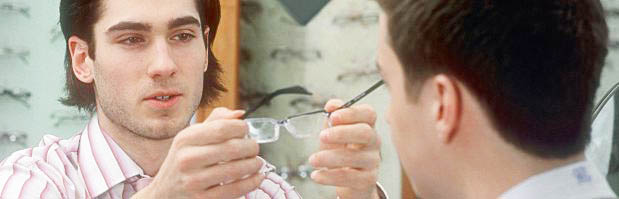
placing the eyewear directly on the Patient, the Optician Some portion of the Opticians' Generation Gap is explicable due to the current focus on Dispenser training by way of on-the-job apprenticeship programs, many of which are devoid of adequate Full Discovery Patient Interview training, and absent any Hands-on, In-place, On-the-face assessment, design and adjustment of prescription eyewear as practiced by skilled Opticians. But this gap is equally a result of today's over-emphasis on the corporate retail paradigm whereby the latter generations especially tend to become more skilled at parroting slogans, giving testimonials about sales prowess, and answering questions about company policy, sales goals and promotions from company executives, all of which afford them no experience in conducting a Patient interview or effectively assessing, designing, and then fitting prescription eyewear directly on the Patient. Unfortunately today's aspiring Dispensers tend to become merchants, peddling ready-made, over-the-counter merchandise, not skilled Opticians, dispensing customized, prescription eyewear. "It's
time for Optical Retailers to think outside the 'Big Box.' This leads one to wonder whether board certification and-or licensing is really effective, since just about anybody can hand over a pair of eyeglasses or contact lenses and operate a cash register, as we see demonstrated in some of today's true-to-life TV ads, whereby the Patient and Dispenser never make direct contact. The Dispenser just hands the Patient their eyewear. The Patient puts the eyeglasses on, looks in the mirror, and leaves. This scenario is so commonplace today in the real world that many Patients never expect to have any form-fitting adjustments applied to a frame.
"A
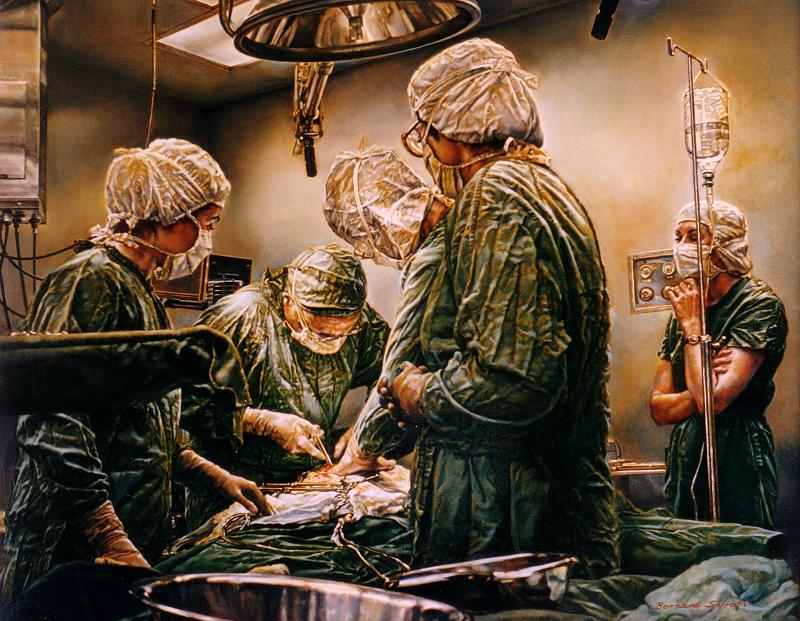
Surgeon must train for years in actual hands-on practice, In the eyes of the Consumer the hands-on custom fitting aspect of dispensing eyewear has become an exotic and unfamiliar craft, and the art has devolved to such an extent that many Consumers (even many Dispensers) now actually think that a hand-fitted frame is inferior to an off-the-board frame. For example, some Patients, having never seen or experienced a hands-on customized frame fitting, have been known to request that the skull conforming adjustments, having been applied by a skilled Optician of the hands-on-school, be removed from temple ends because "they don't look straight, flat and normal like other people's glasses." Unfortunately, the "other people's glasses" were more than likely never customized to fit either. There are some industry observers who see the devolution of Ophthalmic Dispensing as the result of an overall corporate strategy perpetrated by some industry members to eliminate any reliance on competent, licensed Dispensers in order to better manage their labor costs and enhance their profits. But the Profession is mostly the victim of the perpetual tension and struggle between opposing market forces; the Company's need for control of inventory and labor costs, and the Patient's desire for choice and comfort. What many corporations don't understand is that giving the Consumer more of what they want is best for everybody. The last century's most successful entrepreneur, Sam Walton, taught that the Company must always favor the Consumer, first. See complete article here. -- See Optician: Merchant or Health Care Provider?
A Call To The Faithful
"This
week the head of the Los Angeles Archdiocese, Cardinal NEW
YORK (CNN) - The separation of church and state in this country is narrowing.
And it is the church, not the state that is encroaching. Our Constitution
protects religion from the intrusion or coercion of the state. But we
have precious little protection against the political adventurism of
all manner of churches and religious organizations.
Trash Talk Radio
"This
country will only flourish once we consistently learn to applaud Washington
DC - LET’S say a word about the girls. The young women with the
musical names. Kia and Epiphanny and Matee and Essence. Katie and Dee
Dee and Rashidat and Myia and Brittany and Heather.
Invisibility
Cloak May Be Possible
Imagine an invisibility
cloak that works just like An
invisibility cloak and other Harry Potteresque types of magic are likely
doable, researchers say. "What's standing in the way is our engineering
capabilities," said John Pendry, a physicist at the Imperial College
London.
THE
CRUCIFIXION
This extraordinary account claims Jesus was crucified, removed from the cross ... alive, and then fully recovered with the help of the Essenes. The Dead Sea Scrolls were uncovered in 1947. What do the Dead Sea Scrolls reveal about Jesus and why haven't these works been published, in full, after 60 years of 'research'? Is it possible that they reveal data that corroborates Jesus' survival, as claimed in 'The Crucifixion,' by An Eyewitness? Is this the non-fiction sequel to 'The DaVinci Code'? Is this The Greatest Story Never Told? Click here, now! -- Your Birth Date Numerology
We have your number! Your Life Path Number can indicate who you are, what you are good at, and what your inborn abilities are. It can also point to what you have to learn, and the challenges that you face. A Life Path Number does not present you with any obstacles to being anything you want to be, but it may just color your choices differently and give you better insight as to choices that you make. To
figure out your Life Path Number, add all the numbers in your Birth Date
together, as in this example, until there is ONLY one digit between 1 and 9, inclusive.
THE ORIGINATOR 1's
Are Originators. Coming up with new ideas and executing them is natural.
Having things their own way is another trait that gets them as being
stubborn and arrogant. 1's are extremely honest and do well to learn
some diplomacy skills. They like to take the initiative and are often
leaders or bosses, as they like to be the best. Being self-employed
is definitely helpful for them. THE PEACEMAKER 2's
Are Born Diplomats. They are aware of others' needs and moods and
often think of others before themselves. Naturally analytical and very
intuitive they don't like to be alone. Friendship and companionship
is very important and can lead them to be successful in life, but on
the other hand they'd rather be alone than in an uncomfortable relationship. THE LIFE OF THE PARTY 3's
Are Idealists. They are very creative, social, charming, romantic and
easygoing. They start many things, but don't always see them through.
They like others to be happy and go to great lengths to achieve it.
They are very popular and idealistic. THE CONSERVATIVE 4's
Are Sensible And Traditional. They like order and routine. They only
act when they fully understand what they are expected to do. They like
getting their hands dirty and working hard. They are attracted to the
outdoors and feel an affinity with nature. They are prepared to wait
and can be stubborn and persistent. THE NONCONFORMIST 5's
Are Explorers. Their natural curiosity, risk taking and enthusiasm
often land them in hot water. They need diversity, and don't like to
be stuck in a rut. The whole world is their school and they see a learning
possibility in every situation. The questions never stop. THE ROMANTIC 6's
Are Idealistic And Need To Feel Useful. A strong family
connection is important to them. Their actions influence their decisions.
They have a strong urge to take care of others and to help. They are
very loyal and make great teachers. They like art or music. They make
loyal friends who take the friendship seriously. THE INTELLECTUAL 7's Are Searchers. Always probing for hidden information, they find
it difficult to accept things at face value. Emotions don't sway their
decisions. Questioning everything in life, they don't like to be questioned
themselves. They're never off to a fast start, and their motto is slow
and steady wins the race. They come across as philosophers and being
very knowledgeable, and sometimes as loners. They are technically inclined
and make great researchers uncovering information. They like secrets. THE BIG SHOT 8's
Are Problem Solvers. They are professional, blunt and to the point,
have good judgment and are decisive. They have grand plans and like
to live the good life. They take charge of people. They view people
objectively. They let you know in no uncertain terms that they are the
boss. THE PERFORMER 9's
Are Natural Entertainers. They are very caring and generous, giving
away their last dollar to help. With their charm, they have no problem
making friends and nobody is a stranger to them. They have so many different
personalities that people around them have a hard time understanding
them. They are like chameleons, ever changing and blending in. They
have tremendous luck, but also can suffer from extremes in fortune and
mood. The
Cutting Edge If some of the meat in supermarkets is looking rosier than it used to, the reason is that a growing number of markets are selling it in airtight packages treated with a touch of carbon monoxide to help the product stay red for weeks.
This form of "modified atmosphere packaging," a technique
in which other gases replace oxygen, has become more widely used
as supermarkets eliminate their butchers and buy precut, "case-ready"
meat from processing plants. The
carbon monoxide is itself harmless at the levels being used in the
treated packaging. But opponents say that the process, which is
also used to keep tuna rosy, allows stores to sell meat that is
no longer fresh, and that consumers would not know until they opened
the package at home and smelled it. Labels do not note whether meat
has been laced with carbon monoxide.
BECOME
A VEGETARIAN Think
about it! SCHOLARS
RATE WORST PRESIDENTIAL BLUNDERS From engaging in sexual relations with an intern to letting the Vietnam War escalate, U.S. presidents have been blamed for some egregious errors. So who had the worst blunder?
Where does Bill Clinton's Monica Lewinsky scandal rank?
What Your Optician Needs To Know Another Side of The Soy-Protein Story What About PPA (PhenylPropanolAmine) American Crisis: The Military-Industrial Complex
 More Web sites by
KhalsaWebMasters.com 
|
|









 Views
Views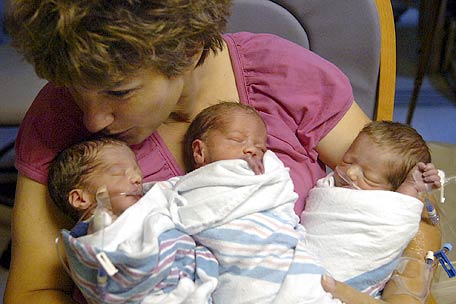




 A study published in Pediatrics that claimed thimerosal was not a cause of autism was funded by the National Institutes of Health (which would be negatively impacted if a link was found). Also, the study’s researchers were reportedly paid by vaccine manufacturers for past consulting.



















 Many scholars said it belonged at No. 10, saying that it probably
affected Clinton's presidency more than it did American history and
the public. --
Many scholars said it belonged at No. 10, saying that it probably
affected Clinton's presidency more than it did American history and
the public. --






 *Consultation
with a health care professional should occur before applying adjustments
or treatments to the body, consuming medications or nutritional supplements,
and before dieting, fasting or exercising. None of these activities
are herein presented as substitutes for competent medical treatment.
*Consultation
with a health care professional should occur before applying adjustments
or treatments to the body, consuming medications or nutritional supplements,
and before dieting, fasting or exercising. None of these activities
are herein presented as substitutes for competent medical treatment.