
Welcome to
 EqualsHappiness.com
Benzoate of Soda
aka Sodium Benzoate
This
soft drink preservative can be hazardous to your health.
If your food comes in boxes, bottles or cans, use caution.


Benzoate
of Soda, the preservative
in Diet Coke
and other foods, is
a health risk.
Consumer Reports caramel color poses
health risk in soft drinks. Get details here.
Aspartame sugar substitute linked to
Leukemia and Lymphoma. Get
details here.
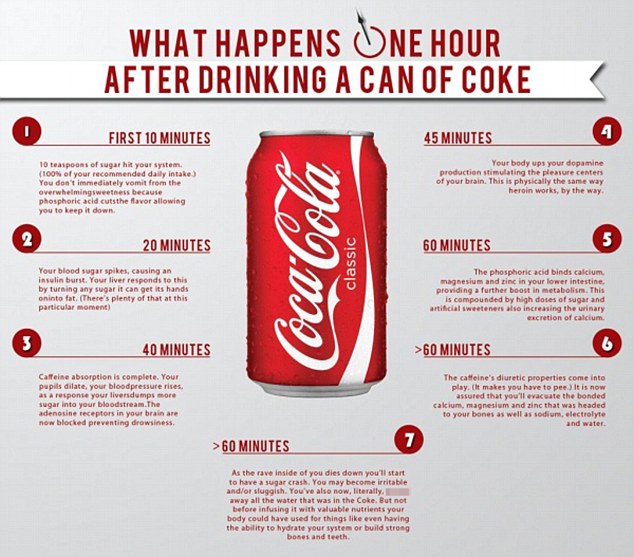

Diet
Coke to drop additive in DNA damage fear.
By Colin Fernandez
Diet
Coke to drop additive in DNA damage fear. May be linked to hyperactivity
and DNA damage.
Coca-Cola is phasing out a controversial additive that has been
linked to damage to DNA and hyperactivity in children.
Sodium benzoate, also known as E211, is used to stop fizzy drinks
going moldy.
Coca-Cola said it had begun withdrawing the additive from Diet
Coke in January in response to consumer demand for more natural
products.
(Editor's Note: Pepsi has been market testing their all-natural 'Throwback' Pepsi, "Made with real sugar," low sodium, all natural, with no High-Fructose Corn Syrup (aka Corn Sugar) or preservative (no benzoate of soda) for several months.
See Sugar is a four letter word. See Sugar: The Bitter Truth. See Why Sodium Benzoate is so scary.
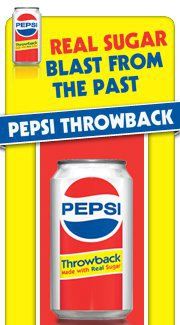
Company representatives we contacted claim the product has been well received in targeted areas. Pepsi plans to make the switch-over to the 'Throwback' product as well as similar changes to the Sierra Mist drink in the Spring of 2011.)
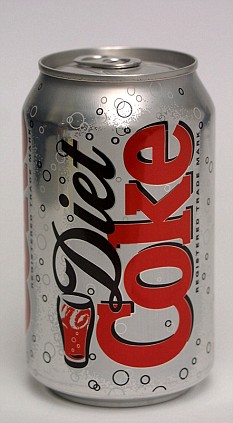
Diet Coke is reportedly phasing out preservative.
By the end of the year no can or bottle will contain E211.
The company plans to remove it from its other products as soon
as possible, but said that at present it had not found a satisfactory
alternative to replace the additive in some soft drinks with a
higher juice content, including Fanta, Dr Pepper, Sprite and Oasis.
The chemical is not used in regular Coke.
While sodium benzoate occurs naturally in some fruits, it is used
in greater strengths by the soft drinks industry.
But research by Peter Piper, a professor of molecular biology
at Sheffield University, found that the additive could switch
off parts of DNA, the genetic code in the cells of living creatures,
that could be linked to cirrhosis of the liver and Parkinson's
disease.
However, the Government-backed Committee on Mutagenicity has dismissed
the research.
It argues that while sodium benzoate has been shown to be harmful
to yeast cells, human cells are stronger. (The questions to ask
here are, what about folks who consume large amounts of the chemical,
and even though human cells are stronger, how quickly can the
body, especially the liver, neutralize the toxicity, and over
what time frame? "... good health and sustained wellness
is dependant on the rapid removal of waste.")
Research by Southampton University found that sodium benzoate
was one of seven additives - the six others are food colors -
that can lead to hyperactivity in children.
The Food Standards Agency has called for the six colors to be
withdrawn from products but not sodium benzoate.
The Daily Mail has campaigned for a ban on harmful additives.
A Coca-Cola spokesman said: "We are continuously listening
to our consumers' thoughts about ingredients."
The firm stressed that E211 was approved as an additive by many
bodies around the world including the European Food Standards
Agency. (See Corporate America
vs. Consumers.)
See Sugar is a four letter word. See Sugar: The Bitter Truth. See Why Sodium Benzoate is so scary.
Corporations
are putting consumers at risk!
"They
exist to make money for stockholders,
not to serve the needs of the consumer.
They're about sales, not about service.
It's a matter of profit over prudence.
To big to fail is too big to serve.
To serve is to succeed."
'The Doctors' video.

NEWS
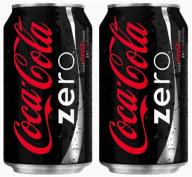
FLASH: Venezuela bans Coke Zero.
THE
AMERICAN MILITARY INDUSTRIALFINANCIAL
ENERGYMEDICALINSURANCE
CORPORATE FLAG

"A
corporation's first purpose is to make money for
its stockholders, not to serve the needs of consumers.
The BP-Gulf Coast oil disaster is
an example of what can
happen as a result of a corporation's obsession with profits and their
indifference and insensitivity to peoples' needs." -- Opticianry Review
"Big
Pharma is remarkably good at creating diseases and convincing us
that we have them -- even when we don't. They've gotten so good at it
that seven
out of 10 visitsto the doctor's office now result in prescriptions.
In 2004, spending
for prescription medication was $188.5 billion, almost
five times what was spent
in 1990, accordingto a report by the Government
Accountability Office. Are we getting
sicker? Or is the pharmaceutical industry
just getting really good at telling
us that we are sick?" -- Alison Fairbrother
Given
the history of the food and drug multi-national corporations, it's
a
good idea not to consume many of their products. For instance, if
you
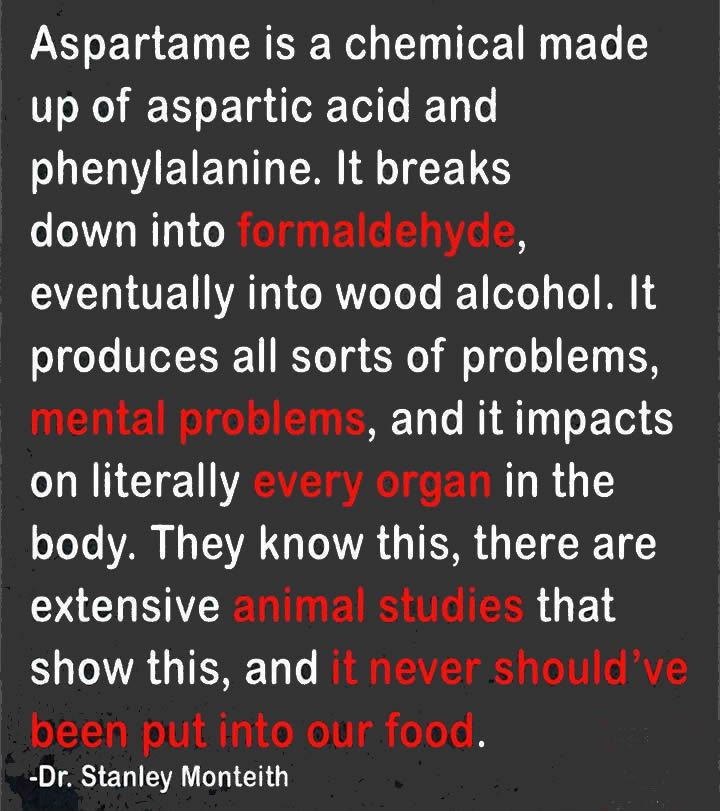
look at the history of aspartame,
how it got approved, and how it still
remains on the market, there's plenty of reason to use great caution.
Due
to the power and corrupting influence of Big
Pharma, the teaching
of nutritional science and the use of vitamin and herbal supplements
is
not taught to any significant extent in our medical schools. The
obvious
reason is that teaching this science reduces the use of prescription
drugs.
Now you know!
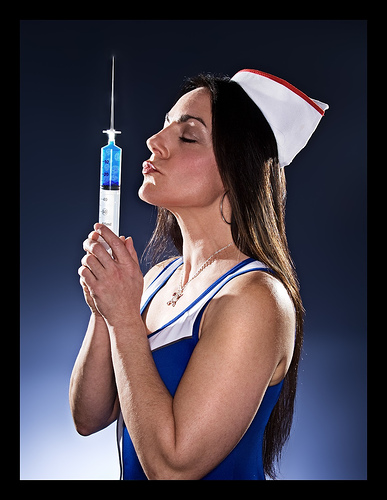
DEADLY-DOSE DRUG DEATHS
Exploring the nation's drug crisis
LATE
BREAKING NEWS
This may blow your mind.
Think the
pharmaceutical corporations are health and well-being resources?
Wait
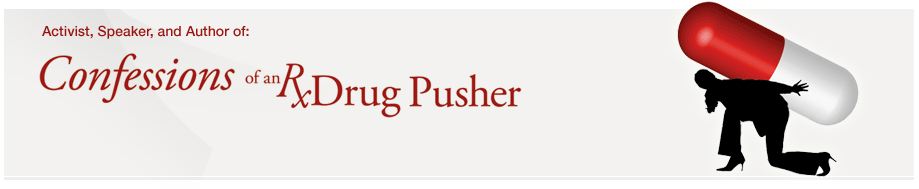
until you hear this testimonial from a former pharmaceutical corporation
insider.
Wait, there's more. Watch this.


Visit HealthEqualsHappiness.com

Pages And Points To Ponder



Deception is the corporate rule
What a trillion dollars looks like
Drug company insider confesses
Lasik Eye Surgery - FDA Warning
Read This If You Drink Diet Drinks
What Your Optician Needs To Know
Corporations Are Killing Consumers
The Corporate Poisoning of America
Is Alzheimer's Diabetes of The Brain
Another Side of The Soy-Protein Story
Are Prescribed Drugs Making You Sick
What About PPA (PhenylPropanolAmine)
http://www.rense.com/general52/msg.htm
The Military-Industrial Complex vs America



More Web sites by
KhalsaWebMasters.com

 *Consultation
with a health care professional should occur before applying
adjustments or treatments to the body, consuming medications
or nutritional supplements and before dieting, fasting or exercising.
None of these activities are herein presented as substitutes
for competent medical treatment. See
Disclaimer.
*Consultation
with a health care professional should occur before applying
adjustments or treatments to the body, consuming medications
or nutritional supplements and before dieting, fasting or exercising.
None of these activities are herein presented as substitutes
for competent medical treatment. See
Disclaimer.