Benefits
going meatless . Less end-of-life disability . Prevention of some cancers . Reduced LDL, i.e., bad cholesterol . Plenty of soluble fiber for bowel regularity . Enhanced sexual potency in males and females . Stomach-pleasing reduction of hard-to-metabolize fat . Easily assimilated nitrous oxide, key to arterial self-repair . Protein that’s much more beneficial than protein from animals
You are what you eat, drink and think. What you eat, drink and think can cause illness.
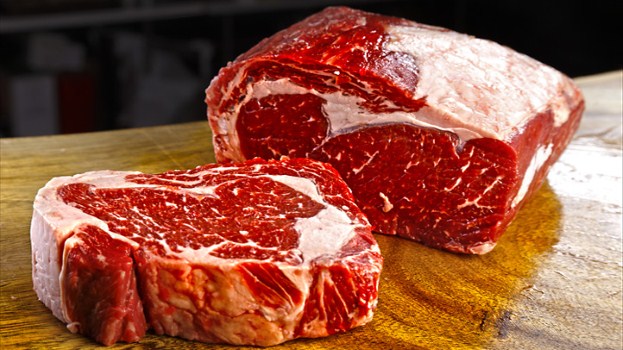
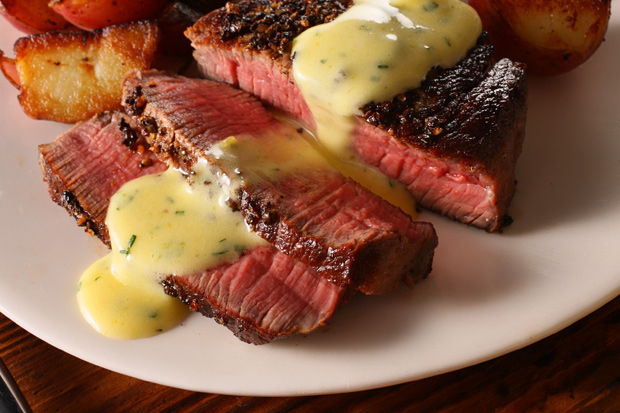
Here's the Beef!
People are fed by the food industry, which pays no attention to health...
and are treated by the health industry, which pays no attention to food.
"Researches found that as the amount of animal foods increased in
the diet, even in relatively small increments,
so did the emergence
of cancers that are common in the West."Joel Fuhrman, M.D.
"One fourth of what you eat keeps you alive.
The other three-fourths keeps your doctor alive."
From the life-changing DVDForksOverKnives.com.
"Cutting through all the rhetoric, in most cases
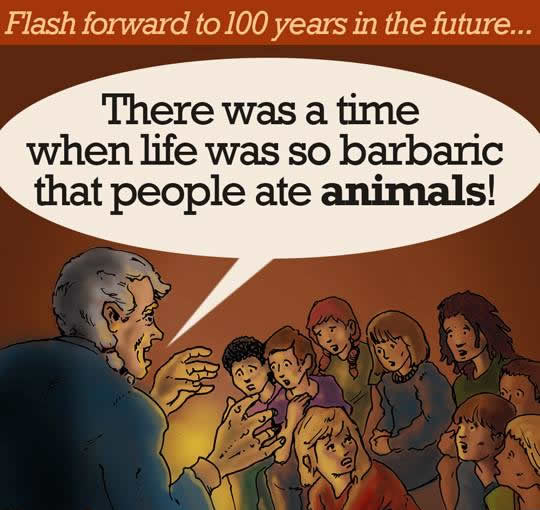
the truth is, if you eat dead animals, it is because
you want to eat dead animals, period." Hari Singh
20 Reasons I Do Not Eat Dead Animals
. Eating processed meat increases the risk of death from heart disease by 72 percent.
. Animal products contain bad cholesterol, which can lead to heart disease, America's leading killer, whereas a vegan diet is cholesterol-free!
. Men who eat 2.5 eggs or more a week have an 81 percent greater chance of developing lethal prostate cancer than those who eat fewer than .5 eggs a week.
. People who regularly eat processed or red meat are up to 50 percent more likely to develop colon cancer, the second most common cancer worldwide, than individuals who avoid these foods altogether.
.Vegans have 34 percent fewer incidences of female-specific cancers, like breast, cervical and ovarian cancer.
. Contrary to The Dairy Council's mantra: Cow's milk does not "do a body good." In fact, it can leech calcium from your bones.
. About 60 percent of adults can't digest milk... and humans are the only animals to drink another animal's milk and to drink milk as adults!
.Kale contains more calcium per calorie than milk -- 90 grams per serving -- and is better absorbed. See kale salad!
. Vegans have lower rates of obesity and weigh 5 to 20 pounds less than meat eaters.
. One in three American children is overweight or obese. A vegan diet, high in fiber, low in fat, cholesterol free, and rich with vitamins and minerals, is an excellent choice for healthy children.
. A vegan diet has been shown to help treat Type 2 diabetes for many diagnosed with the disease.
. Our daily protein requirement can easily be met with high protein legumes, nuts, seeds, grains and even leafy vegetables. Consider that many of top vegan athletes, among them tennis champion Serena Williams, the world's strongest man Patrik Baboumian, MMA fighter Mac Danzig, triathlete Brendan Brazier, and NFL fullback Tony Fiametta are clearly getting all the protein they need!
. A study led by Dean Ornish, M.D., showed telomeres, DNA-protein complexes that are markers of health and longevity, were elongated among men who adopted a low-fat, plant-based diet.
. Omega-3 fatty acids like fish oil are good for you, but are plentiful in plant sources such as hemp seeds, flax seeds, and seaweeds.
. Worried about B-12 in a vegan diet? Adding fortified foods like breakfast cereals, non-dairy milk, and nutritional yeast make it easy to get the recommended daily intake. Most multivitamins also contain ample B-12.
. Vegans have lower incidences of anxiety and depression than meat eaters.
. There is a strong correlation between Alzheimer's disease and the consumption of meat and dairy.
. Antibiotics used on factory farmed animals are creating life threatening "superbugs. "About 80 percent of U.S. antibiotics are used to keep farmed animals alive in crowded filthy conditions. Bacteria are evolving to resist these antibiotics, leading to new antibiotic-resistant infections. The Centers for Disease Control (CDC) estimates that 2 million people get sick and at least 23,000 die as a result. (See 400,000 Medical Error Deaths Per Year.)
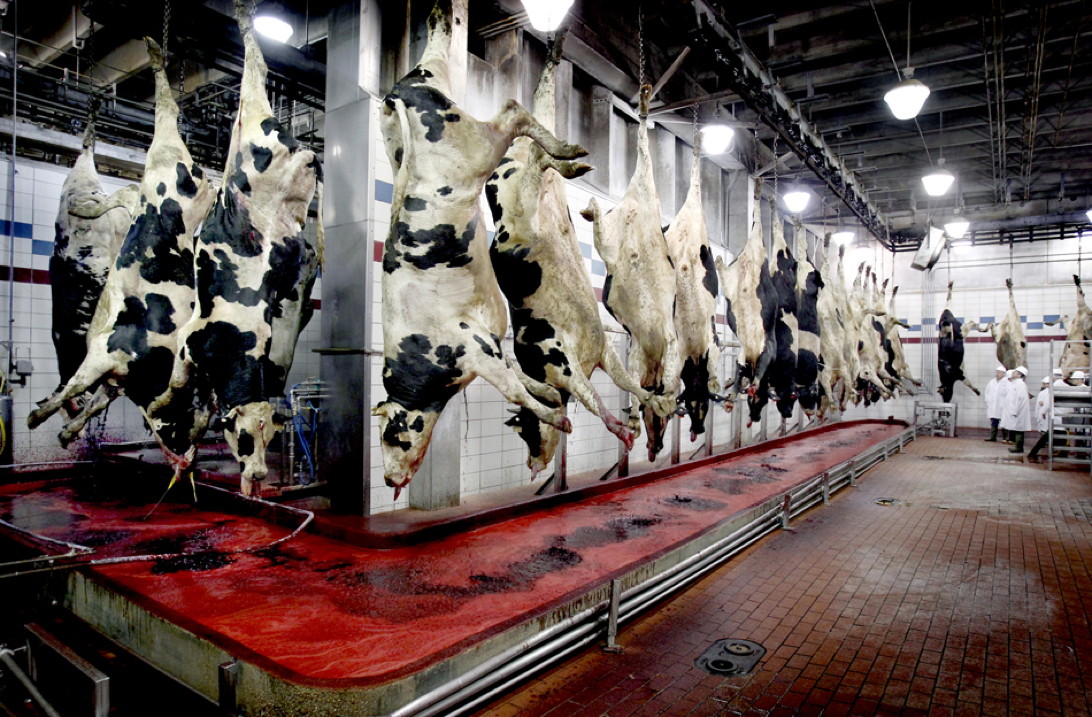
. Pig poop! The USDA is piloting a program at pig slaughterhouses that speeds up kill lines by 20 percent while halving the number of inspectors. The result? Whole chunks of feces made it to the end of the processing line before being caught by inspectors.
The USDA, Big Ag, powerful lobbies like The Dairy Council and their friends in Congress have duped the American public for decades. Milk does not "do a body good," nor should beef be "what's for dinner." The consumption of animal products is making people sick and fat, causing cataclysmic environmental problems, and subjecting 150 billion individual beings (animals) every single year to terror, torture, and suffering. See Compassionate Cuisine. See Meat Consumption: A Major Public Health Issue. --
It
has been well documented that vegetarians are healthier than
people who eat meat. In some cases, vegan vegetarians
have better health than lacto-ovo
vegetarians. Although many vegetarians also exercise and avoid smoking, evidence indicates that their
good health is largely due to diet. One study of 30,000 people in California compared
vegetarians and meat eaters who, aside from their dietary differences, had very similar
lifestyles and health practices. The vegetarians were less likely to be obese, or to have high
blood pressure, diabetes, rheumatoid arthritis, or colon cancer. They were also less
likely to die from heart disease. In fact, the vegetarians were healthier even than people who
ate meat only occasionally. Even when vegetarians were fatter than meat eaters, they had
lower cholesterol levels. 40 days. See Finally, The Truth About Cancer.
For
every action there is an equal and opposite reaction.
There are consequences for everything we consume.
Everything that you eat, drink and think really matters.
The
best answer to excessive levels of uric
acid,
the condition known as gout, and
similar arthritic-
like diseases, is to stop the eating of dead animals.
Eat a flesh-free diet for
40 days and see what happens.
Due
to the power and corrupting influence of Big
Pharma, the teaching
of nutritional science and the use of vitamin and herbal supplements
is
not taught to any significant extent in our medical schools.
The obvious
reason is that teaching this science reduces the use of prescription
drugs.
PINK SLIME
This is not pretty! Viewer
discretion is advised.
Currently, 70% of Amercia's beef is treated with ammonia, i.e., pink slime.
Words For Today
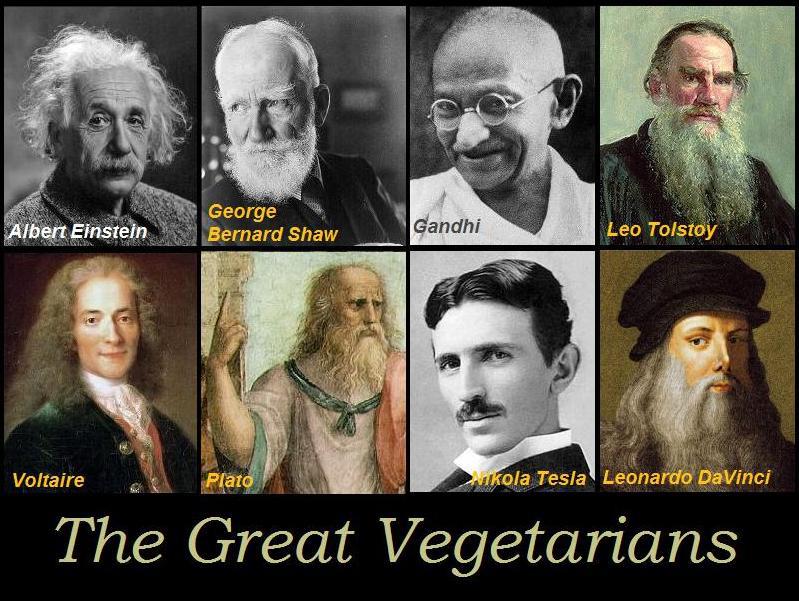
Albert Einstein
"Nothing
will benefit human health and increase
the chances for survival of life on Earth as much as
the evolution to a vegetarian diet."
-- Albert
Einstein
"No
matter how good the diet is, we tend to exceed the self
cleaning capacity of our bodies. Uric
acid, (a byproduct
of meat consumption), calcium
crystals, and many other
wastes and poisons get stored in tissues and joints. They
make us stiff and may cause many diseases. In Kundalini
Yoga, muscle stretching along with internal massage bring
waste back into circulation so that the
lungs, intestines,
kidneys and skin are able to remove it." -- Yogi
Bhajan
"In
each and every environment, good
health and sustained wellness is dependent
on the rapid removal of waste. In
terms of your
personal health, you need to void solid waste two to
three times a day, or once between each meal, without
straining, in order to sustain health and wellness. Toxins
are rendered harmless if removed from the body quickly.
Health and wellness is defined as those human conditions
wherein the rapid removal of waste is the norm." -- Hari Singh
FleshLessFleshFull
Think About It!
Processed
Meats Can Cause Cancer
By Charlie Neibergall, AP
A
new report estimates that half the meat and poultry sold
in the supermarket may be tainted with the staph germ.
Researchers found more than half of supermarket meat contained
Staphylococcus aureus, a bacteria that can make people
sick.
That estimate is based on 136 samples of beef, chicken,
pork and turkey purchased from grocery stores in Chicago,
Los Angeles, Washington, D.C., Flagstaff, AZ and Fort
Lauderdale.
Researchers found more than half contained Staphylococcus
aureus, a bacteria that can make people sick. Worse, half
of those contaminated samples had a form of the bacteria
resistant to at least three kinds of antibiotics.
Proper cooking should kill the germs. But the report suggests
that consumers should be careful to wash their hands and
take other steps not to spread bacteria during food preparation.
The nonprofit Translational Genomics Research Institute
in Arizona did the work.
In
a press release by U.S. health officials, poultry has
become the leading source of food-born illness in America.
And
according to a recent report by the United Nations, "Livestock's
contribution to environmental problems is on a massive
scale...the impact is so significant that it needs to
be addressed with urgency."
Cows emit a staggering 18% of the world's
greenhouse gases. There are more cattle in China than
Chinese. Each of these 1.5 billion cattle has 4 stomachs
resulting in a total of 6 billion stomachs. These produce
massive quantities, 100 gallons a day of methane gas, which
is far more potent as a greenhouse gas than carbon dioxide.
Check out these staggering numbers.*
18 % increase in death from heart disease from only 1 serving of red meat per day including hamburger, pork, roast beef, and lamb.
10% increase in death from cancer from the same.
21% increase in death from heart disease from processed meat like hot dogs, bologna, and sausage.
16% increase in death from cancer from the same.
*Research results from Harvard School of Public Health, which involved 120,000 people.
The Original Fast Foods
What is a Vegetarian?
A
vegetarian is a person who refuses to eat dead animals.
PROS AND CONS
Vegetarians
do not eat meat, poultry, or fish (people who include
small amounts of these foods in their diets sometimes
call themselves semi-vegetarians.) Vegetarians build their
diets around a wide variety of plant foods, including
grains (such as rice, barley, and oats), grain-based foods
(such as bread, pasta, and cereals), legumes, vegetables,
fruits, nuts and seeds. Soy foods such as tofu,
soy milk, and soy-based meat substitutes may play
an important role in many vegetarian diets. In addition,
cheese and milk made from rice, almonds, and soybeans
are prominent in some vegetarian diets. Lacto-ovo vegetarians
consume dairy foods and eggs. Vegans are vegetarians who
do not eat any animal products, including dairy products,
eggs, and honey. See Recipes. See
Corporations are putting
consumers at risk.
WHY DO PEOPLE CHOOSE A MEATLESS DIET?
Watch this video From Farm
To Fridge. Viewer
discretion is advised.
Many choose
it to improve their health or to decrease the risk of chronic
diseases, such as heart disease, diabetes, or cancer. See Finally, The Truth About Cancer.
Others
go vegetarian due to concerns about world hunger and the environment,
because large-scale production of animal foods uses land that
could otherwise be used to grow plant-based foods, and is
a major cause of deforestation and soil erosion worldwide.
Still others
are concerned about the presence of antibiotics, hormones,
pesticide residues, or disease-causing agents (as with mad
cow disease) that may be present in meat.
Some vegetarians
object to inhumane practices of modern-day animal farming,
so their reasons for being vegetarian are largely ethical.
Some vegetarians
believe that humans are not physiologically suited to meat
eating; humans have more in common with herbivorous animals
than with carnivorous animals in terms of the structure and
function of our teeth and our digestive tract.
Finally,
some people choose vegetarianism in an attempt to live more
simply and economically, and in closer harmony with the way
most of the world’s population eats.
What do advocates say?
"If
you suffer from gout and-or
arthritis, eliminate flesh foods
from your diet for 40 days and see what happens." -- Hari Singh
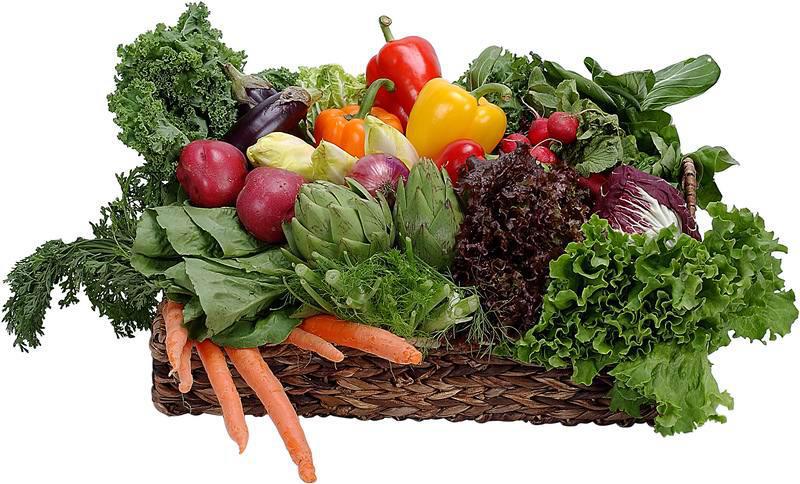
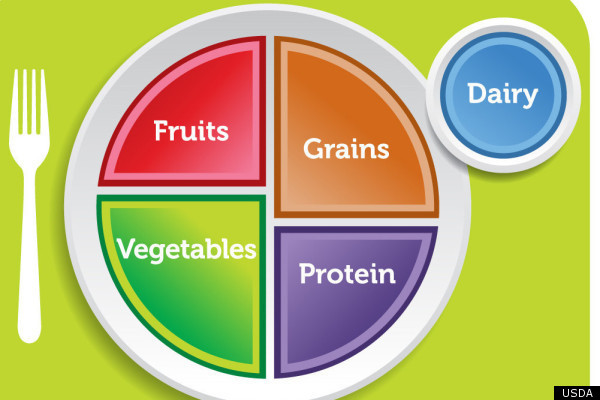
Bread, cereal, rice, pasta group, 6-11
servings daily. Vegetable group, 3-5 servings daily. Fruit group, 2-4 servings daily. Dry beans, nuts, seeds, eggs, and meat
substitutes group, 2-3 servings daily. Milk, yogurt, and cheese group, 2-3 servings
daily. Fat, oils, and sweets, sparingly.
It is well documented that vegetarians are healthier than
people who eat meat. In some cases, vegans have better health
than lacto-ovo vegetarians. Although many vegetarians also
exercise and avoid smoking, evidence indicates that their
good health is largely due to diet. One study of 30,000 people
in California compared vegetarians and meat eaters who, aside
from their dietary differences, had very similar lifestyles
and health practices. The vegetarians were less likely to
be obese, or to have high blood pressure, diabetes, rheumatoid
arthritis, or colon cancer. They were also less likely to
die from heart disease. In fact, the vegetarians were healthier
even than people who ate meat only occasionally. Even when
vegetarians were fatter than meat eaters, the vegetarians
had lower cholesterol levels. See Finally, The Truth About Cancer. See Every Cancer Can Be Cured In Weeks.
Cows emit 18% of the world's greenhouse
gases.
Vegetarians have lower blood pressure even when they eat the
same amount of salt as meat eaters and exercise less. Researchers
have known since the beginning of the 1900s that feeding meat
to vegetarians causes their blood pressure to rise.
Many studies show that vegetarians have less colon cancer
than meat eaters. The composition of bacterial flora in the
colon differs between vegetarians and people who eat meat
in ways that could possibly affect cancer risk. (BTW: Have you
ever met a vegetarian alcoholic? Let
us know here.)
CHANGE YOUR BODY'S CHEMISTRY!
Eliminate many toxic byproducts.
Flesh is a highly acid food. About my pH balance.
Many factors in a vegetarian diet contribute to the better
health of vegetarians. These factors include:
Vegetarians
consume two to three times as much fiber as do meat-eaters.
This helps to reduce cholesterol and blood glucose levels,
and protect against colon cancer.
Vegetarians
consume more antioxidants, which are found in a wide variety
of plant foods. Antioxidants protect cells from oxygen-induced
damage and reduce the risk for heart disease, arthritis, cancer,
and other diseases.
Vegetarians
consume more phytochemicals than do meat eaters, special compounds
found in plants. Many phytochemicals have a wide range of
protective effects in the human body. They help to detoxify
carcinogens, stimulate the immune system, regulate cell growth
(which helps to fight cancer), and reduce some of the harmful
effects of excessive exposure to hormones.
Vegetarians
eat more isoflavones than do meat eaters. These compounds,
found mostly in soy foods, are another type of phytochemical.
Research shows that isoflavones may reduce the risk for prostate
cancer and may improve bone health. See Finally, The Truth About Cancer.
Vegetarians
consume much less saturated fat and cholesterol than do meat
eaters. This helps to explain why they have significantly
lower levels of blood cholesterol. One study showed that blood
cholesterol levels were 14% lower in lacto-ovo vegetarians
and 35% lower in vegans compared to meat-eaters. Lower intakes
of saturated fat reduce the risk for heart disease and possibly
for diabetes and cancer.
Vegetarians
do not consume heme iron, a type of iron found in meat that
appears to increase the risk of heart disease and cancer.
Vegetarians
do not eat red meat, which has been linked to increased cancer
risk in many studies. Red meat consumption stimulates the
production of mutation-causing compounds in the colon and
is linked to increased damage to DNA.
Note:
We know of no vegetarians that are alcoholics.
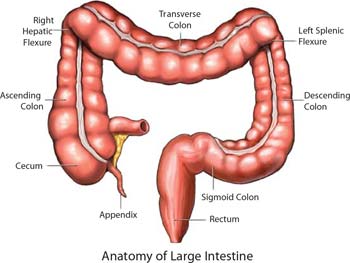
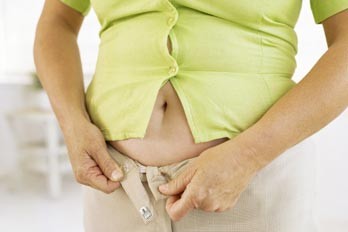
A typical meat-eater's physique with undigested meat
and all of the resultant toxins held in the intestines.
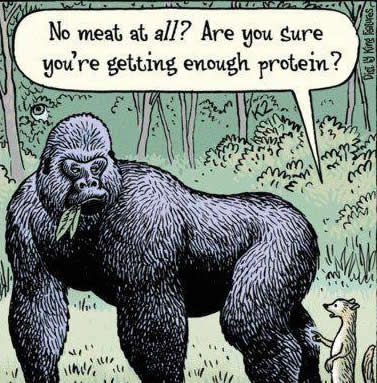
How do Vegetarians get sufficient protein?
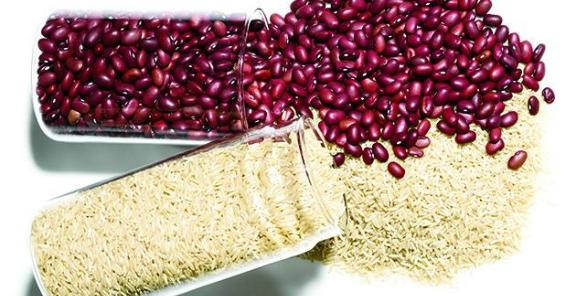
Beans and grains combined equal a complete protein
These foods are known as incomplete proteins, including BEANS, whole GRAINS, NUTS, SEEDS, PEAS, and CORN. Just combine two or more incomplete proteins and you've got a complete protein. Enjoy them together in one meal or the combination can be consumed over the same day, such as black bean soup for lunch and brown rice with dinner.
Here are some other food combinations that work well:
Beans with whole grains: hummus (contains chickpeas and tahini, which is made from sesame seeds) and pita bread, red beans and rice, chickpea and quinoa veggie burgers on a whole-wheat bun, split pea soup with whole-grain bread, lentil barley soup, black beans and polenta, and tortillas with refried beans. Nuts or seeds with whole grains: sunflower seed butter on crackers, almond butter on toast, peanut noodles. Beans with seeds or nuts: hummus, salad topped with sunflower seeds and chickpeas.
What do critics say?
Some
folks just can't 'live' without eating dead flesh.
Critics of vegetarianism claim that people who choose this
diet will have to “balance incomplete proteins”
to synthesize complete protein in the body. Proteins that
come from fruits, vegetables, legumes, and grain products
are only “incomplete” in the sense that they do
not provide all nine essential amino acids (protein building
blocks) at a single meal; thus, according to critics, a vegetarian
(and especially a vegan) must be careful to consume appropriate
quantities of complementary proteins each day to ensure that
he or she is getting enough dietary protein.
Contrary to this popular belief, inadequate protein intake
is rarely a concern for vegetarians. Better understanding
of protein nutrition shows that, for adults, it is not necessary
to consume special combinations of foods to meet requirements
for the right balance of amino acids. Many plant foods, such
as grains and legumes, provide protein. Soy foods and dairy
products are particularly rich in high-quality protein. Protein
needs are easily met when vegetarians consume a variety of
plant foods and eat enough food to meet calorie needs.
Critics also point out that there is no way to get vitamin
B12 via food except through animal products. Tempeh and other
fermented soy products do not contain consistent enough quantities
of B12 to meet the body’s requirements. Vegetarians
must therefore eat B12-fortified foods or take vitamin supplements
on a daily basis to prevent a deficiency.
Some critics fault vegetarian, and particularly vegan, diets
for not providing sufficient calcium. In truth, most people,
not just vegetarians, eat less than optimal amounts of calcium.
Dairy products are a good source of dietary calcium, but they
are not the only source. Green leafy vegetables and tofu are
also good sources, and are usually eaten in large quantities
by vegetarians. Vegans - who eat no animal products - are
the most likely to suffer from calcium deficiency. Many Americans - vegetarians
and meat eaters alike - could benefit from taking a calcium
supplement.
Sea food is dead flesh, too.
Vegetarians eat less iron than non-vegetarians, and the iron
they eat is somewhat less absorbable. As a result, vegetarians
are more likely to have reduced iron stores.
However, iron deficiency is not usually caused by a lack of
iron in the diet alone; an underlying cause - such as
iron loss in menstrual blood - often exists. Although
iron is found in a variety of different foods, its availability
to the body (bio availability) varies significantly. This
is determined by whether it is found in the form of heme and
non-heme iron. Heme iron is found only in meat, fish, and
poultry. It is absorbed much more readily than non-heme iron
found primarily in fruits, vegetables, dried beans, nuts,
and grain products, such as bread and iron-fortified breakfast
cereals. Including a source of vitamin C at each meal improves
absorption of vegetarian-source iron.
Strict vegans may become iodine deficient if they do not consume
enough iodine, readily available in iodized salt.
Very
few foods are good sources of vitamin D, which is why milk
is fortified with it. Vegetarians who do not consume milk
should be sure to get 20 to 30 minutes of sun exposure every
day since this promotes the synthesis of vitamin D in the
body. People who live in cloudy, smoggy, or northern areas,
and people who do not leave their residences, need foods fortified
with vitamin D. These fortified foods include breakfast cereals
and some brands of soy milk and rice milk. Since people with
dark skin make vitamin D less efficiently, they may also need
supplemental sources of vitamin D or increased sun exposure.
See What About Gout? See Ways
To Perfect Health. See From
Farm To Fridge, discretion advised.
'Meat' the Culprit
This
huge billboard appearing near the Indianapolis Motor Speedway
warns NASCAR Sprint Cup fans that chowing down on hot
dogs could seriously damage their health. The billboard
is sponsored by the Cancer Project of the nonprofit Physicians
Committee for Responsible Medicine. Tell the FDA here. See Finally, The Truth About Cancer. See
more here.
The
Hot Dog Headache
A hot dog headache sounds funny, but the nitrites (preservatives)
used in hot dogs and other processed meats can bring on
headache pain. These nitrous compounds are actually used
as experimental models for migraine. Experts used to think
these culprits were headache triggers because they widened
blood vessels and let more blood into the head. More blood
in the head, they thought, meant more pressure and pain.
But it appears blood vessels don’t change during
migraine. The latest explanation for hot dog headache
is that the brain stem becomes more active when these
compounds are present, and that somehow this leads to
migraine symptoms like headache pain. Another reason for
not eating dead animals.
This is not pretty! Viewer
discretion is advised.
Why And
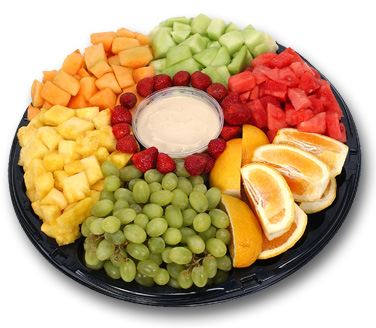
How To Eat Fruit By Dr. Oz FRUIT IS A MOST IMPORTANT FOOD
We
all think eating fruit means just buying fruit, cutting it
up and popping it into our mouths. It's not that easy. It's
important to know how and when to eat fruit.
What's the correct way to eat fruit? Fruit should be eaten on an empty stomach. It means not eating fruit after a meal.
Eating
fruit like that plays a major role in detoxifying your system,
supplying you with a great deal of energy for weight loss
and other life activities.
Let's say you eat two slices of bread, then a slice of fruit.
The slice of fruit is ready to go straight through the stomach
into the intestines, but it's prevented from doing so.
In the meantime, the whole meal rots and ferments, and turns
to acid. The minute the fruit comes into contact with the
food in the stomach, and digestive juices, the entire mass
of food begins to spoil.
Eat your fruit on an empty stomach, or before your meal! You've
heard people complain: Every time I eat watermelon I burp,
when I eat durian my stomach bloats, when I eat a banana I
feel like running to the toilet, etc. This will not happen
if you eat the fruit on an empty stomach. Fruit mixes with
the putrefying other food and produces gas. Hence, you bloat!
There's no such thing as some fruits, like orange and lemon
are acidic, because all fruit becomes alkaline in our body,
according to Dr. Herbert Shelton who did research on this
matter. If you have mastered the correct way of eating fruit,
you have the Secret of Beauty, Longevity, Health, Energy,
Happiness and normal weight.
When you need to drink fruit juice drink only fresh fruit
juice, NOT the concentrated juice from the cans. Don't drink
juice that has been heated. Don't eat cooked fruit; you don't
get the nutrients at all. You get only the taste. Cooking
destroys all of the vitamins.
EATING A WHOLE FRUIT is better than drinking
the juice. If you should drink the juice, drink it mouthful
by mouthful slowly, because you must let it mix with your
saliva before swallowing it. You can go on a 3-day fruit-fast
to cleanse your body. Eat fruit and drink fruit juice for
just 3 days, and you will be surprised when your friends say
how radiant you look!
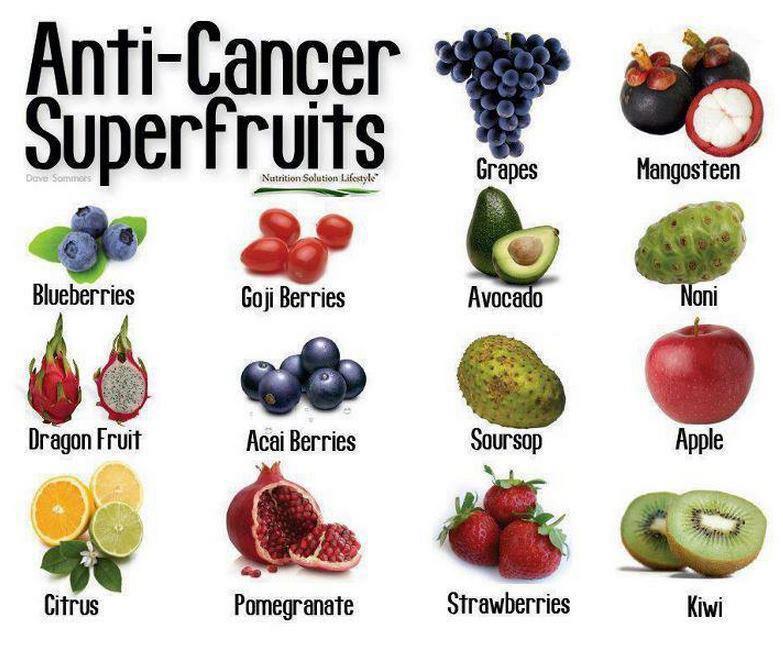
KIWI Tiny but mighty, and a good source of
potassium, magnesium, vitamin E and fiber. Its vitamin C content
is twice that of an orange!
AN APPLE a day keeps the doctor away? Although
an apple has a low vitamin C content, it has antioxidants
and flavonoids which enhances the activity of vitamin C, thereby
helping to lower the risk of colon cancer, heart attack and
stroke.
STRAWBERRY Protective Fruit. Strawberries
have the highest total antioxidant power among major fruits
and protect the body from cancer-causing, blood vessel-clogging
free radicals.
EATING 2 - 4 ORANGES a day may help keep
colds away, lower cholesterol, prevent and dissolve kidney
stones, and reduce the risk of colon cancer.
WATERMELON Coolest thirst quencher. Composed
of 92% water, it is also packed with a giant dose of glutathione,
which helps boost our immune system. Also a key source of
lycopene, the cancer-fighting oxidant. Also found in watermelon:
Vitamin C and Potassium.
GUAVA & PAPAYA Top awards for vitamin
C. They are the clear winners for their high vitamin C content.
Guava is also rich in fiber, which helps prevent constipation.
Papaya is rich in carotene, good for your eyes.
DRINKING COLD WATER after a meal could lead to
Cancer!
Can you believe this? For those who like to drink cold water...
this applies to you. It's nice to have a cold drink after
a meal, however, the cold water will solidify the oily stuff
that you've just consumed, which slows digestion. Once this
'sludge' reacts with the acid, it will break down and be absorbed
by the intestine faster than the solid food. It will line
the intestine. Very soon, this will turn into fats, which could lead
to cancer. It is best to drink hot soup or warm water after
a meal. -- See How To Identify A
Stroke. See New Aspirin For
Heart Attack. See Finally, The Truth About Cancer.
*Consultation
with a health care professional should occur before applying adjustments
or treatments to the body, consuming medications or nutritional
supplements and before dieting, fasting or exercising. None of these
activities are herein presented as substitutes for competent medical
treatment. See Disclaimer.












 . Less end-of-life disability
 . Prevention of some cancers
 . Reduced LDL, i.e., bad cholesterol
 . Plenty of soluble fiber for
  . Enhanced sexual potency in males and females
 . Stomach-pleasing reduction of hard-to-metabolize fat
 . Easily assimilated nitrous oxide, key to arterial self-repair
 . Protein that’s much more beneficial than protein from animals




 . Eating processed meat increases the risk of death from heart disease by
  . Animal products contain bad cholesterol, which can lead to
  . Men who eat 2.5 eggs or more a week have an 81 percent greater chance of developing lethal prostate cancer than those who eat fewer than .5 eggs a week.
 . People who regularly eat processed or red meat are up to 50 percent more likely to develop
  .
.  . Dairy consumption can trigger
  . Contrary to The Dairy Council's mantra: Cow's milk does not "do a body good." In fact, it can leech
  . About
  .
.  . Vegans have lower rates of
  . Pig poop! The USDA is piloting a program at pig slaughterhouses that speeds up kill lines by 20 percent while halving the number of inspectors. The result? Whole




 FleshFull



 A
new report estimates that half the meat and poultry sold
in the supermarket may be tainted with the staph germ.
A
new report estimates that half the meat and poultry sold
in the supermarket may be tainted with the staph germ. 
 In
a press release by U.S. health officials, poultry has
become the leading source of food-born illness in America.
In
a press release by U.S. health officials, poultry has
become the leading source of food-born illness in America. Cows emit a staggering 18% of the world's
greenhouse gases. There are more cattle in China than
Chinese. Each of these 1.5 billion cattle has 4 stomachs
resulting in a total of 6 billion stomachs. These produce
massive quantities, 100 gallons a day of methane gas, which
is far more potent as a greenhouse gas than carbon dioxide.
Cows emit a staggering 18% of the world's
greenhouse gases. There are more cattle in China than
Chinese. Each of these 1.5 billion cattle has 4 stomachs
resulting in a total of 6 billion stomachs. These produce
massive quantities, 100 gallons a day of methane gas, which
is far more potent as a greenhouse gas than carbon dioxide. Check out these staggering numbers.*
 18 % increase in death from heart disease from only 1 serving of red meat per day including hamburger, pork, roast beef, and lamb.

 Milk, yogurt, and cheese group, 2-3 servings
daily.
Milk, yogurt, and cheese group, 2-3 servings
daily. Fat, oils, and sweets, sparingly.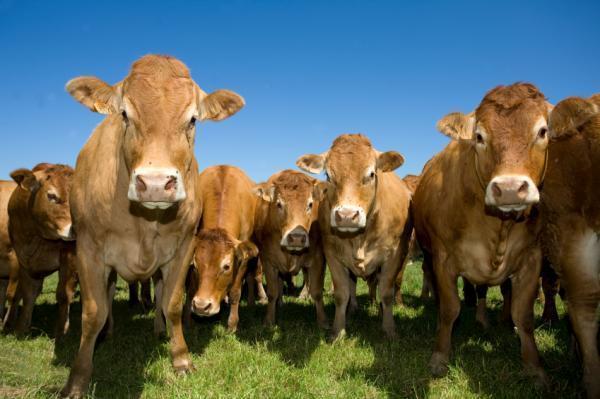











 *Consultation
with a health care professional should occur before applying adjustments
or treatments to the body, consuming medications or nutritional
supplements and before dieting, fasting or exercising. None of these
activities are herein presented as substitutes for competent medical
treatment.
*Consultation
with a health care professional should occur before applying adjustments
or treatments to the body, consuming medications or nutritional
supplements and before dieting, fasting or exercising. None of these
activities are herein presented as substitutes for competent medical
treatment.