|
|
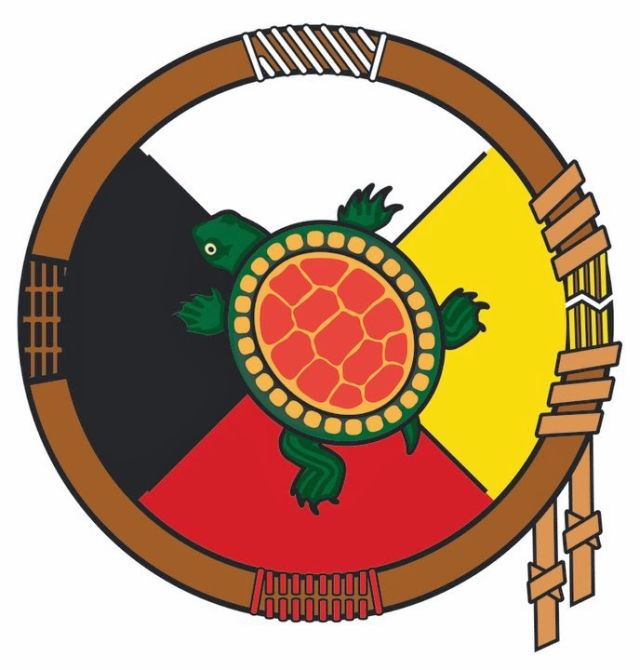
Colors of the Directions
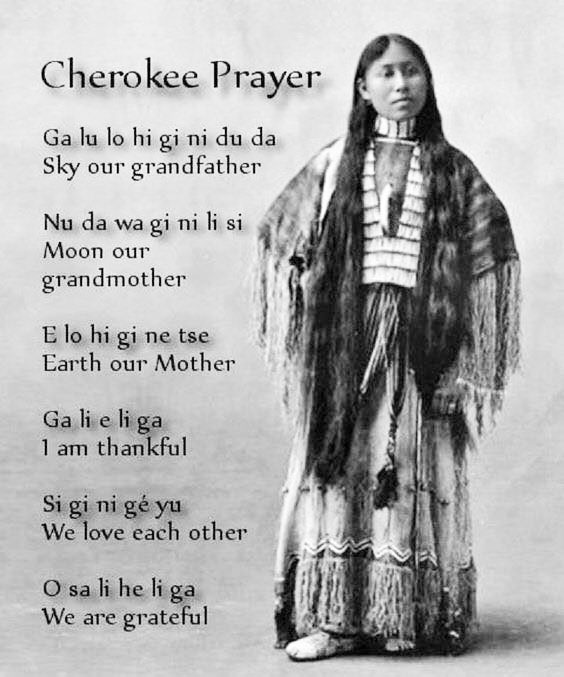
The Cherokee economy, like that of the other southeastern tribes, was based on intensive agriculture, mainly of corn, beans, and squash. Deer, bear, and elk were hunted. The Husk, or Green Corn Ceremony, was a time of thanksgiving, rekindling of sacred fires, and spiritual renewal. The tribe was divided into seven multilineal clans that were dispersed in war and peace moieties (half-tribes). The people lived in numerous permanent villages, some of which belonged to the war moiety, the rest to the peace moiety, i.e., a moiety is one of two social or ritual groups into which a people is divided, especially among some American Indians and Australian Aborigines. In the early 19th century, the Cherokee demonstrated unusual adaptability to Western institutions, both in their governmental changes and in their adoption of Western methods of animal husbandry and farming, including the plantation system. Public schools were established and in the 1820s, Sequoya, a tribal member, invented an 85-character syllabify script for the Cherokee language. Widespread literacy followed almost immediately. In 1828 the first Native American newspaper, the Cherokee Phoenix, began publication. See Native American Languages. See Trail of Tears: Another Story of American Injustice. See 18 Things White People Should Know.
CONTEMPORARY LIFE
Traditional Cherokee culture, in Oklahoma, was severely weakened. The old ways, including traditional crafts, are most strongly preserved by the Eastern Band, some of whom continue to live on the Qualla Reservation in North Carolina. The quality of North Carolina Cherokee basketry is considered being equal to or better than that of earlier times. In Oklahoma the Cherokee live both on and off the reservation, scattered in urban centers and in isolated rural regions. Their occupations range from fishing to industrial labor to business management. In North Carolina, farming, forestry, factory work, and tourism (about 5 million tourists annually) are sources of income. The Cherokee language has about 10,000 modern speakers. In 1990 there were 308,132 Cherokee descendants in the United States. Note: Cherokee is purportedly among the more difficult languages for native English speakers to acquire. This is in part due to the polysynthetic nature of the language, meaning that words consist of many parts. Words are constructed to convey an assertion, its context, and a host of connotations about the speaker, the action, and the object of the action. The complexity of the Cherokee language is best exhibited in verbs, which comprise approximately 75% of the language, as opposed to only 25% of the English language. See more.
Modoc Culture
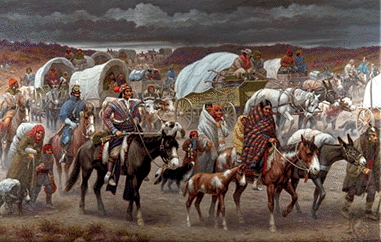
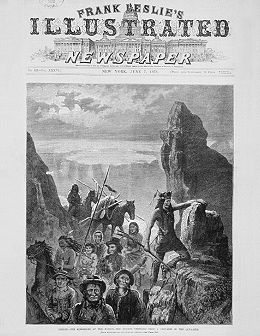
Many Native Americans were displaced from their lands as more white settlers moved into the Oregon country. The ancestral home of the Modoc Tribe of Oklahoma consisted of some 5,000 square miles along what is now the California-Oregon border. While their tribal territory encompassed only a small area, it was one of panoramic diversity. On the west loomed the perennially snow-capped peaks of the majestic Cascade Mountains; to the east was a barren wasteland of alkali flats; towering forests of Ponderosa pines were to the north while the Lava Beds, now a National Park, formed their southern boundary. From prehistoric times dating back some 10,000 years; the Modoc were a culturally detached and unique band. Occasionally they formed war parties to drive out unwelcome visitors or raid neighboring tribes. The Modoc were hunters, fishermen, and gatherers who followed the seasons for food. They lived their lives in relative obscurity. But the arrival of the white European Americans in the early 19th century changed their lives forever. The Modoc learned to live peacefully with the farming and ranching newcomers, often working for them and trading for livestock and other necessities. The flow of non-Indians into their ancestral homelands had an enormous effect on the culture of the Modoc people. They embraced many of the settler's ways, and eventually began to wear clothing patterned after non-Indians with whom they socialized in the nearby town of Yreka, California. Even the names of the Modoc changed and they became known to their own people by the names given to them by the white man. Keintpoos became Captain Jack, while others became known to history as Scarfaced Charley, Stamboat Frank, Bogus Charley, Shack Nasty Jim, Long Jim, Curly-headed Doctor, and Hooker Jim. The Modoc people refused to remain on the Klamath Reservation and fought against the United States Army, but were forced to surrender in 1873, an event depicted in the painting and newspaper illustration below.
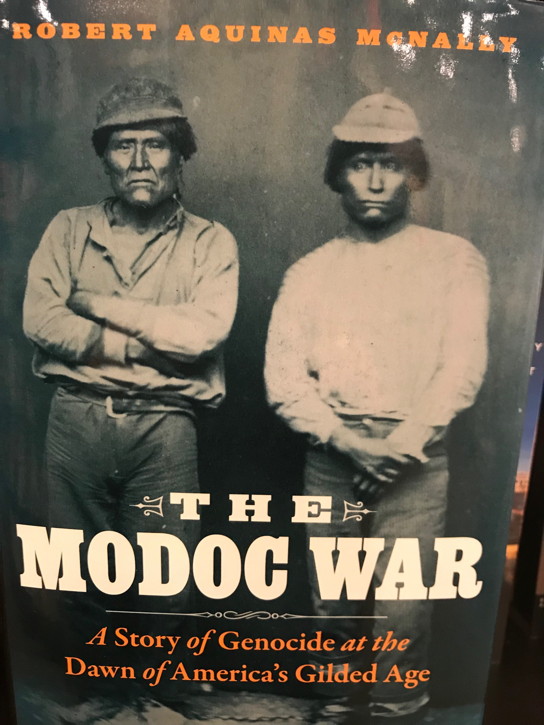
Many Modoc, whose language belongs to the Sahaptin-Chinook branch of the Penutian linguistic stock, lived in Southwest Oregon and Northern California, particularly around Modoc Lake (also known as Lower Klamath Lake) and Tule Lake. Modoc culture was similar to the culture of the Klamath, but the Modoc did not rely as heavily on the wokas, or water-lily seeds, for food. See Native American Languages. Considerable trouble occurred at times between the Modoc and the early white settlers, with atrocities being committed on both sides. The Modoc were finally constrained (1864) to go on the Klamath Reservation in Oregon, but most of the tribe was dissatisfied. In 1870, Chief Kintpuash, or Captain Jack (see below), led a group back to California and refused to return to the reservation. The attempt to bring them back brought on the Modoc War (1872-73). The war began in November 1872 when the military tried to force a small band of Modoc Indians, led by Captain Jack, to a reservation. The Modocs took refuge in an ancient lava flow that became their stronghold. Today it is a part of the Lava Beds National Monument. The Modocs knew the land and used it to their advantage. Twisting lava tubes and hidden caves created the perfect hideout for fifty-five Modoc warriors and their families. Indian policy was the subject of national debate and many humanitarians sided with the Modocs. Then the Indians attacked a peace commission, resulting in the only U.S. general killed in an Indian conflict. The government cracked down hard, calling for swift punishment. By the end, the Modocs were fighting off a force of nearly 1,000 men, made up of both military soldiers and civilian volunteers. Again and again, the small band of Indians overcame incredible odds to protect their way of life. But it could not last. Their world was about to change forever. By the end, the Modocs were fighting off a force of nearly 1,000 men, made up of both military soldiers and civilian volunteers. Again and again, the small band of Indians overcame incredible odds to protect their way of life. But it could not last. Their world was about to change forever. After the Modoc War, the Modoc people were divided; some were sent to Oklahoma (where a few remain), and some to the Klamath Reservation in Oregon. The Modoc in Oregon share lands with the Klamath and Snake. See V. F. Ray, Primitive Pragmatists: The Modoc Indians of Northern California (1963), R. H. Dillea, Burnt-Out-Fires (1973).
The Modoc
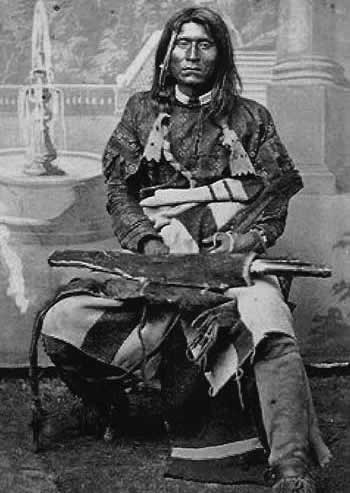
Captain Jack, subchief of the Modoc and leader of the hostile group in the Modoc War, 1872-73, whose Modoc name was Kintpuash, had agreed in 1864 to leave his ancestral home and live on a reservation with the Klamath. He found it impossible to live on friendly terms with his former enemies, and after killing a Klamath medicine man, Jack and a group of followers left the reservation. They resisted arrest in November 1872 and fled into the lava beds in California. Their strong defensive position frustrated numerous attempts by US troops to dislodge them. In April 1873, a peace commission headed by General Edward Richard Sprigg Canby met with Jack and several of his men.
At a prearranged signal, Jack shot Canby dead. The army renewed its efforts to capture them and forced the Modoc to take refuge elsewhere. The Modoc, who were tired of fighting, began to give themselves up, and on June 1, Captain Jack was captured. He was taken to Fort Klamath, where on Oct. 3, 1873, he and three of his warriors were hanged for the murder of Canby. Even though Captain Jack was the leader of the Modoc Indians who fought the US Army for several months in 1872, he didn't have complete control over the band. The Modocs stressed individual choice but worked as a group. Jack would accept the decisions of the whole band even if he didn't agree. He argued against killing General Canby, but the majority of the warriors believed it would send the Army away, so Jack went along with the plan. Jack had two wives, at least one daughter, and a sister, Queen Mary. They lived with him during the entire Modoc War. See biography by D. P. Payne (1938).
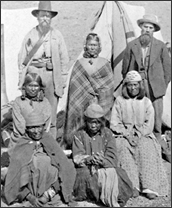
The Modoc War The Modoc War was a series of battles between the Modoc and the US Army. It was fought as a result of the attempt to force a group of the Modoc to return to the Klamath Reservation in South Oregon. Beginning in November 1872, US soldiers were engaged in sieges against the Modoc who were encamped in the lava beds near Tulle Lake, Calif. The soldiers, after losing battle after battle, increased their forces to 1,000 by March 1873. During peace negotiations General Edward R. S. Canby and Eleazer Thomas were killed. The soldiers intensified their efforts to subdue the Modoc and finally, in late May 1873, Captain Jack and his much reduced force of 30 warriors were captured. The Modoc War proved costly to both sides: 87 soldiers were killed and 83 were wounded. Although the Modoc lost only 8 warriors and an unknown number of women and children in the fighting, they were thereafter divided as a people. The Modocs called themselves the Maklaks and were part of the Lulacas coast tribe before 1800. Their language is part of the Lutumanian linguistic group. Around 1800 they broke away from the Lulacas because of an argument about tribute to the chief. Chief Moadacus led his new tribe to the area near Lost River. See Native American Languages. CAPTAIN JACK'S MEN
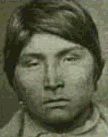
Boston Charley (the miners in Yreka called him Boston because he had a light complexion and appeared almost Caucasian) was one of the four Modocs hung on October 3, 1873. He shot the Reverend Thomas on April 11th, 1873.
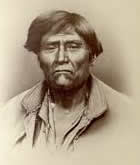
Scarfaced Charley got his name because of a disfiguring scar on his face reportedly caused when he fell off a wagon when he was a young man. Scarfaced Charley was one of the more militant of the Modocs and may have fired the first shot of the Modoc War at the Battle of Lost River.
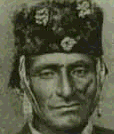
John Schonchin was the brother of Old Schonchin, one of the Chiefs of the Modoc Tribe. He was hung with Captain Jack on October 3rd, 1873 for his part in the killing of General Canby and Reverend Thomas.
Black Jim was one of the four Modocs to hang on October 3rd. He shot and tried to scalp Alfred Meacham when General Canby was shot. After the Second Battle of the Stronghold, he and a few of the other Modocs left the two main bands of Modocs and tried to escape the US Army. Oregon Volunteers captured them.
Hooker Jim was one of the most violent and independent members of the Modoc Tribe. After the Battle of Lost River he and a small group of Modocs took revenge on the settlers and killed 17. When he was captured after the Second Battle of the Stronghold, he agreed to help the Army find Captain Jack in return for escaping the hangman's noose. BARNCHO AND SLOLUCK Barncho and Sloluck were at the scene when General Canby and Reverend Thomas were killed. President Ulysses S. Grant commuted their death sentences, but they were sent to prison on Alcatraz. Barncho died of tuberculosis in prison, but Sloluck was released and sent to his tribe in Oklahoma in February 1878. -- More.
10 Quotes
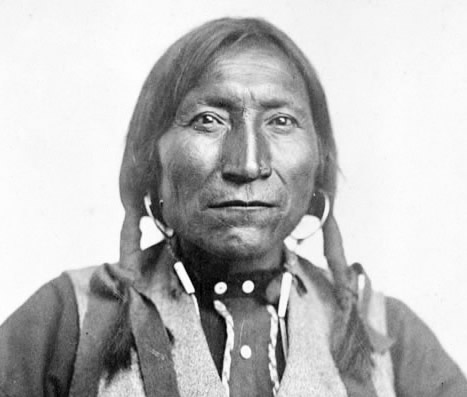
Luther Standing Bear was an Oglala Lakota Sioux Chief who, among a few rare others such as Charles Eastman, Black Elk, and Gertrude Bonnin occupied the rift between the way of life of the Indigenous people of the Great Plains before, and during, the arrival and subsequent spread of the European pioneers. Raised in the traditions of his people until the age of eleven, he was then educated at the Carlisle Indian Industrial Boarding School, where he learned the english language and way of life. Like his above mentioned contemporaries, however, his native roots were deep, leaving him in the unique position of being a conduit between cultures. Though his movement through the white man’s world was not without “success” — he had numerous movie roles in Hollywood — his enduring legacy was the protection of the way of life of his people. By the time of his death he had published four books and had become a leader at the forefront of the progressive movement aimed at preserving Native American heritage and sovereignty, coming to be known as a strong voice in the education of the white man as to the Native American way of life. Here, then, are 10 quotes from the great Sioux Indian Chief known as Standing Bear that will be sure to disturb much of what you think you know about “modern” culture.
Turtle Island Symbol A Tale of Six Boys On Iwo Jima If Your Dad Doesn't Have A Beard Notable Women of Native America Look, Listen and Experience Peace Life According To Native Americans A Notable Woman of Native America 18 Things White People Should Know U.S. Marine Corps Warfighting Manual Why Native Americans Keep Long Hair How Sikh Women Transform 'Me' Into 'We' To The Greatest Generation ... "Before You Go" The U.S. Marine Corps Silent Drill Team With Rifles
|
|
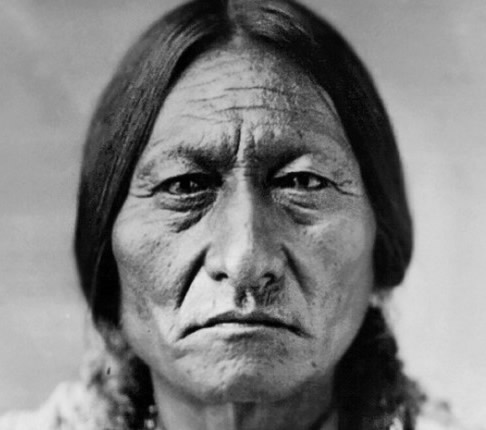
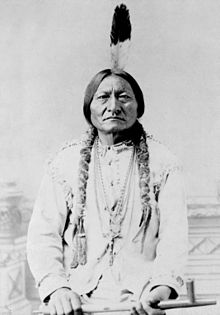
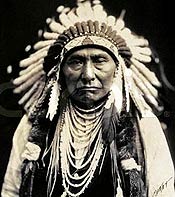




 .) Praise, flattery, exaggerated manners and fine, high-sounding words were no part of Lakota politeness. Excessive manners were put down as insincere, and the constant talker was considered rude and thoughtless. Conversation was never begun at once, or in a hurried manner.
 .) Children were taught that true politeness was to be defined in actions rather than in words. They were never allowed to pass between the fire and the older person or a visitor, to speak while others were speaking, or to make fun of a crippled or disfigured person. If a child thoughtlessly tried to do so, a parent, in a quiet voice, immediately set him right.
 .) Silence was meaningful with the Lakota, and his granting a space of silence before talking was done in the practice of true politeness and regardful of the rule that ‘thought comes before speech.’…and in the midst of sorrow, sickness, death or misfortune of any kind, and in the presence of the notable and great, silence was the mark of respect… strict observance of this tenet of good behavior was the reason, no doubt, for his being given the false characterization by the white man of being a stoic. He has been judged to be dumb, stupid, indifferent, and unfeeling.
 .) We did not think of the great open plains, the beautiful rolling hills, the winding streams with tangled growth, as ‘wild’. Only to the white man was nature a ‘wilderness’ and only to him was it ‘infested’ with ‘wild’ animals and ‘savage’ people. To us it was tame. Earth was bountiful and we were surrounded with the blessings of the Great Mystery.
 .) With all creatures of the earth, sky and water was a real and active principle. In the animal and bird world there existed a brotherly feeling that kept the Lakota safe among them. And so close did some of the Lakotas come to their feathered and furred friends that in true brotherhood they spoke a common tongue.
 .) This concept of life and its relations was humanizing and gave to the Lakota an abiding love. It filled his being with the joy and mystery of living; it gave him reverence for all life; it made a place for all things in the scheme of existence with equal importance to all.
 .) It was good for the skin to touch the earth, and the old people liked to remove their moccasins and walk with bare feet on the sacred earth… the old Indian still sits upon the earth instead of propping himself up and away from its life giving forces. For him, to sit or lie upon the ground is to be able to think more deeply and to feel more keenly. He can see more clearly into the mysteries of life and come closer in kinship to other lives about him.
 .) Everything was possessed of personality, only differing from us in form. Knowledge was inherent in all things. The world was a library and its books were the stones, leaves, grass, brooks, and the birds and animals that shared, alike with us, the storms and blessings of earth. We learned to do what only the student of nature learns, and that was to feel beauty. We never railed at the storms, the furious winds, and the biting frosts and snows. To do so intensified human futility, so whatever came we adjusted ourselves, by more effort and energy if necessary, but without complaint.
 .) The old Lakota was wise. He knew that a man’s heart, away from nature, becomes hard; he knew that lack of respect for growing, living things soon led to lack of respect for humans, too. So he kept his children close to nature’s softening influence.
 .) Civilization has been thrust upon me… and it has not added one whit to my love for truth, honesty, and generosity. --