|
Ardaas Bhayee, Amar Das Guroo, Amar Das Guroo, Ardaas Bhayee, HUKAM One
who considers himself ... During
the early hours of the morning By
this procedure he truly washes away The
one who repeats the Name with his every breath I
seek to kiss the very dust GUR
SAT GUR KA JO *"This prayer has been given to Guru Amar Das. The prayer is manifested by Guru Ram Das. The miracle is complete." (Guru Amar Das is the energy of grace and hope when there is no hope. Guru Ram Das is the energy of miracles, healings and blessings. This is the prayer to answer all prayers.) Dhan
Dhan Ram Das Guru,
*Blessed, blessed is Guru Ram Das; Guru
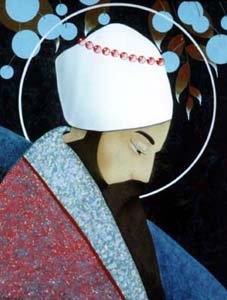
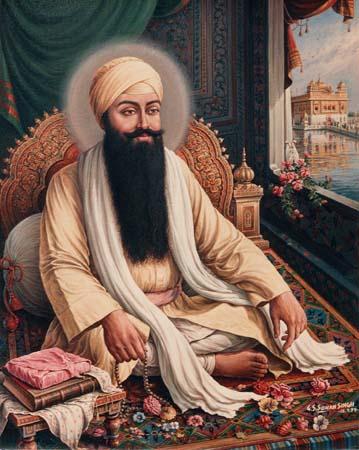
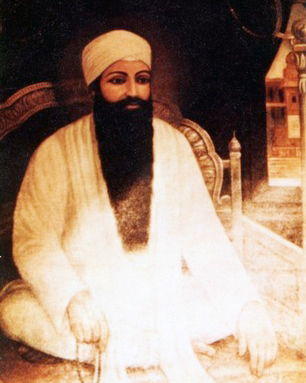
Ram Das is known as the Chauthi Patshahi or the Fourth Guru.
Born in Lahore into a Sodhi Khatri family residing in Mohalla
Chuna Mandi, by all accounts, the date of his birth was the second
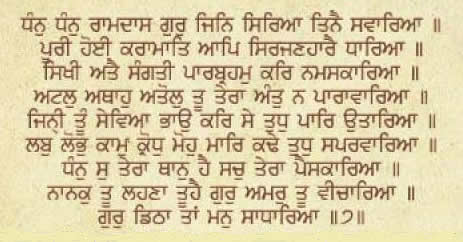
day of the dark half of the month Karthik, September 24, 1534. See Royal Yogi of The Solar Dynasty. Shabad (Hymn) Dhan Dhan Raam Daas Gur Jin Siri-aa Tinai Savaari-aa
Dhan dhan raam daas gur jin siri-aa tinai savaari-aa Blessed, blessed is Guru Ram Das; the One who created You has also exalted You. MORE FROM GURU RAM DAS I Would Ever Meditate On Thee I
would make myself a slave If
it is Thy Will to grant me happiness; And
even in pain, I will never forget Thee. If
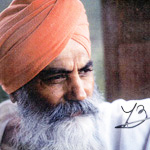
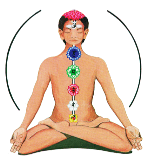
it is Thy Will ... Commentary by Yogi Bhajan "The world shall come to an understanding, and that's what is going to happen, that we, a handful of Sikhs when we'll reach in ourself the purity and piety, when we will have the dignity and the divinity, when we'll have the essence of one single line: "Ang Sang Wahe Guru," when we'll understand in the all realms of our tattwas, in our chakras, in our gunas, in our being, in our rejections, in our projections, in our pain, in our pleasure, in our richness... when in all that we reach ALWAYS for Guru Ram Das, there's nothing we should worry about. Our affairs will be adjusted. Mantra of Oneness
It is upon you. This is your karma. This is your Dharma: that you go wherever you go and spread the glory of your Guru. Spread out. Heal people. Lift them. Elevate them. And when they thank you, humbly thank them for giving you a chance so Guru Ram Das could come through. Hail, Guru Ram Das, and heal people. That's the last word you should hear and it should resound in your ears, in your heart, and in your head. There's nothing more to it. Don't try to talk too much and debate things. It won't work. Become Nirgun. Let Sirgun work through you. Give it a chance. That's the real seva. That's the real simran. That you put your bana on, take the bani of the Guru, and in the name of the Guru and heal people in all walks of life. Stop for nothing. If you are a Christian, do it as a Christian. If you are a Jew, do it as a Jew. Guru Ram Das doesn't differentiate a person... personality... identity. You all belong to God. There are a lot of people in a lot of faiths, in a lot of walks of life who just need your touch. They just need you. They just need your vibration. They just feel good when you talk to them and you are around them. Please do not deny it to anyone! Time is now, and now is the time! *Ang Sung Wahe Guru celebrates the realization that there is no piece or part of ourselves, no action, and no life that is not already the living vibration of the Infinite. IT is all God. We are One. See OneIsTheAnswer.com. See YouAreTheEssence.com. See Glossary of Sikh Terms. See SikhAndYeShallFind.com. See A Comprehensive Sikh History Quiz. Guru Ram Das.com continues, next.
NOTES The
word "Guru" is a Sanskrit word meaning teacher, honored
person, religious person or saint. Sikhism though has a very specific
definition of the word Guru. It means the descent of divine guidance
to mankind provided through ten Enlightened Masters. This honor of
being called a Sikh Guru applies only to the ten Gurus who founded
the religion starting with Guru Nanak in 1469 and ending with Guru
Gobind Singh in 1708; thereafter it refers to the Sikh Holy Scriptures
the Siri Guru Granth Sahib. The divine spirit was passed from one Guru
to the next, as "the light of a lamp, which lights another, does
not abate.
Science and Practice of Meditation and its Benefits Sing Along With These Born Again Americans All About Sikhs From the U.S. Dept. of Justice The 1974 Transition of Bhai Sahib Dyal Singh Ek Ong Kar Sat Nam Siri WhaHe Guru.com See Why Sikhs Keep Their Hair Unshorn See What Happens When You Meditate To The First Teachers of Sikh Dharma Life According To Yogi Bhajan.com If Your Dad Doesn't Have A Beard History of Sikhs In America Video Lessons Learned From The Sikhs The New York Times About Sikhs Americans Get An 'F' In Religion
Visit MySikhSense.com Pages And Points To Ponder
See SensitivitySummit.com. See Desmond Tutu's Plea To Israel. More Web sites by
KhalsaWebMasters.com 
|
|