| ReligionDemographics.com
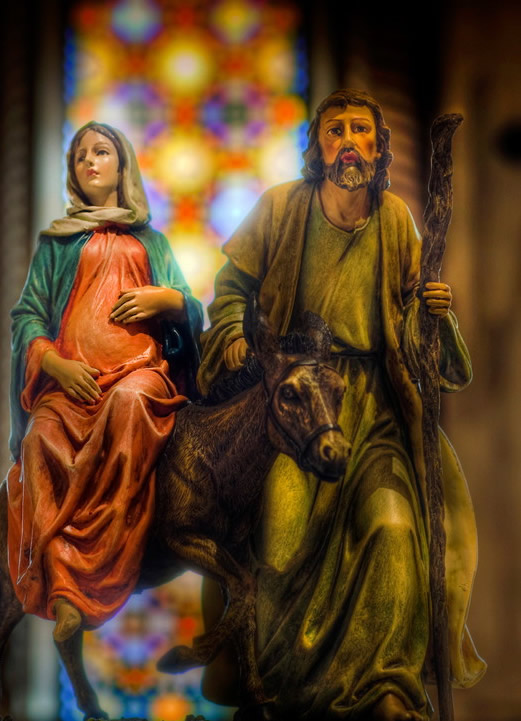
"During this time in our history radical transparency is needed. Christianity started out as a breakaway sect of Judaism nearly 2000 years ago, 30+ CE.* Jesus, the son of Mary and her husband Joseph, believed by Christians to be conceived through the Holy Spirit, was bothered by many of the laws and practices of his native Jewish faith and began preaching a different message. During his travels he was joined by Mary Magdalene and twelve disciples who followed him in his journeys and learned from him. He reportedly performed many miracles during this time and related many of his teachings in the form of parables. Among his best known sayings are to "love thy neighbor" and "turn the other cheek." At one point he revealed that he was the Son of God sent to Earth to save humanity from sin. He was crucified on a cross for his teachings. He then 'rose from the dead' and appeared to his disciples and told them to go forth and spread his message. See Editor's note.
Since Christianity and Judaism share the same history up to the time of Jesus Christ, they are very similar in many of their core beliefs. There are two primary differences. One is that Christians believe in original sin and that Jesus died in our place to save mankind from that sin. The other is that Jesus was fully human and fully God and as the Son of God is part of the Holy Trinity: God the Father, His Son, and the Holy Spirit. All Christians believe in heaven and that those who sincerely repent their sins before God will be saved and join Him in heaven. Belief in hell and satan varies among groups and individuals.
There are a multitude of forms of Christianity which have developed either because of disagreements on dogma, adaptation to different cultures, or simply personal taste. For this reason there can be a great difference between the various forms of Christianity. These may even appear to be different religions to many people. --
"If you cannot see God in all, you cannot see God at all." A Christian gives thanks that
"We hold these truths to be self-evident, that all men are
created equal, that they
"These foundation stones of American democracy were laid a century too late to save Mary Dyer's life. Dyer, a middle-aged mother of six, was hanged in 1660 for defying a Puritan law that banned Quakers from the Massachusetts Bay Colony. The Christians who cruelly deprived this woman of Life, Liberty and the pursuit of Happiness were dead certain (so to speak) that they were on a mission from God, protecting their "divinely ordained" civic order against Mary Dyer's seditious belief in the Inner Light. As a spiritual descendant of Mary Dyer, I'm profoundly grateful that America is not a Christian nation. If it were, my Quaker convictions might get me into very deep oatmeal. And as a Christian who does his best to take reason as seriously as I take faith, I find impossible to understand America as a "Christian nation" -- and I believe that there are vibrant possibilities in the fact that it is not. Whatever America's founders believed about Christianity -- and they believed a wide range of things -- they clearly rejected the idea of an established church. That's strike one against the curious conceit that we're a Christian nation. If
being a Christian nation means asking ourselves every day, "What
would Jesus do?" about a political issue, then doing it, that's
strike two. To take but one example (without forgetting things like
slavery, justice for those who can afford it and peace through war):
If, as Christians believe, God is the Creator and Redeemer of All, then there's no way God favors Americans above people of other nationalities. Strike four. As
a Christian, I'm passionately opposed to American pretensions that
we have special standing with God; to political office-seekers who
play on our religious differences; and to the religious arrogance
that says, "Our truth is the only truth." But I'm equally
passionate about the urgency of creating a culture of meaning that
responds to the deepest needs of the human soul. This is a task we
have been neglecting at great peril, a task that demands the best
of all our wisdom traditions, a task on which people of diverse beliefs
can and must make common cause. Of course, we can continue to have pseudo-theological food fights over questions like, "How can we save our nation by making all Americans into God-fearing souls?," or "How can anyone be so ignorant as to believe in God or the soul?" Or we can take advantage of the fact that American democracy offers us an open space in which to pursue questions of personal, communal and political meaning, illumined by multiple sources of light. Which will it be? That's a question worth wrapping our lives around, with gratitude for our political inheritance." Parker
J. Palmer *The dates are given in BCE (Before Common Era) and CE (Common Era). These years correspond to the same dates in BC and AD but by defining the current period as the "Common Era" the nomenclature attempts to treat all religions and beliefs as equal. Editor's note: In the eyes of the enlightened student of religion, there is only one God. The same God worshipped by various religions and known by various names and descriptions, i.e., Islam it's Allah, Christianity and Judaism it's God, Hinduism it's Brahmin, the same God masquerading via the diversity of creation and wearing the mask of what Sikhs, Hindus and others call Maya. -- 2015 PEW REPORT ON CHRISTIANITY
April 29, 2015 -- In extensive study done by the Pew Research Center has yielded some fascinating information regarding the trajectory of world religions over the next four decades. As of 2010, Christianity was the dominant world religion with roughly 2.2 billion adherents and Muslim's were second with about 1.6 billion adherents. If current demographic trends continue however, Islam is expected to catch up to Christianity midway through the 21st century. Furthermore, people are leaving Christianity in droves. About 106 million Christians are expected to switch affiliation from 2010 to 2050 while only about 40 million people are expected to enter Christianity. The religiously unaffiliated (athiests, agnostics) are expected to see the largest net gains from switching, adding more than 61 million followers. Christians are expected to see the largest net losses from religious switching In North America, the fastest growing religious groups are Muslims and followers of "other religions" (an umbrella category that includes Baha’is, Jains, Sikhs, Taoists and many smaller faiths). Christianity is expected to decline from 78 percent of the overall population in 2010 to 66 percent in 2050. Unaffiliated religions are expected to rise over that same time from 16 percent of the population to 26 percent. By 2050, the United States will have more Muslims (2.1 percent of pop.) than Jews (1.4 percent). In South America and the Caribbean, Christianity will see a slight dip over the next four decades, from 90 percent in 2010 to 89 percent in 2050. Over that same time the religiously unaffiliated population will add 45 million followers increasing from 8 percent of the population in 2010 to 9 percent in 2050. If the current trends continue beyond 2050 - which is big if considering unforeseen events that can happen over a 40 year span (war, famine, innovation etc.) - then by the year 2070 the world's population of Muslims would roughly equal that of Christians. Here are other chief findings from the report: The Jesus Painting
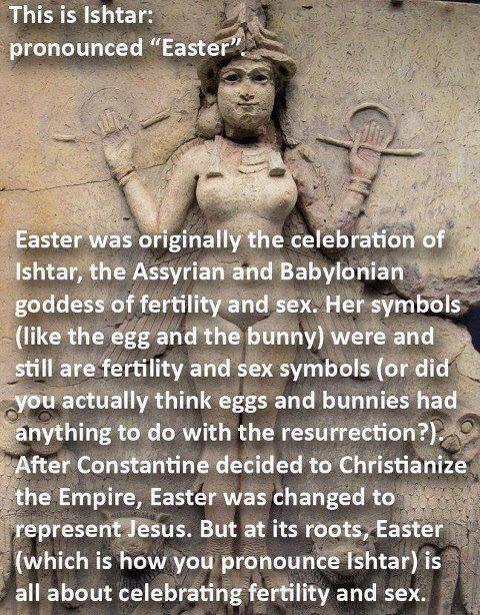
The Easter Date
In the gospel tale, there are two dates for the crucifixion: the 14th and the 15th of the
POINTS TO PONDER
 More Web sites by KhalsaWebMasters.com 
|
|






 .)
.)  .) The number of Muslims will equal the number of Christians around the world by 2050.
  .) Atheists, agnostics and other people who do not affiliate with any religion – though increasing in countries such as the United States and France – will make up a declining share of the world’s total population.
 .) The global
  .) In Europe, Muslims will make up 10 percent of the overall population.
 .) India will retain a Hindu majority but also will have the largest Muslim population of any country in the world, surpassing Indonesia.
 .) In the United States, Christians will decline from more than three-quarters of the population in 2010 to two-thirds in 2050, and Judaism will no longer be the largest non-Christian religion. Muslims will be more numerous in the U.S. than people who identify as Jewish on the basis of religion.
 .) Four out of every 10 Christians in the world will live in sub-Saharan Africa. --