|
WhoAreTheSikhs.com
AMERICANS IN THE AFTERMATH OF 9-11 It
remains true today, in the ancient tradition of ignorance,
Immediately after September 11, 2001, an epidemic of hate crimes against minorities swept the United States and other countries. The wave of hate crimes and hate violence affected Muslims especially, and anyone perceived to be a Muslim, e.g., Sikhs, Arabs, South Asians, Latinos, and other brown-skinned people. Incidents occurred in every part of the public sphere: houses, roadways, workplaces, airports, school grounds, and street corners, as well as churches, synagogues, mosques, temples and gurdwaras in nearly every major city in the United States. In targeted communities, places of worship have been burned, homes vandalized, families threatened, jobs denied, children bullied, women harassed, men and women beaten and murdered.* See More Recent Videos. See Sikh Security Measures.
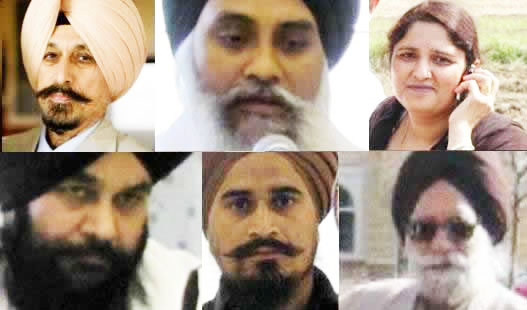
REMEMBERING THE OAK CREEK SIX
ANOTHER SIKH SLAIN
Tuesday, September 8, 2015
Sunday, August 5, 2018
Monday, August 6, 2018
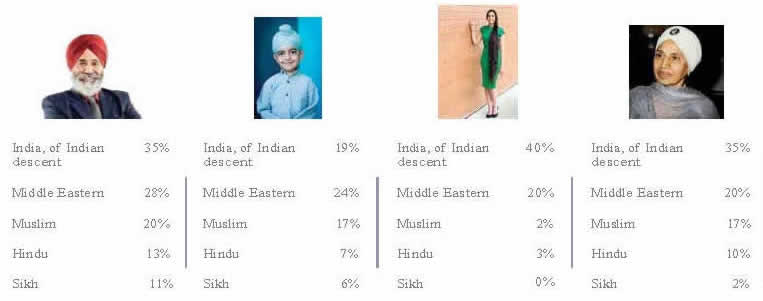
NOTE: The incidents documented in the videos above are by no means a comprehensive listing. Many other Sikhs have faced similar attacks in the U.S. National Sikh Campaign 2014 Survey of Americans
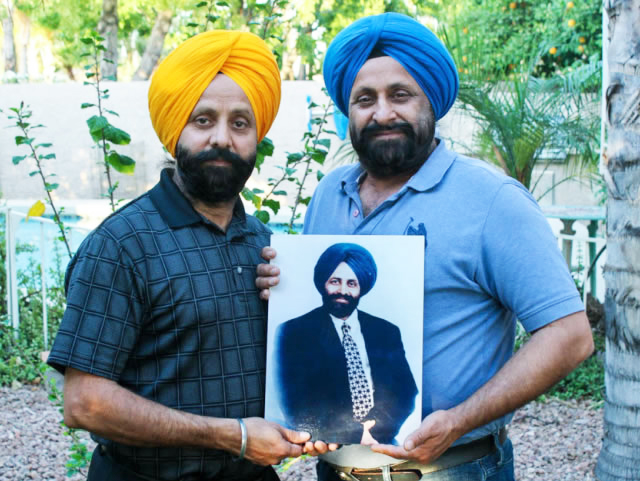
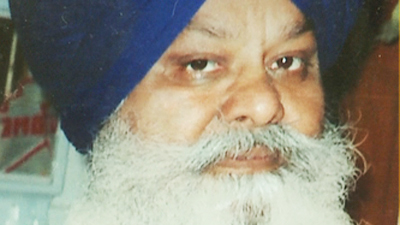
Sikh men with turbans and beards have been most affected by post 9-11 hate crimes. This backlash violence has been primarily directed at those perceived to resemble the enemy -- a turbaned and bearded Osama bin Laden, the leader of the radical Al-Qaeda. But the people who wear turbans in the United States are Sikhs, members of the world’s fifth largest religion who trace their heritage to the Punjab region of India. See GoodGuysWearTurbans.com. On September 15, 2001 in Mesa, Arizona, Balbir Singh Sodhi, a Sikh man, became the first person murdered in the hate epidemic. Out of the estimated nineteen people murdered in the immediate aftermath, four were turbaned Sikh men. See March 6, 2011 killing of 2 Sikh men. See the 'Dream in Doubt' video.
Many hate crimes and incidents have gone unreported. The federal government officially reported a 1700 per cent increase in ‘anti-Muslim’ hate crimes, just from 28 in 2000 to 481 in 2001. And this only includes crimes both reported to and recorded by police departments. Community and civil rights groups have reported thousands of hate incidents in the years following 9-11, including at least nineteen murders. Hate crimes are only the tip of the iceberg.
Violent hate crimes are the most obvious manifestation of a wide range
of racism and prejudiced behavior, including verbal harassment, threats,
staring, and avoidance. Qualitative research documents subtle forms
of discrimination that do not appear in police statements or newspaper
reports -- Sikhs, Muslims, and South Asians treated as perpetually
foreign, alien, laughable or un-American. Millions of Sikh, Muslim,
and Arab Americans have experienced subtle or overt forms of the post
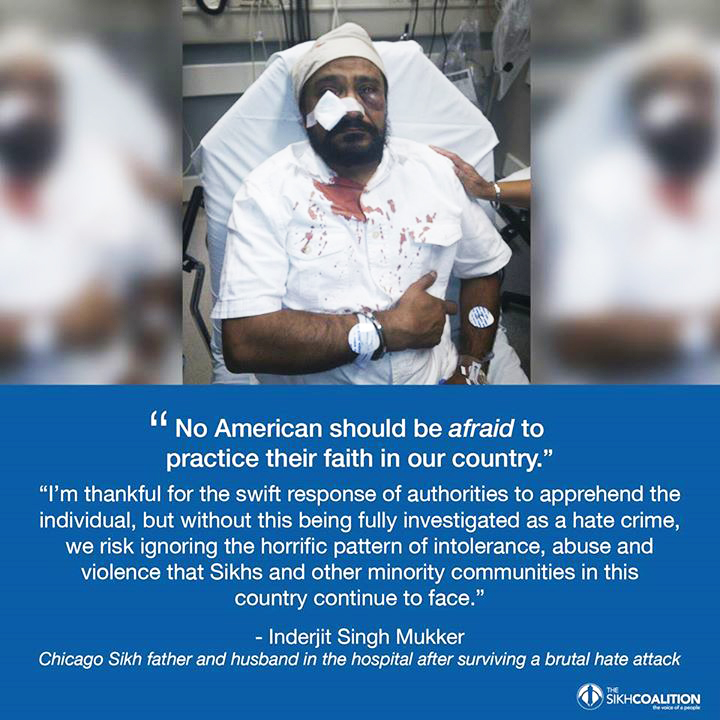
9-11 hate epidemic. Soon after the immediate outbreak of private violence, our government began to allow greater provisions for racial profiling in both immigration enforcement and domestic security programs. While these provisions were meant to protect our national security, they have violated and further alienated groups who fall into designated categories. These groups include turbaned Sikhs who have consistently experienced public violence in the form of employment discrimination, immigration enforcement, targeted security searches, or prisoner abuse. The hate epidemic persists today. Many believe that these hate crimes disappeared after the initial 9-11 aftermath. However, spikes in hate violence in the United States correspond with terrorism abroad as well as critical moments in the U.S. war in Iraq. At the onset of the war in Iraq, three turbaned Sikh cab drivers were shot in the San Francisco Bay Area alone. Due to inconsistent classification and tracking procedures at local, state, and federal levels, there is no way to provide exact statistics for present-day hate crimes. While the number of hate crimes has not returned to levels reported in the aftermath of 9-11, qualitative research confirms that Sikh, Muslim, and Arab Americans continue to experience subtle yet damaging forms of discrimination in both private and public realms. See MSNBC reporting of the March 2011 murder of Sikh man in California. See U.S. Senator Dick Durbin's comments. Hate Crimes Continue In 2012
On September 8th, police were called in the middle of the night to the burning of State Line Grocery store, owned by Arvinder Singh in Clay County, NC. "9-11 Go Hom"' was spray painted along the wall of the grocery store and although locals believe this to be a hate crime, the investigation will continue. News reports confirm that Mr. Singh was not harmed, and was in his home nearby. This being a suspected arson crime, police are investigating. See How Secure Is Your Gurdwara? -- *Sources available upon request at: info@dwf-film.com. See 'Divided We Fall' film. Also see 2012.
"Human
is a blend of saint and soldier; this is a complete person. If you
Science and Practice of Meditation and its Benefits Sing Along With These Born Again Americans All About Sikhs From the U.S. Dept. of Justice The 1974 Transition of Bhai Sahib Dyal Singh Ek Ong Kar Sat Nam Siri WhaHe Guru.com See Why Sikhs Keep Their Hair Unshorn See What Happens When You Meditate To The First Teachers of Sikh Dharma Life According To Yogi Bhajan.com If Your Dad Doesn't Have A Beard History of Sikhs In America Video Lessons Learned From The Sikhs The New York Times About Sikhs Americans Get An 'F' In Religion
More Web sites by
KhalsaWebMasters.com 
|
|

 VIEWS
VIEWS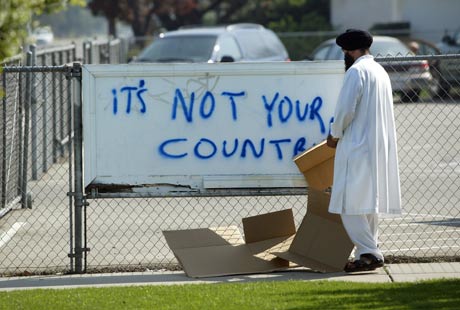


 Balbir Singh Sodhi: Shot to death