"The
purpose of life is to watch and experience living.
To enjoy living every moment of it. And to live in environments,
which are calm, quiet, slow, sophisticated, elegant. Just to be.
Whether you are naked or you have a golden robe on you,
that doesn't make any difference. The ideal purpose of
your life is that you are grateful
- great and full - that
you are alive, and you enjoy it." –
Yogi
Bhajan
Introduced
to the West in 1969 by Yogi Bhajan, Yogi
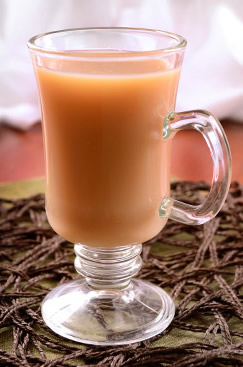
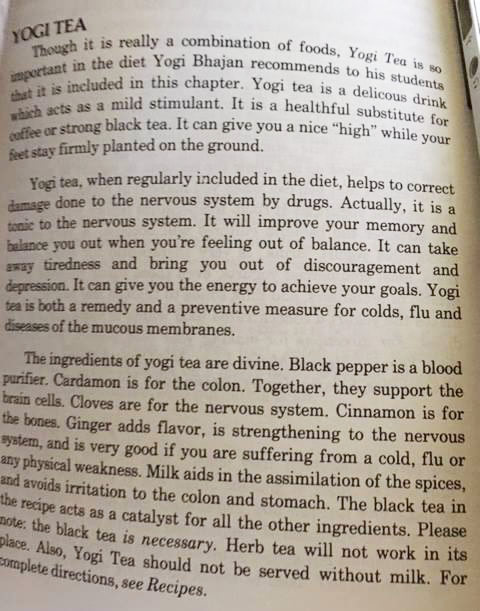
Tea* is a delicious ancient Eastern recipe and remedy. Yogi Tea is health promoting, delicious and soothing and a great coffee substitute. The benefits of Yogi Tea would fill pages. In the science of yogic foods the spices used are said to have the following properties. It acts
as a tonic for the entire nervous system. It reduces tiredness and
helps restore mental balance. Yogi Tea is a remedy and preventative
measure for colds, flu and sinus problems. The peppercorns are a blood
purifier, cardamom is for the digestive system, cloves are for the
nervous system, cinnamon is for the bones, ginger is an aid in strengthening
the nervous system, as well as energizing the entire person, and the
black tea acts as a catalyst for the other ingredients. Milk aids
in the assimilation of the spices and helps avoid irritation of the
stomach and colon. And the mucous-producing qualities of milk are
greatly reduced by boiling the milk. Most folks love the aroma and
taste of Yogi Tea. Also see Golden
Milk and Almond Milk.
Brewing
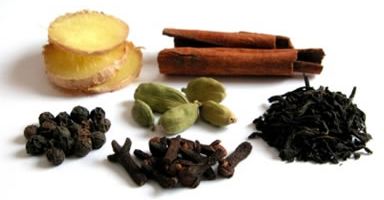
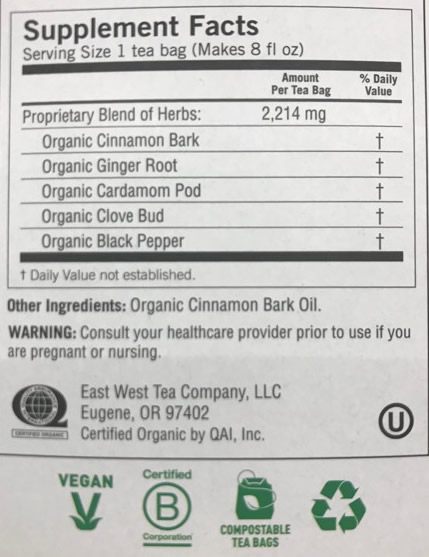
Black pepper: blood purifier Cardamom pods: digestive aid Cloves: beneficial to the nervous system Cinnamon: strengthens the bones Ginger root: healing for colds and flu, increases energy
The milk in the tea helps in the easy assimilation of spices. A homeopathic dose of black tea acts as an alloy for all the ingredients, creating just the right chemical balance. While it was not a part of the original recipe, the use of soy milk is a variation that Yogi Bhajan permitted.
INGREDIENTS FOR EACH CUP: 10 ounces of water (about 1-1/3 cups) 3 whole cloves - cloves support the nervous system 4 whole green cardamom pods, cracked - cardamom works as a digestive aid 4 whole black peppercorns - peppercorns purify the blood ½ stick cinnamon - cinnamon strengthens the bones and immune system 1 to 2 slices fresh ginger root - ginger increases energy, boosts the immune system ¼ teaspoon or 1 small bag of black tea ½ cup milk - milk helps assimilate the spices
COOKING INSTRUCTIONS:
Bring water to a boil and add spices. Cover and boil 15 to 20 minutes, then add black tea. Let sit for a few minutes, then add the milk and return to a boil. Don’t let it boil over. When it reaches a boil, remove immediately from heat, strain, and sweeten with maple syrup or honey, if desired. Save the drained spices and use them to make a second batch with slightly less water. For a special treat, add just a touch of vanilla extract. Drink plain, cold Yogi Tea first thing in the morning as a powerful tonic.
See the dangers of using Aspartame as a sugar
substitute.
NOTES: a) Without milk this brew is not really considered Yogi Tea, b) The
milk aids assimilation and digestion, c) Herb tea may not be substituted
for the black tea. In this combination and with the small amount of
black tea it has a balanced chemical action on the system.
INGREDIENTS FOR EACH GALLON: 1 gallon water 30 cloves 30 whole green cardamon pods 30 whole black peppercorns 1 large finger fresh ginger, thinly sliced 5 sticks cinnamon 1 teabag, black tea*
Add Milk** and Honey (optional) to taste ONLY after the cooking process. Do not cook honey. Bring water to boil. Add all spices except black tea bag. Boil 30-45 min. Longer is stronger. Finally, add black tea bag and boil another 5 minutes. If adding milk and honey, do so after adding the tea bag and letting it steep -- OR BETTER add milk and honey to individual cup or a small batch. That way you can store the raw tea in the fridge and prepare with milk and honey as you go. If you go cup by cup, you can leave the raw tea on the stove on the lowest flame to enjoy all day.
*The black tea is added last because it amalgamates the spices and sort of seals them. Also the tannins help assimilate the spices into the body.
**Milk helps to ease the shock of the spiciness on the stomach and intestines so drink with milk if you’re sensitive.
NOTE: For a stronger tea let the spices sit and sink to the bottom. If the tea gets really strong you can cut it with milk or reconstitute with a little water.
When Yogi Bhajan was a military commander in India there was an epidemic among the troops. He ordered all of his men to fill their canteens with Yogi Tea and drink nothing else, not even water. His battalion was the only unit that didn’t get sick! Yogi tea purifies the blood, lungs and circulatory system. It cleans the liver and has many more unseen benefits. It’s good to drink Yogi Tea every day. See How To Make Yogi Tea Video.
More About
The Ingredients
Ginger
is considered to be the universal medicine in Ayurveda.
Ginger is one of the best herbs for nausea and vomiting. It aids digestion
and assimilation generally, relieves cold spasms and cramps, and supports
menstruation.
Ginger is particularly synergistic with onions and garlic, the combination
of the three being called 'Trinity Roots' in Ayurvedic dietary therapy.
Whether consumed as a food, or as a potent medicine, ginger acts in
diabetics both by stimulating pancreas cells and by lowering lipids
(cholesterol and triglycerides) in the blood.
Ginger is considered to be one of the most important Ayurvedic medicines
in the treatment of arthritis, especially osteoarthritis.
Ginger is one of the best herbs for nausea and vomiting. It aids digestion
and assimilation generally, relieves cold spasms and cramps, and supports
menstruation.
Herbs and spices are typically not significant sources of nutrients
in the diet, but ginger has relatively high calcium and iron content.
Ginger increases peripheral circulation, so is used clinically for
cold hands and feet. Being diaphoretic, ginger is a treatment for
cold and flu.
Cinnamon is a very mild herb that is well tolerated
by a broad variety of people. Cinnamon is a pungent, sweet and hot
yang tonic. It increases general vitality, warms and energizes the
body as a whole, counteracts congestion, stops diarrhea, improves
digestion, relieves abdominal spasms, is anti-rheumatic and aids peripheral
blood circulation.
Cinnamon enhances the flow of blood through the body, but, paradoxically,
herbalists revere
it for its ability to stop excessive bleeding.
Cinnamon bark excels in treating menstrual cramps. Many women have
found it to be a dramatic remedy, often giving relief on the first
try, after years of monthly pain.
Like dong quai, cinnamon is a warming herb, which in Chinese terms,
"warms the middle and disperses cold." This property makes
it a very good choice to support menstruation. Cinnamon enhances circulation
to the uterus, so the warm relaxing blood flow can relieve the cramping.
As you would imagine, cinnamon is often used together with dong quai
for this symptom.
The person who can benefit most from cinnamon is cold, dry and frail,
and often has osteoarthritis, asthma and digestive problems.
Since cinnamon is common as a culinary herb, it is necessary to be
a selective shopper to get good quality. You can find medicinal quality
cinnamon in your health food store, Chinese herb pharmacy, or from
a top quality medicinal tea manufacturer.
According to Chinese medicine practitioners should be used with caution
during pregnancy.
Cardamom is an excellent digestive enhancer. It is
used in herbal medicine to treat gastralgia, enuresis (involuntary
urination), spermatorrhea, phlegm, indigestion and flatulence. This
herb is particularly appropriate for use in lung related formulas.
It aids the spleen, the stomach and lungs.
Cloves
promote circulation in the lungs and the stomach. They treat cough,
and enhance digestion.
Herbalists use cloves
to aid the lymph system. The volatile oil is a powerful analgesic.
Clove is known to lower triglycerides and blood sugar.
Black Pepper is known only as a humble condiment
in most of the Western world, but in Asia, it is considered to be
the foremost detoxifier and anti-aging herb. Black pepper is a warming
remedy.
This herb increases circulation, and lowers blood pressure and contains
compounds that prevent osteoporosis.
Black pepper has been long used as a detoxifier. Piperine, a major
active ingredient, also aids the liver.
Black pepper reduces free radicals. It is antioxidant, and prevents
the depletion of glutathione. It also prevents the destruction of
other antioxidants, such as vitamin A.
Pepper is used for treating sinus congestion. Its warming nature balances
cold herbs in formulas. Boil 10 peppercorns in milk, strain, and drink.
--
History of Yogi Tea
By Sat Ganesha Singh Khalsa
Our story began in 1969 when Yogi Bhajan, an inspirational teacher of holistic living, started teaching Kundalini Yoga in the West. He shared with his students his wisdom and knowledge of healthy living and the beneficial properties of herbs while serving a comforting and aromatic spiced tea they affectionately named “Yogi Tea”.
We are privately owned and operated by East West Tea Company, LLC. Based in Springfield, Oregon, our headquarters is approximately 100 miles south of Portland, Oregon, where we have a sales and marketing office. In the beautiful Pacific Northwest we enjoy a temperate climate with abundant opportunities for outdoor and cultural activities.
Our products are blended, packaged and shipped from our Springfield facility, where we have been making – and sipping – delicious and functional teas since 1972. Our 60 varieties of herbal, green and black teas are available nationwide in natural food stores as well as leading grocery and mass stores. It is the strength of our people and our guiding principle that have contributed to Yogi tea becoming and remaining the #1 tea brand in the U.S. natural channel.
Our Commitment is summarized in our guiding principle: “Feel Good, Be Good, Do Good.”
Yogi Bhajan's
Original Formula is back!
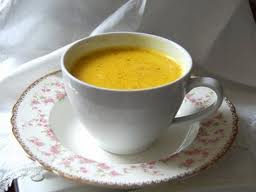
Golden Milk
This
delicious hot drink is very good for the spine. It lubricates
all the joints and helps to break up calcium deposits.
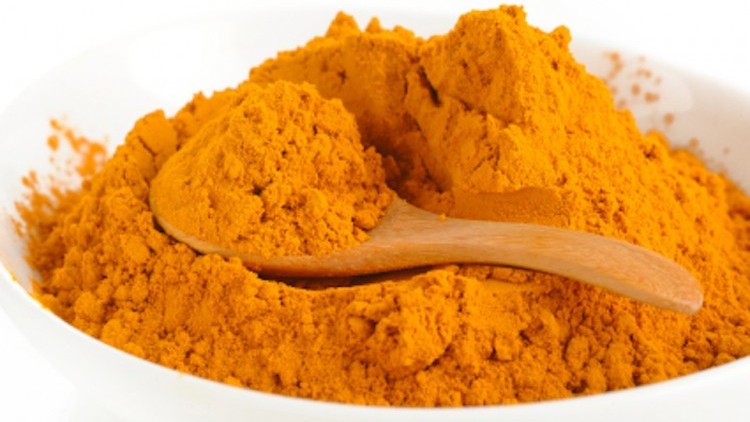
1 cup unsweetened nut milk 1 Tbsp coconut oil (or ghee) 1 tsp turmeric 1/2 tsp cinnamon 1/4 tsp dried ginger 1 dropper's worth Stevia (Or add honey
or maple syrup to taste.)
Heat, blend and enjoy.
*Adding in some fresh pepper will help to increase the bioavailability of curcumin - active component found in turmeric. This hot drink is excellent for frayed nerves. Think being easily startled, sensitive to noise, anxiety or depression.
Notes: Boil
a quantity of turmeric in water for about 8 minutes until it forms a thick
paste for storing in refrigerator
for up to 40 days, if
desired. If too much water boils away, add a little more water. Meanwhile, bring your nut milk to a boil with the coconut oil. As soon
as it boils, remove from heat. Combine the two mixtures and
add a dropper's worth of Stevia, or add honey or maple syrup to taste.
As
a change of pace, whiz golden milk in the blender until frothy
and serve with a sprinkle of cinnamon. Also see The Power of Oregano.
INGREDIENTS:
1/3 cup raw honey
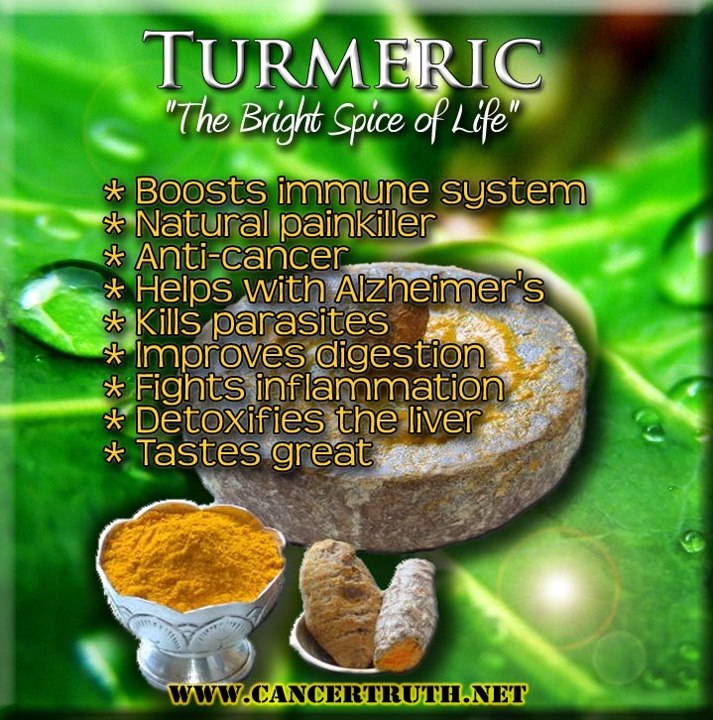
2-1/2 teaspoons dried turmeric
1 Lemon
Lots of freshly ground black pepper
Work the turmeric into the honey until it forms a paste. You can keep this on hand, in a jar, for whenever you'd like a cup. For each cup of tea, place a heaping teaspoon of the turmeric paste in the bottom of a mug. Pour hot (but not boiling water) into the mug, and stir well to dissolve the turmeric paste. Add a big squeeze of juice from a lemon, and a good amount of black pepper. Enjoy!
Stir now and then as you drink so all the good stuff doesn't settle to the bottom, or top off with more hot water as you drink it. Prep time: 2 minutes - Cook time: 3 minutes. NOTE: Turmeric tends to stain anything it comes into contact with, so be careful.
1.5
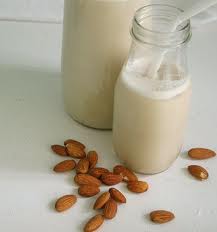
cups whole peeled* almonds or other whole raw almonds 4
cups water 1
tsp vanilla extract - optional 1.5
tblsp maple syrup or honey - optional dash
of cinnamon - optional
Other
items: blender metal
strainer cheesecloth
First thing, soak the almonds
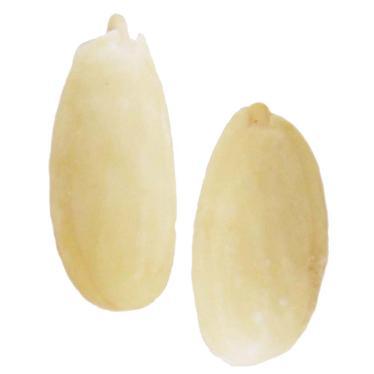
long enough to enable removal of the skin. Peeled almonds work best
because they have the papery, slightly bitter almond skins removed.
Unpeeled almonds can be used, but the milk will need to be strained
more to get all the skins out. The most important point is that the
almonds are raw, not toasted.
*Peeled almonds
Cover the peeled almonds with
water, and soak them for at least 4 hours. This softens them and makes
them much easier to blend.
Once they're soft, strain the
water from the almonds, and place the soaked almonds in the blender.
Add 1.5 cups of water. Use less water in the beginning of the procedure,
so the mixture will become a smoother paste.
Blend the almonds in water
for 1-2 minutes. Stop occasionally to move the mixture around with
a spatula. Do not be alarmed when the mixture starts looking like
chunky baby food.
After a few minutes, it will
become a smooth puree. Add the cinnamon and maple syrup or honey.
(Note: No honey for babies before they are at least one year old.
Botulism can be a problem with a baby's immune system, and honey is
a possible carrier. Maple syrup is preferred.)
Add the remaining 2.5 cups
of water. Blend everything together for another 2-3 minutes, until
it is completely smooth and frothy. Taste the milk, and adjust the
vanilla, cinnamon, and-or sweetener to taste. A pinch of salt will
bring out other flavors in the milk.
The almond solids in the milk
tend to give it a chalky texture. For a smoother, more creamy product
strain the almond milk.
Place 3 or 4 layers of cheesecloth
over a metal strainer set over a bowl. Pour the almond milk through
the strainer into the bowl. Use a spoon or spatula to press down on
the strainer and move the solids around, to help the almond milk through
the cheesecloth.
Once the milk has passed through
the strainer, gather up the cheesecloth and gently squeeze it to remove
excess liquid. What's left is a fine almond meal. You can discard
it, or you can dry it out in a very low heat oven and use it in place
of almond flour in baking recipes.
Use
almond milk in place of milk for drinking, on cereal, or in baking
recipes. It keeps fresh in the refrigerator for 3-4 days. You can
also freeze it.
Yogurt
1
quart milk 2-3
tblsp. yogurt
Place
milk in a saucepan. Heat it slowly so as not to scorch it. Just short
of boiling, remove it from heat and let cool to a lukewarm temperature,
about 118 degrees F. As it cools, stir it occasionally. Then add 2-3
tblsp. of already made yogurt as a 'starter' and stir gently and thoroughly.
You can leave the milk in the saucepan, covered, or you can pour it
into a sterilized jar with a lid. Wrap tightly in a towel to hold
in the heat, and place in a warm, dark place where the temperature
can be maintained for 6-7 hours. A gas oven with only the pilot light
on works well. An insulated cooler, or even a cardboard carton covered
with a blanket will usually do the trick. Let it sit undisturbed.
The temperature must be neither too hot nor too cold, or the yogurt
will not form. After 6-7 hours, you may remove it from its 'hiding
place' and refrigerate. To grow a stronger yogurt culture (for more
acidophilus in the yogurt), allow it to sit out at room temperature
for from 3 hours to three days.
Jalapeno Milk
This
is a great drink for heading off a cold or flu when you feel one coming
on. But be careful! It's hot. If you've never tried it before, use
only the minimum quantity of jalapeno's. One more piece of advice
-- it's not quite so hot if you drink it with a straw.
2-5
fresh jalapeno chiles 8
oz. milk
Chop
jalapeno's and blend with milk. --
Who is Yogi Bhajan?
Yogi Bhajan
Motto: If you cannot see God in all, you cannot see God at all.
Credo: It’s not the life that matters, it’s the courage
that you bring to it.
Challenge: Don’t love me, love my teachings. Be ten times greater
than me.
Yogi
Bhajan (Harbhajan Singh Khalsa Yogiji)
is a Kundalini Yoga Master, a
spiritual teacher, and the chief religious and administrative authority
for the Ministry of Sikh Dharma in the
Western Hemisphere. Yogi Bhajan was given the Ministerial title of
"Siri Singh Sahib" by the
central governing body of the Sikh religion,
the Akal Takhat, in recognition of his work
in the Western world. He is an individual of remarkable insight, powerful
energy and an unwavering commitment to global healing, peace, and
spiritual awareness.
Yogi Bhajan is a Master of Kundalini Yoga, the Yoga
of Awareness, and a dedicated and inspired teacher. Since arriving
in the United States in 1969, he has dedicated himself to bringing
meaning, dignity and a reconnection of Spirit into the lives of people
everywhere, especially those people who have become lost and confused
through the use of drugs. See YogiBhajansTeacher.com.
Ayurvedic Herbalist
Karta Purkh Singh Khalsa
Karta
Purkh Singh Khalsa, D.N.C., R.H. (AHG), is one of the foremost natural
healing experts in the field today and one of the foremost herbal
experts. He is a coauthor of the popular book Herbal Defense (Warner
Books), an accomplished author, teacher and lecturer. He has taught
hundreds of classes, and has written countless articles for a wide
variety of publications, including Herb Quarterly.
Karta Purkh Singh Khalsa has studied
a wide spectrum of physical and mental health care therapies from
all over the world and is well versed in using therapies from Western,
Traditional Chinese and Ayurvedic Herbalism. He focuses especially
on Ayurvedic medicine and on the therapeutic value of yoga and meditation
for creating healthy lifestyle practices. He is also a Certified Dietitian-Nutritionist
and can counsel clients on creating healthy diet plans that suit their
body's specific needs.
Karta Purkh Singh Khalsa is available by phone
for nutritional and/or herbal consultation. Clients receive a comprehensive,
individualized dietary and herbal program based upon their presenting
condition or goals for a healthy lifestyle. A one time consultation
is available for a health assessment and recommendation for healthy
lifestyle choices. Ongoing consultations are also available for those
who are living with more involved health concerns or chronic conditions. Contact Karta Purkh Singh at kpkhalsa@msn.com.
*Consultation
with a health care professional should occur before applying adjustments
or treatments to the body, consuming medications or nutritional supplements,
and before dieting, fasting or exercising. None of these activities
are herein presented as substitutes for competent medical treatment.
See Disclaimer.






 Black pepper: blood purifier
  10 ounces of water (about 1-1/3 cups)




 *Consultation
with a health care professional should occur before applying adjustments
or treatments to the body, consuming medications or nutritional supplements,
and before dieting, fasting or exercising. None of these activities
are herein presented as substitutes for competent medical treatment.
See
*Consultation
with a health care professional should occur before applying adjustments
or treatments to the body, consuming medications or nutritional supplements,
and before dieting, fasting or exercising. None of these activities
are herein presented as substitutes for competent medical treatment.
See 


