| |
|
|
News
'Miews'

Latest 'News'

More
'News'
Americans
get an 'F' in religion
By
Cathy Lynn Grossman
"We
are not all on the same one path to the same one God ...
Religions aren't all saying the same thing. That's presumptuous
and wrong. They start with different problems, solve the
problems in different ways, and they have different goals."
"If you
think Sunni and Shia are the same because they're
both Muslim, and you've been told Islam is about peace,
you won't understand what's happening in Iraq."
March 8 - Sometimes
dumb sounds cute: Sixty percent of Americans can't name five of the
Ten Commandments, and 50% of high school seniors think Sodom and Gomorrah
were married.
Stephen Prothero, chairman of the religion department at Boston University,
isn't laughing. Americans' deep ignorance of world religions - their
own, their neighbors' or the combatants in Iraq, Darfur or Kashmir -
is dangerous, he says.
His new book, Religious Literacy: What Every American Needs to Know
- and Doesn't, argues that everyone needs to grasp Bible basics, as
well as the core beliefs, stories, symbols and heroes of other faiths.
Belief is not his business, says Prothero, who grew up Episcopalian
and now says he's a spiritually "confused Christian." He says
his argument is for empowered citizenship.
"More and more of our national and international questions are
religiously inflected," he says, citing President Bush's speeches
laden with biblical references and the furor when the first Muslim member
of Congress chose to be sworn in with his right hand on Thomas Jefferson's
Quran.
"If you think Sunni and Shia are the same because they're both
Muslim, and you've been told Islam is about peace, you won't understand
what's happening in Iraq. If you get into an argument about gay rights
or capital punishment and someone claims to quote the Bible or the Quran,
do you know it's so?
"If you want to be involved, you need to know what they're saying.
We're doomed if we don't understand what motivates the beliefs and behaviors
of the rest of the world. We can't outsource this to demagogues, pundits
and preachers with a political agenda."
Scholars and theologians who agree with him say Americans' woeful level
of religious illiteracy damages more than democracy.
See
the complete article here. --
America's
Generations Gap
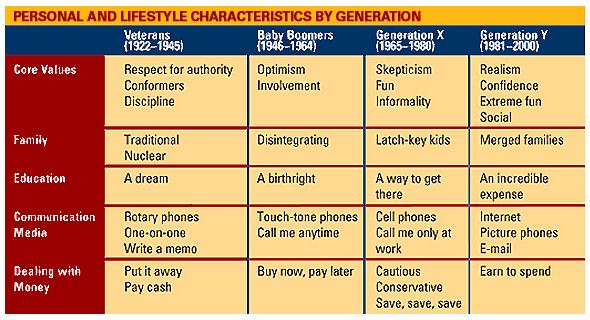
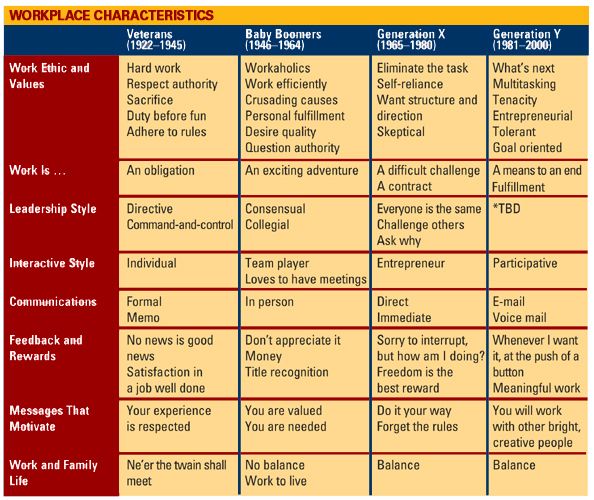
June 4 - In
an article appearing in the Orlando Sentinel, Harry Wessel reports that
there's a generation gap in America's workplace that's serious enough
to cause a big brain drain in coming years. According to Randstad USA,
an Atlanta-based employment-services company;
"U.S. businesses
risk a shortage of skilled labor -- not because of the lack of manpower
in the wake of retiring baby boomers, but because of the limited transfer
of knowledge.
According to
a Harris Interactive survey, there is little interaction among the four
generations of U.S. employees.
It defined the
four generations as Matures* (those born before 1946), Baby Boomers
(born 1946-1964), Generation X (born 1965-1979) and Generation Y (born
1980-1988).
The different
generations rarely interact with one another and often do not recognize
each other's skills or work ethic.
Employers should
help close the knowledge gap by instituting ways for each generation
to recognize the strengths and value of all colleagues."
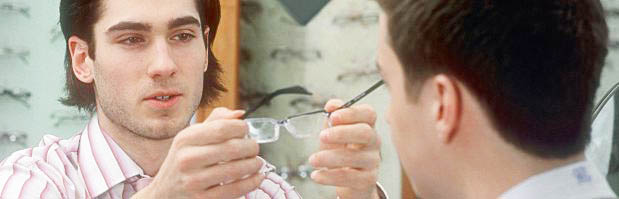
See the Opticians'
Generation Gap.
Some
Possible Cancer Answers

By
Hari Singh Bird
See
Excerpts From 'Cancer Answers' Link Below*
"Low
oxygen levels in cells could be a fundamental cause of cancer."
"There
are several reasons cells become poorly oxygenated. An overload of toxins
clogging up the cells, poor quality cell walls that don't allow nutrients
into the cells, the lack of nutrients needed for respiration, poor circulation
and perhaps even low levels of oxygen in the air we breathe.
Cancer cells produce excess lactic acid as they ferment energy.
Lactic acid is toxic, and tends to prevent the transport
of oxygen into neighboring normal cells. Over time as these cells replicate,
the cancer may spread if not destroyed by the immune system.
Chemotherapy and radiation are used because cancer cells are weaker
than normal cells and therefore may die first.
However, chemo and radiation damage respiratory enzymes in healthy cells,
and overload them with toxins, so they become more likely to develop
into cancer. The underlying cancer causing conditions are worsened,
not improved. And the cancer usually returns quickly a second time unless
you make changes to support the health of your body." --
Some
Personal Observations
"Within
and without all environments,
good health and sustained wellness is
dependant on the rapid removal of waste."
a) In my experience
as a teacher of Kundalini Yoga, I have observed many people, young and
old, with poor breathing habits. The practice of Kundalini
Yoga** (inclusive of the Breath
of Fire, Deep Breathing, Stretching, Internal Massage, etc.),
and other aerobic exercising, can provide additional and much needed
oxygen to oxygen starved cells, especially the brain.
Notes from a
Kundalini Yoga class: "No matter how good the diet is, we tend
to exceed the self cleaning capacity of our bodies. Uric acid (a
byproduct of meat consumption), calcium crystals, and many
other wastes and poisons get stored in tissues and joints. They make
us stiff and may cause many diseases. In Kundalini
Yoga, muscle stretching and internal massage bring waste back
into circulation so that the lungs, intestines, kidneys, and skin are
able to remove it."
b) Cow's milk contains lots of lactic
acid.***
For some interesting
and thought provoking words about Kundalini Yoga and our consumption
of milk,
water, and flesh
food, see these links.
*http://cance-prevention.net/?engine=overture!801&keyword=sign+of+lung+cancer
**http://www.harisingh.com/newsKundalini.htm
***http://www.milksucks.com/index2.asp
http://www.watercure.com
http://www.harisingh.com/newsNews.htm#meat
--
Whatever
Happened To
Old Fashioned Optical Dispensing?
By
Hari Singh Bird, LDO
Dispensing Optician since 1958
The
Generation Gap

Hands-on,
in place, on-the-face
dispensing, a thing of the past?
"For
the truly skilled Optician,
the standard of care must include
personalized design and hands-on
fitting of eyewear on each Patient."
It is apparent
to many of today's senior Ophthalmic
Patients and other industry observers that there's little connection
between the applied dispensing skills, i.e., the 'hands-on'
assessment, design, adjustment and delivery techniques of "Mature
Generation" skilled Opticians of yesteryears, and the practices
of many of today's Retail Dispensers and Managers.
Through no fault
of their own, due to the absence of multi-generational connections,
many of today's Dispensers, especially Retail
Managers, are seen to provide and-or oversee only the most
casual delivery of
prescription eyewear
as if it were ready-to-wear clothing or over-the-counter general merchandise,
with little or no attention being given to the all-important Full Discovery
and Disclosure Patient Interview, or to the subtler frame-fitting details
as practiced by their hands-on-skilled predecessors.
Unfortunately, their attention is now preoccupied almost entirely with
quantity-over-quality issues, such as daily sales goals, sales reports
and other marketing efforts to the detriment of Patient satisfaction,
which of course, adversely impacts sales as well as referrals. Consequently,
many of today's Ophthalmic Retailers are chronically struggling with
high rates of returns and refunds.
"The
most perfect ophthalmic Rx can be compromised if the
eyewear does not provide comfort and long-term wear-ability."
And if any hands-on
skill is applied, it may amount to no more than a slight adjustment
of the frame's nosepiece and-or a sharp and short ninety-degree bend
of the frame's temples at the junction of the ears. In other words,
no reshaping of the temples to follow the lines of the skull occurs,
in the mistaken belief that it is the temples-to-ears contact that holds
the eyewear in place. Of course, it's the temples-to-skull contact,
NOT THE EARS, that actually holds the eyewear in place. See
example here.
In fact, many
of today's Dispensers only require the delivered eyewear to look straight
or "cool," never mind that it does not fit the asymmetric
facial or cranial contours of the Patient. It's as if they are fitting
a one-dimensional, flat-surfaced counter top instead of a multi-dimensional,
contoured human face and skull. Some have been known to go so far as
to 'fix', i.e., remove, any previously applied skull-conforming configuration,
albeit more comfortable for the Patient.
"In
order to excel as a Dispensing Optician, one must first have
the attitude of a Healer,
and then, the sense of a retail merchant."
Through no fault
of their own, today's Dispensers are unaware of the decades-old decline
of applied hands-on, in-place, on-the-face fitting skills. This situation
has produced at least two generations, "Generation X" and
"Generation Y" Opticians, including many latter generation
Board Certified Opticians, who have never witnessed any demonstrations
of these hands-on skills.
Furthermore, it's uncertain if any of today's Schools of Opticianry
are teaching dispensing skills to this same degree. And as a result,
many latter day Dispensers have come to believe, after practicing a
couple of years of their method of 'delivering' eyewear, that they are
sufficiently skilled and are in need of no additional training in the
art and craft of dispensing eyewear, and worse, that they have little
to learn from more skilled colleagues.
As an example,
a Patient recently reported their experience whereby they were just
handed their new eyeglasses at an Optometrist's office by a Dispenser
with 20 years of experience, whereupon no adjustments to the eyewear
were offered and the Patient was forced to seek the appropriate service
elsewhere. The Patient subsequently reported that she felt fortunate
to find an Optician having the skills to relieve her discomfort after
some considerable time spent searching. Unfortunately, similar episodes
have become rather common throughout the retail optical industry.
"Hands-on
dispensing is a soon-to-be-lost art. If we continue today's
trends to the narrow and strictly retail approach to ophthalmic services,
the marketing of ready-to-wear, over-the-counter eyewear will continue
to
flourish, hands-on dispensing skills and services will disappear, Patients
will continue to suffer from substandard quality of service, and eyewear
will
continue to be delivered by an increasing number of unskilled Dispensers.
The current retail paradigm for dispensing eyewear needs to be overhauled."
Placing
The Frame Directly
On The Patient Is Important

"By
placing the eyewear directly on the Patient, the Optician
can get a much better sense of how the frame fits the Patient,
whether too tight or loose, and what adjustments are needed."
Some portion
of the Opticians' Generation Gap is explicable due to the current focus
on Dispenser training by way of on-the-job apprenticeship programs,
many of which are devoid of adequate Full Discovery Patient Interview
training, and absent any Hands-on, In-place, On-the-face assessment,
design and adjustment of prescription eyewear as practiced by skilled
Opticians. But this gap is equally a result of today's over-emphasis
on the corporate retail paradigm whereby the latter generations especially
tend to become more skilled at parroting slogans, giving testimonials
about sales prowess, and answering questions about company policy, sales
goals and promotions from company executives, all of which afford them
no experience in conducting a Patient interview or effectively assessing,
designing, and then fitting prescription eyewear directly on the Patient.
Unfortunately today's aspiring Dispensers tend to become merchants,
peddling ready-made, over-the-counter merchandise, not skilled Opticians,
dispensing customized, prescription eyewear.
"It's
time for Optical Retailers to think outside the 'Big Box.'
Unlike other retail venues, the delivery of ophthalmic services, i.e.,
adjustments and repairs at no charge, often precedes a future sale."
This leads one
to wonder whether board certification and-or licensing is really effective,
since just about anybody can hand over a pair of eyeglasses or contact
lenses and operate a cash register, as we see demonstrated in some of
today's true-to-life TV ads, whereby the Patient and Dispenser never
make direct contact. The Dispenser just hands the Patient their eyewear.
The Patient puts the eyeglasses on, looks in the mirror, and leaves.
This scenario is so commonplace today in the real world that many Patients
never expect to have any form-fitting adjustments applied to a frame.

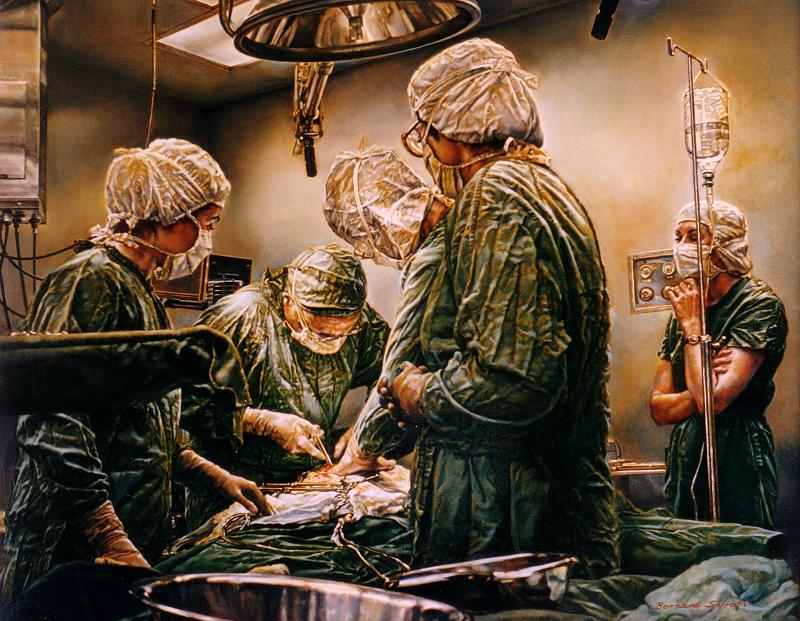
"A
Surgeon must train for years in actual hands-on practice,
in residency, before being considered to be a qualified Surgeon."
In the eyes
of the Consumer the hands-on
custom fitting aspect of dispensing eyewear has become an exotic
and unfamiliar craft, and the art has devolved to such an extent that
many Consumers (even many Dispensers) now actually think that a hand-fitted
frame is inferior to an off-the-board frame. For example, some Patients,
having never seen or experienced a hands-on customized
frame fitting, have been known to request that the skull conforming
adjustments, having been applied by a skilled Optician of the hands-on-school,
be removed from temple ends because "they don't look straight,
flat and normal like other people's glasses." Unfortunately, the
"other people's glasses" were more than likely never customized
to fit either.
There are some
industry observers who see the devolution of Ophthalmic Dispensing as
the result of an overall corporate strategy perpetrated by some industry
members to eliminate any reliance on competent, licensed Dispensers
in order to better manage their labor costs and enhance their profits.
But the Profession is mostly the victim of the perpetual tension and
struggle between opposing market forces; the Company's need for control
of inventory and labor costs, and the Patient's desire for choice and
comfort. What many corporations don't understand is that giving the
Consumer more of what they want is best for everybody. The last century's
most successful entrepreneur, Sam Walton, taught that the Company must
always favor the Consumer, first. See
Retail Optical vs. Healthcare Provider --
See
complete article here.
A
Call To The Faithful

By
Lou Dobbs
CNN Commentator
"This
week the head of the Los Angeles Archdiocese, Cardinal Roger
Mahony, basically threatened his faithful with denial of heaven if
they don't support amnesty for illegal aliens."
NEW YORK (CNN)
- The separation of church and state in this country is narrowing. And
it is the church, not the state that is encroaching. Our Constitution
protects religion from the intrusion or coercion of the state. But we
have precious little protection against the political adventurism of
all manner of churches and religious organizations.
The leadership of the Catholic Church and many Protestant churches,
as well as Jewish and even Muslim religious organizations, are driving
that political adventurism as those leaders conflate religion and politics.
And while there is a narrowing of the separation between church and
state, there is a widening schism between the leadership of churches
and religious organizations and their followers and members.
Conservative evangelical leader James Dobson recently said actor and
former Sen. Fred Thompson wasn't Christian enough to be president. He
instead chose to commend Newt Gingrich, who has been married three times
and recently admitted to an extramarital affair. Five evangelical Christian
leaders signed the "Land Letter" to President Bush in 2002
affirming a Christian theological basis to invade Iraq.
This week the head of the Los Angeles Archdiocese, Cardinal Roger Mahoney,
basically threatened his faithful with denial of heaven if they don't
support amnesty for illegal aliens. The good Cardinal said: "Anything
that tears down one group of people or one person, anything that is
a negative in our community, disqualifies us from being part of the
eternal city."
The nation's religious leaders seem hell-bent on ignoring the separation
of church and state when it comes to the politically charged issue of
illegal immigration. A new coalition called Christians for Comprehensive
Immigration Reform Wednesday will begin lobbying lawmakers with a new
advertising and direct mail campaign on behalf of amnesty for illegal
aliens.
The Rev. Jim Wallis of Sojourners Magazine put it this way: "If
given the choice on this issue between Jesus and Lou Dobbs, I choose
my Lord and savior, Jesus Christ."
But before the faithful acquiesce in the false choice offered by the
good Reverend, perhaps he and his followers should consult Romans 13,
where it is written: "Everyone must submit himself to the governing
authorities, for there is no authority except that which God has established.
The authorities that exist have been established by God. Consequently,
he who rebels against the authority is rebelling against what God has
instituted, and those who do so will bring judgment on themselves."
There is a more obvious and immediate judgment offered by the followers
and members of both the Protestant and Catholic Churches. A Zogby poll
last year asked churchgoers if they supported the House bill that would
make illegal aliens return home and reduce future illegal immigration
by securing the border and performing checks on illegal employers. Seventy-five
percent of Protestants responded that was a good or very good idea,
77 percent of born-again Christians also agreed, and 66 percent of Catholics
also backed tougher enforcement measures.
This schism between our church leaders and church members is just as
broad and deep as that between our elected officials and their constituents
across the country. Neither the state nor the church is exhibiting wisdom
or fidelity to our national values in permitting the widening of that
divide.
The opinions expressed in this commentary are solely those of the writer.
--
Trash
Talk Radio

By
Gwen Ifill
Op-Ed Contributor
New York Times Opinion
"This
country will only flourish once we consistently learn to applaud
and encourage the young people who have to work harder just to
achieve balance on the unequal playing field."
Washington DC
- LET’S say a word about the girls. The young women with the musical
names. Kia and Epiphanny and Matee and Essence. Katie and Dee Dee and
Rashidat and Myia and Brittany and Heather.
The Scarlet Knights of Rutgers University had an improbable season,
dropping four of their first seven games, yet ending up in the N.C.A.A.
women’s basketball championship game. None of them were seniors.
Five were freshmen.
In the end, they were stopped only by Tennessee’s Lady Vols, who
clinched their seventh national championship by ending Rutgers’
Cinderella run last week, 59-46. That’s the kind of story we love,
right? A bunch of teenagers from Newark, Cincinnati, Brooklyn and, yes,
Ogden, Utah, defying expectations. It’s what explodes so many
March Madness office pools.
But not, apparently, for the girls. For all their grit, hard work and
courage, the Rutgers girls got branded “nappy-headed ho’s”
— a shockingly concise sexual and racial insult, tossed out in
a volley of male camaraderie by a group of amused, middle-aged white
men. The “joke” — as delivered and later recanted
— by the radio and television personality Don Imus failed one
big test: it was not funny.
The serial apologies of Mr. Imus, who was suspended yesterday* by both
NBC News and CBS Radio for his remarks, have failed another test. The
sincerity seems forced and suspect because he’s done some version
of this several times before.
I know, because he apparently did it to me.
I was covering the White House for this newspaper in 1993, when Mr.
Imus’s producer began calling to invite me on his radio program.
I didn’t return his calls. I had my hands plenty full covering
Bill Clinton.
Soon enough, the phone calls stopped. Then quizzical colleagues began
asking me why Don Imus seemed to have a problem with me. I had no idea
what they were talking about because I never listened to the program.
It was not until five years later, when Mr. Imus and I were both working
under the NBC News umbrella — his show was being simulcast on
MSNBC; I was a Capitol Hill correspondent for the network — that
I discovered why people were asking those questions. It took Lars-Erik
Nelson, a columnist for The New York Daily News, to finally explain
what no one else had wanted to repeat.
“Isn’t The Times wonderful,” Mr. Nelson quoted Mr.
Imus as saying on the radio. “It lets the cleaning lady cover
the White House.”
I was taken aback but not outraged. I’d certainly been called
worse and indeed jumped at the chance to use the old insult to explain
to my NBC bosses why I did not want to appear on the Imus show.
I haven’t talked about this much. I’m a big girl. I have
a platform. I have a voice. I’ve been working in journalism long
enough that there is little danger that a radio D.J.’s juvenile
slap will define or scar me. Yesterday, he began telling people he never
actually called me a cleaning lady. Whatever. This is not about me.
It is about the Rutgers Scarlet Knights. That game had to be the biggest
moment of their lives, and the outcome the biggest disappointment. They
are not old enough, or established enough, to have built up the sort
of carapace many women I know — black women in particular —
develop to guard themselves against casual insult.
Why do my journalistic colleagues appear on Mr. Imus’s program?
That’s for them to defend, and others to argue about. I certainly
don’t know any black journalists who will. To his credit, Mr.
Imus told the Rev. Al Sharpton yesterday he realizes that, this time,
he went way too far.
Yes, he did. Every time a young black girl shyly approaches me for an
autograph or writes or calls or stops me on the street to ask how she
can become a journalist, I feel an enormous responsibility. It’s
more than simply being a role model. I know I have to be a voice for
them as well.
So here’s what this voice has to say for people who cannot grasp
the notion of picking on people their own size: This country will only
flourish once we consistently learn to applaud and encourage the young
people who have to work harder just to achieve balance on the unequal
playing field.
Let’s see if we can manage to build them up and reward them, rather
than opting for the cheapest, easiest, most despicable shots.
Gwen Ifill is a senior correspondent for “The NewsHour With Jim
Lehrer” and the moderator of “Washington Week." --
*Note: Don Imus was fired from his positions with NBC News and CBS just
hours after his suspensions from both networks.
Invisibility
Cloak May Be Possible
By
Andrew Bridges
Imagine an invisibility
cloak that works just like
the one Harry Potter inherited from his father.
An invisibility
cloak and other Harry Potteresque types of magic are likely doable,
researchers say. "What's standing in the way is our engineering
capabilities," said John Pendry, a physicist at the Imperial College
London.
Researchers in England and the United States think they know how to
do that. They are laying out the blueprint and calling for help in developing
the exotic materials needed to build a cloak.
The keys are special manmade materials, unlike any in nature or the
Hogwarts School of Witchcraft and Wizardry. These materials are intended
to steer light and other forms of electromagnetic radiation around an
object, rendering it as invisible as something tucked into a hole in
space.
"Is it science fiction? Well, it's theory and that already is not
science fiction. It's theoretically possible to do all these Harry Potter
things, but what's standing in the way is our engineering capabilities,"
said John Pendry, a physicist at the Imperial College London.
Details of the study, which Pendry co-wrote, appear in Thursday's online
edition of the journal Science.
Scientists not involved in the work said it presents a solid case for
making invisibility an attainable goal.
"This is very interesting science and a very interesting idea and
it is supported on a great mathematical and physical basis," said
Nader Engheta, a professor of electrical and systems engineering at
the University of Pennsylvania. Engheta has done his own work on invisibility
using novel materials called metamaterials.
Pendry and his co-authors also propose using metamaterials because they
can be tuned to bend electromagnetic radiation - radio waves and visible
light, for example - in any direction.
A cloak made of those materials, with a structure designed down to the
submicroscopic scale, would neither reflect light nor cast a shadow.
Instead, like a river streaming around a smooth boulder, light and all
other forms of electromagnetic radiation would strike the cloak and
simply flow around it, continuing on as if it never bumped up against
an obstacle. That would give an onlooker the apparent ability to peer
right through the cloak, with everything tucked inside concealed from
view.
"Yes, you could actually make someone invisible as long as someone
wears a cloak made of this material," said Patanjali Parimi, a
Northeastern University physicist and design engineer at Chelton Microwave
Corp. in Bolton, Mass. Parimi was not involved in the research.
Such a cloak does not exist, but early versions that could mask microwaves
and other forms of electromagnetic radiation could be as close as 18
months away, Pendry said. He said the study was "an invitation
to come and play with these new ideas."
"We will have a cloak after not too long," he said.
The Pentagon's Defense Advanced Research Projects Agency supported the
research, given the obvious military applications of such stealthy technology.
While Harry Potter could wear his cloak to skulk around Hogwarts, a
real-world version probably would not be something just to be thrown
on, Pendry said.
"To be realistic, it's going to be fairly thick. Cloak is a misnomer.
'Shield' might be more appropriate," he said. --
THE
CRUCIFIXION

by An Eyewitness
This extraordinary
account claims Jesus was crucified, removed from the cross ... alive,
and then fully recovered with the help of the Essenes.
The Dead Sea
Scrolls were uncovered in 1947. What do the Dead Sea Scrolls reveal
about Jesus and why haven't these works been published, in full, after
60 years of 'research'? Is it possible that they reveal data that corroborates
Jesus' survival, as claimed in 'The Crucifixion,'
by An Eyewitness? Is this the non-fiction sequel to 'The DaVinci Code'?
Is this The Greatest Story Never Told? Click here, now!

Birth
Date Numerology
Your Birth Number
can indicate who you are, what you are good at, and what your inborn
abilities are. It can also point to what you have to learn, and the
challenges that you face. A Birth Number does not present you with any
obstacles to being anything you want to be, but it may just color your
choices differently and give you better insight as to choices that you
make.
To figure out your Birth Number, add all the numbers in your Birth Date
together, as in the example, until there is only one digit.
Example: March 20, 1950
3 + 20 + 1950 = 1973
Continue until you end up with a single digit number.
1 + 9 + 7 + 3 = 20
2 + 0 = 2
2 is the Birth Number to read for the Birth Date in this example.
1
= THE ORIGINATOR
2
= THE PEACEMAKER
3
= THE LIFE OF THE PARTY
4
= THE CONSERVATIVE
5
= THE NONCONFORMIST
6
= THE ROMANTIC
7
= THE INTELLECTUAL
8
= THE BIG SHOT
9
= THE PERFORMER

THE ORIGINATOR
1's are originals.
Coming up with new ideas and executing them is natural. Having things
their own way is another trait that gets them as being stubborn and
arrogant. 1's are extremely honest and do well to learn some diplomacy
skills. They like to take the initiative and are often leaders or bosses,
as they like to be the best. Being self-employed is definitely helpful
for them.
Lesson to learn: Others' ideas might be just as good or better and to
stay open minded.
Famous 1's: Tom Hanks, Robert Redford, Hulk Hogan, Carol Burnett, Wynona
Judd, Nancy Reagan, Raquel Welch.

THE PEACEMAKER
2's are the
born diplomats. They are aware of others' needs and moods and often
think of others before themselves. Naturally analytical and very intuitive
they don't like to be alone. Friendship and companionship is very important
and can lead them to be successful in life, but on the other hand they'd
rather be alone than in an uncomfortable relationship.
Lesson to learn: Being naturally shy, 2's should learn to boost their
self-esteem and express themselves freely and seize the moment and not
put things off.
Famous 2's: President Bill Clinton, Madonna, Whoopee Goldberg, Thomas
Edison, Wolfgang Amadeus Mozart.

THE LIFE OF THE PARTY
3's are idealists.
They are very creative, social, charming, romantic and easygoing. They
start many things, but don't always see them through. They like others
to be happy and go to great lengths to achieve it. They are very popular
and idealistic.
Lesson to learn: 3's should learn to see the world from a more realistic
point of view.
Famous 3's: Alan Alder, Ann Landers, Bill Cosby, Melanie Griffith, Karen
Roundbutt, Salvador Dali, Jodi Foster.

THE CONSERVATIVE
4's are sensible
and traditional. They like order and routine. They only act when they
fully understand what they are expected to do. They like getting their
hands dirty and working hard. They are attracted to the outdoors and
feel an affinity with nature. They are prepared to wait and can be stubborn
and persistent.
Lesson to learn: 4's should learn to be more flexible and to be nice
to themselves.
Famous 4's: Neil Diamond, Margaret Thatcher, Arnold Schwarzenegger,
Tina Turner, Paul Hogan, Oprah Winfrey.

THE NONCONFORMIST
5's are the
explorers. Their natural curiosity, risk taking and enthusiasm often
land them in hot water. They need diversity, and don't like to be stuck
in a rut. The whole world is their school and they see a learning possibility
in every situation. The questions never stop.
Lesson to learn: 5's are well advised to look before they take action
and make sure they have all the facts before jumping to conclusions.
Famous 5's: Abraham Lincoln, Charlotte Bronte, Jessica Walter, Vincent
Van Gogh, Bette Midler, Helen Keller and Mark Hail.

THE ROMANTIC
6's are idealistic
and need to feel useful to be happy. A strong family connection is important
to them. Their actions influence their decisions. They have a strong
urge to take care of others and to help. They are very loyal and make
great teachers. They like art or music. They make loyal friends who
take the friendship seriously.
Lesson to learn: 6's should learn to differentiate between what they
can change and what they cannot.
Famous 6's: Albert Einstein, Jane Seymour, John Denver, Meryl Streep,
Christopher Columbus, Goldie Hawn.

THE INTELLECTUAL
7 's are the
searchers. Always probing for hidden information, they find it difficult
to accept things at face value. Emotions don't sway their decisions.
Questioning everything in life, they don't like to be questioned themselves.
They're never off to a fast start, and their motto is slow and steady
wins the race. They come across as philosophers and being very knowledgeable,
and sometimes as loners. They are technically inclined and make great
researchers uncovering information. They like secrets.
Lesson to learn: 7's live in their own world and should learn what is
acceptable and what is not in the world at large.
Famous 7's: William Shakespeare, Lucille Ball, Michael Jackson, Joan
Baez, Princess Diana.

THE BIG SHOT
8's are the
problem solvers. They are professional, blunt and to the point, have
good judgment and are decisive. They have grand plans and like to live
the good life. They take charge of people. They view people objectively.
They let you know in no uncertain terms that they are the boss.
Lesson to learn: 8's should learn to exude their decisions on their
own needs rather than on what others want.
Famous 8's: Edgar Cayce, Barbara Streisand, George Harrison, Jane Fonda,
Pablo Picasso, Aretha Franklin, Nostrodamus.

THE PERFORMER
9's are natural
entertainers. They are very caring and generous, giving away their last
dollar to help. With their charm, they have no problem making friends
and nobody is a stranger to them. They have so many different personalities
that people around them have a hard time understanding them. They are
like chameleons, ever changing and blending in. They have tremendous
luck, but also can suffer from extremes in fortune and mood.
Lesson to learn: To be successful, 9's need to build a loving foundation.
Famous 9's: Albert Schweitzer, Shirley MacLaine, Harrison Ford, Jimmy
Carter, Elvis Presley.
Astrology
For You 
The
Cutting Edge
Which
Cut Is Older?
(It's a Trick Question)
By
Marian Burros
If some
of the meat in supermarkets is looking rosier than it used to, the
reason is that a growing number of markets are selling it in airtight
packages treated with a touch of carbon monoxide to help the product
stay red for weeks.

Both of these
steaks were red when bought on Feb. 3.
Kept refrigerated, they were then photographed on Feb. 16.
Why the difference? The one at top was treated with
a process that has some consumer groups angered.
This form
of "modified atmosphere packaging," a technique in which
other gases replace oxygen, has become more widely used as supermarkets
eliminate their butchers and buy precut, "case-ready"
meat from processing plants.
The reason for its popularity in the industry is clear. One study,
conducted at Oklahoma State University for the Cattlemen's Beef
Board in 2003, said retailers lost at least $1 billion a year as
meat turned brown from exposure to oxygen, because, though it might
still be fairly fresh and perfectly safe, consumers simply judged
meat's freshness by its color.
The carbon
monoxide is itself harmless at the levels being used in the treated
packaging. But opponents say that the process, which is also used
to keep tuna rosy, allows stores to sell meat that is no longer
fresh, and that consumers would not know until they opened the package
at home and smelled it. Labels do not note whether meat has been
laced with carbon monoxide.
The Food and Drug Administration approved use of the process in
2004. The Washington Post reported in its Monday editions that Kalsec,
a Michigan producer of a natural food extract that helps slow the
discoloring of the meat but does not "fix" it in the same
way as carbon monoxide, had petitioned the agency to reverse that
decision.
The Consumer Federation of America and the advocacy group Safe Tables
Our Priority have written a letter to the agency in support of the
petition because, they say, the bright red color could mask spoilage
and dangerous bacteria in older meat or meat that has not been kept
at the proper temperature.
Supermarket chains including A.&P. and Pathmark do not carry
the treated meat, but it is showing up with increasing frequency
elsewhere. In New York City, it is sold at 30 Gristede's stores,
at D'Agostino markets under the labels Laura's Lean Beef and Creekstone's,
and at the Morton Williams stores in the Associated chain. A spokeswoman
for Safeway did not respond to phone calls and e-mail messages about
sale of the treated meat there, but it was available at a Safeway
market in Bethesda, Md., earlier this month. SuperTarget stores
are also selling it, and Wal-Mart reports carrying it in 150 stores.
"This is what is going to happen in the meat business,"
said John A. Catsimatidis, chairman and chief executive of Gristede's.
"The meat looks great. It looks as red as the day it was cut."
Processors say treated ground meat can be sold for 28 days after
leaving the plant, and solid cuts for 35 days. The agribusiness
company Cargill says it has sold 100 million packages in the last
year.
Randy Huffman of the American Meat Institute Foundation, an industry
group, said, "The primary benefit in providing this product
to consumers is the red color they have grown to expect."
In a firsthand look at the treated meat, a package of a conventionally
wrapped rib steak and one with the carbon monoxide were both red
when bought on Feb. 3 near Washington. They were then kept refrigerated.
By Feb. 16, when they were photographed for the pictures that appear
with this article, the conventional meat was brown, but the treated
meat was still rosy. And as of yesterday, other treated meat bought
at the same time was still red despite having been left unrefrigerated
on a kitchen counter since Feb. 14.
Some food scientists who approve of other forms of modified atmosphere
packaging as a way of extending a product's life say this form of
it can be unsafe. Michael Doyle, director of the Center for Food
Safety at the University of Georgia, says one study found that when
meat in modified packages that included carbon monoxide was stored
at 10 degrees above the proper temperature, salmonella grew more
easily.
Representative John D. Dingell of Michigan, the ranking Democrat
on the House Energy and Commerce Committee, has asked the F.D.A.
to explain its approval of the process.
"It's just common sense that when consumers buy meat, they
use color as an important indicator of its freshness," Mr.
Dingell said in an e-mail message to a reporter. "For F.D.A.
to rely on a promise of some stamp on the package that says 'use
or freeze by' is just naïve."
BECOME
A VEGETARIAN
Help stamp out SARS and Bird Flu
Think
about it!
Most food-borne human illnesses
are related to the eating of flesh foods.
Case
Against Eating Meat The
SARS Connection
SCHOLARS
RATE
WORST PRESIDENTIAL BLUNDERS
By Elizabeth Dunbar
From engaging
in sexual relations with an intern to letting the Vietnam War escalate,
U.S. presidents have been blamed for some egregious errors.
So who had the worst blunder? President James Buchanan, for failing
to avert the Civil War, according to a survey of presidential historians
organized by the University of Louisville's McConnell Center.
The survey's top 10 presidential blunders were announced Saturday
during a President's Day weekend conference called "Presidential
Moments."
"We can probably learn just as much - or maybe even more - by
looking at the mistakes rather than looking at why they were great,"
said political scientist and McConnell Center Director Gary Gregg.
Scholars who participated said Buchanan didn't do enough to oppose
efforts by Southern states to secede from the Union before the Civil
War.
The second worst mistake, the survey found, was Andrew Johnson's decision
just after the Civil War to side with Southern whites and oppose improvements
in justice for Southern blacks beyond abolishing slavery.
"We continue to pay" for Johnson's errors, wrote Michael
Les Benedict, an Ohio State University history professor emeritus.
Lyndon Johnson earned the No. 3 spot by allowing the Vietnam War to
intensify, Gregg said.
Where does Bill Clinton's Monica Lewinsky scandal rank? Many scholars

said it belonged at No. 10, saying that it probably affected Clinton's
presidency more than it did American history and the public.
The rest of the top 10 blunders:
4. Woodrow Wilson's refusal to compromise on the Treaty of Versailles
after World War I.
5. Richard Nixon's involvement in the Watergate cover-up.
6. James Madison's failure to keep the United States out of the War
of 1812 with Britain.
7. Thomas Jefferson's Embargo Act of 1807, a self-imposed prohibition
on trade with Europe during the Napoleonic Wars.
8. John F. Kennedy allowing the Bay of Pigs invasion that led to the
Cuban Missile Crisis.
9. Ronald Reagan and the Iran-Contra Affair, the effort to sell arms
to Iran and use the money to finance an armed anti-communist group
in Nicaragua.


Outsourcing
And The Man Who Changed India
Retail
Optical vs. Healthcare Provider
What
Your Optician Needs To Know
|
|
|