World's Foremost Champion of Pluralism* Ek Ong Kar. One Creator of Creation.
Ex Uno Plures. From One Many.
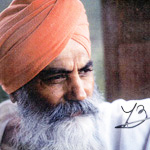
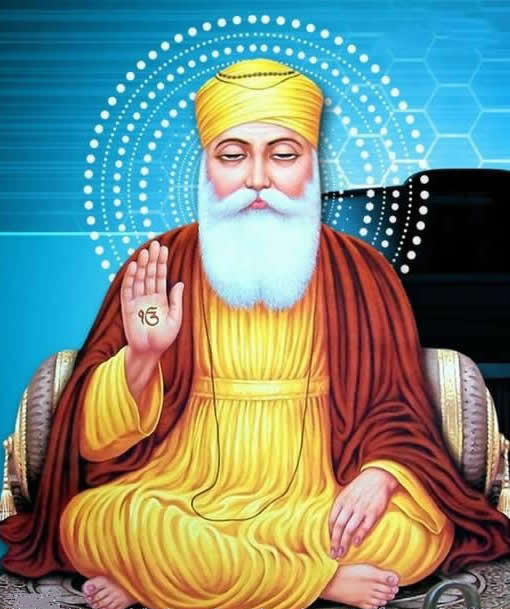
God and me, me and God are ONE. Guru Nanak Dev 1469-1539
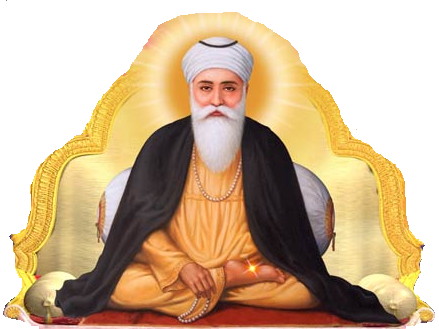
First Master of Sikh Dharma
aka Ek Ong Kar One Creator of Creation
POINTS TO PONDER
"Recognize the Divine light within all and
do not consider social class or status; there are no classes or castes, hereafter." Guru Nanak Dev
"The ignorant impose their darkness on the Light of Truth.
Those who see divisions do not know God. Those who
know Him proclaim His Oneness." Guru Nanak Dev
"From a woman, man is born. Within a woman, man is conceived.
To a woman a man is engaged and
married. A woman becomes a man's friend.
Through a woman, the future generations come.
When a man's woman dies, he seeks another woman.
To a woman he is bound. From a woman, kings are born.
From woman, a woman is born.Without a woman, there would be
no man at all. How can a woman be called bad?" Guru Nanak Dev
"A
woman is sixteen times more effectively intelligent and
more sensitive than a man, and she can handle all walks of
intelligence better than any man. Man is given the physical, and
woman is given the intelligence to balance it out." Yogi
Bhajan
"The false premise of the religious fanatic is,
'My actions are by the will of God, your actions are not.'"
"Exclusion breeds intolerance. Intolerance breeds tribalism.
Tribalism breeds racism. Racism is contrary to Guru Nanak's message. Inclusion begets tolerance. Tolerance begets diversity. Diversity begets pluralism. Pluralism is the essence of Guru Nanak's message to humanity."
"Sikh Dharma is a householders' path by which, with practice, and by God's
grace, one may be blessed with the virtue known as humility, and the good
fortune to overcome the spiritual affliction of
pride." Hari Singh Bird
"If the American Revolution had started as a spiritual movement instead
of a political movement, it would look a lot like the Sikh religion. Just as
the Founding Fathers of the United States put together a Bill of Rights
that protected the fundamental rights of all U.S. citizens, Sikhs also share
a core set of beliefs that focuses on the rights of all people to “life, liberty,
and the pursuit of happiness.” Sikhs believe that all men and women are
created equal and that the right to practice religion freely is encoded in Sikhs’
founding documents. For hundreds of years, Sikhs have fought, and many have
given their lives, to protect the rights of others, including Hindus, Christians,
and Muslims, to practice their own religions." The National Sikh Campaign
*Pluralism: The social condition in which people of different social classes, religions, races, etc., are together in a society but continue to maintain
different traditions and interests. The belief that people of different background, belief, color, etc., should live together in a society.
Worship and meditate on the One God and no other. God is pleased with honest work and true living. Love everybody, and pray for the good of all. See the Light in all, and serve all humanity. Be kind to people, and all other creatures. Be simple in your food, dress, and habits. There is no caste. There is no class. Your actions make you good or bad. There is no rich or poor before God. Work hard, and serve others. Fear not, and frighten not. Women are equal to men. Always speak the truth.
DIVERSITY: The state of having people who are of different races or who
are of different cultures in a group or organization: the opposite of uniformity.
"Organizations become tribalistic and incestuous, i.e., when the 'gene pool'
of members is of one race the organization is at risk of becoming perverted in its
policies and procedures. The obvious remedy is to add outsiders to the member mix."
"The human mind was created to make choices, e.g., to discriminate between
up and down, in and out, black and white, etc. We must remain aware of our
tendency to use our discretionary abilities in order to marginalize and repress
people with whom we differ. Sikhs need to constantly see to it that we advocate
for pluralism and against tribalism in the interest of truth, justice and fairness."
"Racism gets its start with tribalism. The antidote to tribalism is the sensitivity
summit in which people of color and other marginalized groups are heard."
"People who are pretending to be asleep will resist being awakened
because they have something to lose by ending the charade."
"Discourse about racism is not meant to stir up feelings of guilt.
Discourse is meant to drive people to action against injustice.
Question is, are we mature enough to sit down and discuss
issues of diversity, including religion, gender and race?"
"3HO/Sikh Dharma needs to reach out to people of color,
not expect people of color to find 3HO/Sikh Dharma."
"In 2013, the population of African Americans, including those of more than one race,
was estimated at 45 million, making up 15.2% of the total U.S. population." Source.
NOTE: U.S. organizations should reflect about 15 African Americans out of every 100.
Guru Nanak Dev By Ek Ong Kaar Kaur
Guru
Nanak Dev was born November 10, 1469 in Talwandi, which is now called
Nankana Sahib, near Lahore, Pakistan. His father's name was Mehta
Kalyan Chand, but was known as Kalu Mehta. His mother's name was Tripta
Devi and he had one elder sister, Bibi Nanaki. His wife's name was
Mata Sulakhni Ji. He had two sons. His elder son was Sri
Chand and his second son was Lakhmi Chand.
NANAK: From the Sanskrit NA-AN-AKHE. NA means human; AN
means without; AKHE means pain. One who has no pain, no ego.
Born into a Hindu family, Guru Nanak Dev rejected the notion of divisions
between people based on religion. He taught the Oneness of the Creator
and the fundamental brotherhood and sisterhood of all. He stated that
the experience of the Divine dwelled within every person, so there
was no difference between people based on caste, creed, gender or
nationality. His simple but profound philosophy rested on recognizing
the fundamental Divinity of all people. When lived in an awareness
of the Divine Light within all, human life could become a profound
experience of love, truth, patience, peace and contentment.
“Truth is the highest virtue, higher still is truthful living.” Guru Nanak Dev
Rai Bular Bhatti, a wealthy land owner, and Nanak’s sister,
Bibi Nanaki, were the first people who recognized divine qualities
in Nanak. They encouraged and supported him to study and travel.
Guru Nanak Dev achieved his state of enlightenment, or realization, sometime
around the age of 30. After disappearing into a river and meditating
in the water for three days, Guru Nanak Dev emerged having had a powerful
vision of the nature of reality, Divinity and human existence. He
recorded that vision in a song - known as Japji
Sahib - the Song of the Soul. With Japji
Sahib, humanity has a rare picture of what a Master experienced
at the moment of his enlightenment described in his own words.
NOTE: The very first word of Guru Nanak's sacred composition, Japji Sahib, is 'Ek' or 'Ik', meaning 'One'. See Mul Mantra. Japji Sahib appears at the beginning of the Siri Guru Granth Sahib, the written collection of writings and teachings of the Sikh Gurus and other revered saints. The Siri Guru Granth Sahib is considered to be the living guru for all Sikhs. The importance of the concept of 'Oneness' within Sikh values is clearly revealed when you realize the very first word of the Siri Guru Granth Sahib is 'Ek', or 'One'.
"One morning, while taking his bath before his meditation, Guru Nanak Dev immersed himself in the water and did not resurface for three days. His breath became so still and so deep that he could sustain himself under the water. During those three days, he had his enlightenment experience. He saw the Cosmic play of Divine Consciousness, and the role and purpose of human life within it.
After having this vision, Guru Nanak Dev recorded his experiences in Japji Sahib, The Song of the Soul. Japji Sahib is Guru Nanak's description of his own enlightenment experience as a realized yogi. But the gift of Japji is the power of the Shabad Guru, the teacher who manifests through the Sound Current. When Guru Nanak Dev recited Japji Sahib, he brought a new spiritual technology to humanity."
Japji
Sahib (see line by line video translation below) became the foundation of this new spiritual tradition. After
his enlightenment, Guru Nanak Dev spent 15 years traveling through India,
Asia and Persia. He brought people together of all traditions and
sang Divine songs in praise of the Creator, the Creation and the journey
of the spirit through time and space. During this time, he also collected
songs from other mystics that resonated with his own visions and experience
of the Divine. After his travels, he settled down and lived as a farmer,
continuing to teach those who came to learn from him.
NOTE: Jap Ji Sahib has 40 stanzas, including the Mul Mantra, followed by 38 Pauris, or steps, and ending with a section called a Salok. Each stanza has a powerful healing effect, which can be felt especially when we recite this sacred poem every day. We re-pattern the neurons in our brain, as we infuse this positive energy.
Jap means repeat, and Ji means soul. Through repeating Jap Ji daily, we attune our Soul to the universal consciousness that Guru Nanak embodied. This amazing poem teaches us how to live in consciousness on this planet, and it explores topics such as deep listening, surrender, faith, and ways to access the energy of Infinity within us. Jap Ji also encourages us to practice from a place of love, sit within the polarities of the Universe in complete balance and serenity, and apply ourselves wholeheartedly to spiritual discipline. As we recite it with each repetition, we teach ourselves through its vibration; we don't even have to know the meaning. On a cellular level, we are shifting the vibratory frequency of our being.
We must do ourselves a favor. Guru Nanak gave us Jap Ji. Jap means repeated, reciprocal creative power. Jap means when we recite and what we recite, it takes mind, body, and soul to recite; Jap requires consciousness, intelligence, and personality; it requires soul, mind, and body.
Ji means the soul, the inner self, the eternal self, the excellent self, the Infinite Self, that is called Ji. Ji energy is what the universal energy is, and Guru Nanak gave you Jap of the Ji, that's why the name is Jap Ji. It is recitation of that Ji, it is called multiple soul, it's called Infinite Soul.Siri Singh Sahib, Yogi Bhajan, April 16, 1985
"In Japji, Guru Nanak gave you guidance, telling you the way he found liberation.
'In the ambrosial hour, meditate on the True Identity. Your karma will be covered
and you will see the door of liberation'." -- Siri Singh Sahib of Sikh Dharma
When it became clear that the death of Guru Nanak Dev was near, a
dispute arose among his followers. His Hindu followers wanted to cremate
the remains while his Muslim followers wanted to bury the body following
Islamic tradition. Nanak brokered a compromise by suggesting that
each group should place a garland of flowers beside his body, and
those whose garland remained unwilted after three days could dispose
of his body according to their tradition. However, the next morning,
upon raising the cloth under which the Guru’s body lay, only
the flowers shared between his followers were found. The Hindus cremated
their flowers whereas the Muslims buried theirs. He died in Kartapur
Ravi, Pakistan at the age of 70.
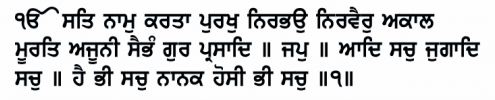
Ek
Ong Kaar - Sat
Naam - Kartaa Purakh - Nirbhau
Nirvair - Akaal Moorat - Ajoonee Saibhang - Gur Prasaad - Jap
Aad Sach - Jugaad Sach - Hai Bhee Sach - Naanak Hosee Bhee Sach
Translation
of Mul Mantra aka Mool Mantra
From Peace Lagoon by Premka Kaur
The Creator is One; Truth is His Name; Doer of everything;
Fearless; Without anger; Undying; Unborn; Self-illumined.
This is revealed through the True Guru's
grace. Meditate.
True in the beginning; Through all Ages; True even now.
O Nanak, The One Creator shall always be
True!
PHYSIOLOGY OF THE WORD
The Siri Singh Sahib taught about the unique classes of languages. He
called them phonetic languages where the sounds of the syllables impart
meaning by the way they resonate with the archetypal human psyche. He
described Gurmukhi, Sanskrit and French as three such languages. In the
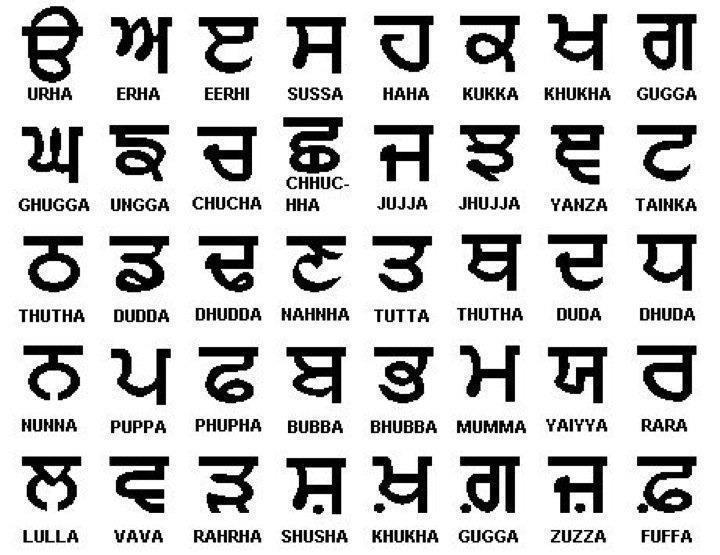
16th century, the second Sikh guru, Guru Angad, created the Gurmukhi
alphabet to phonetically represent many, if not all, languages.
"Guru Angad, the second Sikh Master, invented the Gurmukhi script. Guru Nanak named Guru Angad to succeed him as the Guru for the Sikhs in 1539. Gurmukhi means "from the mouth of the Guru." The Gurmukhi script accomplished something very special. It allowed people to be able to read and pronounce the songs written by Guru Nanak. Up until that point in history, the dialect spoken by Guru Nanak Dev and his contemporaries had no written equivalent. Written languages were reserved for the powerful, the wealthy, and the high-castes. There was no writing or reading based on the common language.
THE GURMUKHI ALPHABET
"The meaning of the Word-Sound is not what is important.
It is the effect of the Word-Sound that matters." -- Hari Singh Khalsa
Gurmukhi was developed to be a very precise phonetic language. By learning to pronounce Gurmukhi, people could not only learn to read and pronounce the songs written by Guru Nanak Dev; they could also learn how to pronounce the songs that Guru Nanak Dev had preserved during his life from other masters and sages, even if those songs were in a completely different language. The purpose of Gurmukhi was not to simply represent the common language of the time, but to allow people to read and sing sacred songs in other languages as well.
Why did this phonetic language develop? And what does it have to do with the Shabad Guru – the Guiding Sound of Wisdom?
Being awakened or enlightened is not simply a mental state. It is a physiological state as well. How we breathe, how the glands secrete, how the nervous system is operating—all of this changes based on what we speak, what we hear, and what we perceive. When Guru Nanak Dev sang his songs, the words he brought forth had a two-fold effect. On the level of language, they imparted a certain philosophical meaning of how to see the world. But in the science of Naad (sound), the songs have the ability to change the physiology of a person and bring them to a more heightened state of consciousness.
IMPORTANT: The invention of Gurmukhi was key to opening the doors of the Shabad Guru to all people. Through learning this very simple, precise method of pronunciation, and by repeating the words of the sages, you begin to induce in yourself the same state of consciousness that they were in when they sang the songs. It begins to create the same changes in the physiology. It opens the door to higher awareness. And all that is required is your breath and voice imitating and repeating those sounds.
This is the essence of the Shabad Guru. It is between you and you. There is no one else involved. It only requires your breath reciting this sacred poetry. By this practice, there is a process you undergo within your own ego and identity to transform your awareness to live at these heights. -- Ek Ong Kaar Kaur Khalsa
The
Mystical Process of the Divine As described in the Mul Mantra
When talking about
Divinity, sometimes we look outside of ourselves to discuss and define
God. The Creator becomes, through our own conversations, everything
a human is NOT. All-powerful. All-knowing. All-seeing. All-loving.
All-kindness. It is as if we humans have taken certain experiences
that give us a sense of comfort, that give us a sense of security
on the earth; and projected their most perfect and continual expression
on a Divine Being who can do and be everything we would most like
to be, but aren’t.
When Guru Nanak Dev talks about Divinity, his language, his perception,
his vision is so all encompassing that Divinity intermingles with
and provides the foundation for everything in the Universe. It is
the secret ingredient that gives rise to our human experience. Every
single aspect of being human, whether we ourselves would judge it
as “good” or “bad” is embraced as part of
the Divine. It’s a union. A yoga
or yoke – between finite perception
and Infinite expression. The duty we have in our human body, Guru
Nanak tells us, is to simply allow ourselves to become aware of this
truth, and to live in a state of gratitude for it. That’s all.
Guru Nanak Dev gave the Mul Mantra as the essence of the Sikh teachings.
Llike a seed that breaks open to create roots –
Mul Mantra is not just a description. It defines
a process through which we can become aware of the reality of the
Divine inside us. Each line describes a state of consciousness and
understanding that state becomes a pre-requisite to developing an
understanding of the state of consciousness described in the next
line. Mul Mantra
Ek Ong
Kaar - One Spirit moves within the Creation - Coordinating,
Consolidating, Continually Creating.
To keep the Creator separate from the Creation is not the way of Guru
Nanak. To see them in a joyful play, intermingling, evolving, finding
new expressions of Itself – that is his gift to us. “God”
is not out there somewhere – pulling strings or watching in
judgment. The Divine dwells inside every molecule as a Living Force,
constantly expressing myriads of forms, though all forms are ultimately
unified in the One.
"Think
about it. You grew your magnificent brain, perhaps the most
complicated thing in the world. And you grew it without even thinking
about it. A supremely intelligent Life Force of unknown origin created
and
sustains this wondrous miracle of life. It's what we refer to as God." -- Hari Singh
Most people’s
search for Spirit begins in an external way – and so Guru Nanak Dev
gives us at the beginning a compact definition of the Force that Runs
the Entire Universe. It is One – Ek. It has vibration, sound
– Ong – and from sound, from vibration, It expresses Itself
in form – Kaar. But the Oneness and the sound and the form are
merged in every moment, in every thing – continually
playing together. A current runs through the entire Creation. And
like children playing with paints, Ek Ong Kaar never creates the same
picture twice.
Sat
Naam - And this Spirit Within me is my True Identity.
If I can accept what Ek Ong Kaar means – then I must also accept
the Presence of the Divine within myself. Perhaps –I do not
always see or feel that Presence. But Guru Nanak Dev tells us –
it is that Divine Presence within us that is our real identity. Our
real name. Our real existence. What I see myself as today, “a
38-year-old woman, Sikh, grew up in South Jersey, loves to read, likes
chocolate, etc.” is a very temporary thing that will change
as I age, or vanish as soon as my breath leaves my body. But beyond
these definitions, these stored memories, opinions and tastes of a
lifetime – there is a Presence, a Life, a Spirit that will keep
going. This Presence is part and parcel of the play of Ek Ong Kaar.
And that is my True Identity. Sat
Naam.
Kartaa
Purakh - It Does All and Causes All to be Done. It Protects
me through all incidents of Time and Space.
This line takes a bit of subtlety to understand. Because in the previous
two phrases, Guru Nanak Dev describes first the Power that runs the entire
Universe. Second, he shows that this Force behind all of Creation
lives inside of my own self, as well. And then what he would like
us to understand is that this Power – which flows through all
of Creation and flows through me – Does everything and Protects
everything.
This line may be difficult because it is difficult to believe that
the Divine is the Doer. Our mind tells us that, “I am the doer.
I am the one who is acting. I am the creator. I am the manipulator.
I am the one who can move things and create my life as I want to.
I am.” The moment the mind hears that it is NOT the doer, it
protests, creates doubts, arguments, becomes defensive and storms
around. The mind can become competitive with Divinity, and try to
prove that it IS the doer, it IS the protector – and nothing
is greater than itself.
We call this ego – and there’s a purpose for it. Because
the intricate truth is that the Divine dwells in you, as well as in
everything, so you are part of that Creative Power, and part of that
Protective energy. You are not the entirety of it. But in your Spirit,
you are part of it.
The misunderstanding comes because of the mind. The purpose of the
mind is to serve the soul. It is created to apply its intelligence
to carry out the commands of Spirit. When a human being flows with
the experience of her own Spirit and the mind serving that –
then it is easy to understand Kartaa Purakh. Where the “I”
is not experienced as the Doer at all. Where everything is arranged
and taken care of by the hand of the One.
But when the mind does not know how to listen to or surrender to our
own Inner Divinity, then it follows its own impulses and desires.
And in that experience, nothing ever quite turns out the way it wants.
That builds frustration, anger and fear. The balance of our lives
as human beings rests on this point. If the mind can be trained to
serve the Spirit, it can surrender its finite understanding of life
and consciously enjoy the experience of the One in All. But if it
is not trained to serve the Spirit, and it follows it own thoughts
and desires – then that creates a life of passion, pain and
death.
Nirbhau,
Nirvair - It fears nothing, and knows nothing of vengeance
or anger.
When I have seen these truths of Ek Ong Kaar, Sat
Naam, Kartaa Purakh
– then how can I ever feel afraid again? How can I ever be angry?
Fear and anger come from ego – from my limited perception needing
to protect my own security and identity. But if the Divine has blessed
me to understand this Force that runs through all, that runs through
me and that Does everything – then whatever I experience is
the Divine. So why would I react to what I see with fear or anger
– if it is all part of the One?
Not that we shouldn’t set boundaries or fight injustice. Guru
Gobind Singh was a master of seeing the Divine on the battlefield,
of praying to every aspect of the Creator while wielding his sword.
It’s more about the way in which one sees life. Anger and fear
cannot coexist with love. To fight and see the Divine in the enemy
– to know the duty and yet to keep compassion in one’s
heart – this is the way of the Sikh. Where fear and anger are
– the Guru’s words are not. Where the Guru’s words
are, fear and anger have no ground in which to grow. This, to my own
mind, is the reason why the Sikhs in history could face such terrible
tortures and horrors and still shine - Because they had cracked this
secret of the Mul Mantra. And the experience of Divinity within themselves
and within the entire creation was so powerful and so great, that
even in the worst circumstances, they could see the Divine in the
other person. And so they could go through the challenge with love
instead of fear and vengeance.
Akaal
Moorat - Deathless, It comes into form.
Moving beyond fear and anger, a perception, an awareness opens up
within ourselves. And suddenly we can touch that Deathless Spirit
inside. Our projection as a human begins to channel that Light. And
we become the Image of the Undying while on the earth.
It isn’t a mental trick or a philosophy. An argument or a policy.
It is something that begins to blossom when we move beyond fear and
anger. Because when we begin to live beyond fear and anger, and feel
our power from the deepest, most true, most genuine love inside of
ourselves – then the fact that we are Deathless begins to make
itself known to our conscious mind. In that awareness, we can represent
Deathless Divinity in our every day life. Through our words, through
our actions, through our dress, through our every interaction. We
present in form the truth and reality of the Deathless Divine. In
time, this gives rise to living the Rehit. For in the Rehit, Guru
Gobind Singh gave the Sikhs a discipline and a structure to be Akaal
Moorat – to be the Image of the Undying, the Deathless in Form.
Ajoonee
- In Itself, It has never been born.
Deathless in Form. Never been born. Though the mind has no capacity
to logically map it, our Spirit has always existed and will continue
to exist always. No death. No birth. No beginning. No end. Just one
big play, one continuous learning – shifting from form to form
through time and space.
Feeling the reality of the Deathless Spirit inside, and understanding
that there was never a beginning to us anyway– the mind can
penetrate through the fog of time and surrender its finite ego to
something far bigger.
Saibhang
- Flowing through the cycles of Birth and Death, It Moves by Its Own
Purity and Projection.
Life needs definition to fulfill itself. And for most of us –
the mind gives us our definition. We are “lawyers,” “engineers,”
“lovers,” “ministers,” “writers,”
“rebels,” – words, pictures, images that direct
how we use our breath, our voice, our creativity to form our own lives.
Guru Nanak Dev gives us a different definition. Saibhang. It’s a
definition that applies to the soul, to the spirit. And in that definition,
our own inner purity flows through time and space, calling one experience
after another forward until we can consciously merge back in Union
with Ek Ong Kaar. With the Source. With the One. Completion.
This definition applies once we understand that we are Deathless in
Form, Never Been Born. In that vastness of Identity – Saibhang
becomes a guideline for how to approach life, how to engage the very
tiny bit of time that we have on the earth – in this body, in
this experience. Rather than looking to create a finite identity and
security for ourselves, Saibhang asks us to see our life in the context
of a much larger journey. And to keep flowing forward, to complete
who we are, so that the mind can consciously merge into the Limitless
of Self and allow that inner Divinity to complete the journey.
Gur
Prasaad - This understanding shall come to you as a sweet
blessing, as a gift, through the Guru.
We need a teacher. We need a guide. Only an idiot believes that his
or her mind can figure everything out on its own. We needed someone
to teach us how to tie our shoes, how to dress ourselves. Then older
- how to count, how to write letters. And yet this most sublime and
important lesson of all – the lesson of what a human being is,
of the purpose of the human life – we can sometimes so arrogantly
assume that we need no teacher for that at all.
It is the proof of God in a world that questions the existence of
the Divine that so many teachers have come to give us a path home.
For the Sikh, that Teacher is the Shabad, the Divinely-given Word
of the Guru. And by meditating on that Sound Current of the Shabad,
It trains the mind into the reality of all that the Mul Mantra has
described. So we seek that blessing, that gift that comes through
the Guru. For just as we could never teach ourselves how to tie our
own shoes, so too – the journey to merge into Divinity needs
an example to follow, needs guidelines, principles, and a Voice that
can remind us of the truth when we wander off the path.
Jap
- In every moment, continue in its Continual Remembrance.
There is only one command in all of the Sri Guru Granth Sahib. There
are many many suggestions, but just one order to obey. Jap. Repeat.
Continue to meditate on this. Over and over and over again. With love
in your heart. Surrender. And remember.
As someone who does marketing, I know that the law of marketing is
repetition. It doesn’t matter how fancy the ad, how large or
expensive. Repetition is the key for someone to remember your message.
To be able to identify your product. The market needs to see the ad
over and over and over again – to remember.
Guru Nanak Dev understood this basic psychology of the human being. And
so he gives this command in the Mul Mantra. Repeat. Remember. Meditate
upon it over and over and over and over again – so that you
can identify it. So that you can learn the truth of it, and see it
for yourself. Ultimately, the Guru can only point us in a good direction.
It is up to us to do the work. And for the Sikh, Jap is the work.
Aad
Sach; Jugaad Sach; Hai Bhee Sach; Naanak Hosee Bhee Sach
- From the start this Truth was True; All through Time and Space It
is True; Even now, this Truth is True; Nanak, It shall ever be True.
The seal of the Mul Mantra is the declaration by Guru Nanak Dev that what
has been described in the previous lines – about the nature
of the Divine, about that Divine identity within us, about the process
to become awake to that reality, about the need for the Guru, and
the order to just keep repeating – all of this is True no matter
what age, no matter what time and space. The Mul Mantra gives the
essence of reality from before the Big Bang to the end of the physical
Universe as we know it and beyond.
For us, as humans, to anchor ourselves to this knowledge can give
us a deep sense of security. This seal exists to remove doubt, to
create trust and faith. So that, by committing ourselves to the message
of the Mul Mantra and realizing its truths, we have an opportunity
to find the Divine within no matter what circumstance of life we have
been born into.
Writing and creating dialogue about Divinity is so important. See The Case For Dialogue. Since
humans have existed – recorded history, myth and even before
that – the way we discuss Divinity defines the purpose of human
life. In a world that has gone mad through so many words, so many
images, so much communication that confuses and competes – the
Mul Mantra gives us a solid identity. It roots us in a reality so
powerful and profound that our lives can be victories of joy, love
and compassion in even the most difficult of times. -- Mul Mantra
Article by a Pakistani, on the 542nd Birthday November 10, 1469, of Guru Nanak Dev Ji
This week millions of Sikhs and their friends around the world are celebrating Gurpurab, but few outside India know the significance of this day or its history. It's the 542nd birth anniversary of Guru Nanak Dev, the founder of the Sikh faith and one of the greatest symbols of pluralism and tolerance in the world.
Mahatma Gandhi may epitomize India in the West, but he is just one of the many towering figures of history that have shaped the land, its culture and its religions. Poets such as Tagore and Iqbal immortalized India in verse while emperors like Asoka and Akbar ruled over dazzling domains that stunned the visitor.
Among the great philosophers and thinkers that India gifted to the world are two men who tower above the rest - Buddha and Guru Nanak Dev, the founders of Buddhism and Sikhism. While Buddha is well known in the West as a result of his creed and followers, Guru Nanak Dev, whose birthday we celebrate today is yet to be discovered.
Let this Muslim introduce you to the man who founded the world's youngest religion, Sikhism and who had a profound role in shaping my Punjabi heritage, alas, one that was torn to shreds by the bloody partition of India in August 1947.
Today, the place where Guru Nanak Dev was born in 1469 is a city that was ethnically cleansed of its entire Sikh population during the bloodbath of 1947.
Nankana Sahib, a place where the Guru spent his childhood with Muslim and Hindu friends are a Bethlehem without Christians; a Medina without Muslims.
For a few days the town will bustle with Sikh pilgrims from all over the world, but soon they will depart and nary a turban will be seen until the Sikhs return next year.
The city of Nankana Sahib lies near Lahore, my maternal ancestral home, where my mother and father were born. My mother told me how she as a Muslim girl grew up with Sikh neighbors and how she was part of the Sikh family's celebrations at the time of Gurpurab and how she would travel with her friend to Nankana Sahib. Decades later she would still recall her lost friend who left Pakistan to seek refuge across the border.
Today Nankana Sahib celebrates, but there are no Muslim girls accompanyingtheir Sikh friends. None.
It is sad. Sad, because Sikhism and Guru Nanak Dev were intertwined with Islam and Muslims. The Guru's closest companion was a Muslim by the name of Bhai Mardana. It is said when Mardana was dying, the Guru asked him, how would you like to die?
As a Muslim? To which the ailing companion replied, "As a human being."
Five hundred years later, a border divides Muslim and Sikh Punjabis. A border where two nuclear armies and a million men face each other. As a Muslim Punjabi I feel the British in dividing Punjab separated my soul from my body and left the two to survive on their own. Muslim Punjabis lost their neighbours and family friends of generations. Most of all they lost their language that today languishes as a second-class tongue in its own home. We kept Nankana Sahib, but lost the Guru.
However, the tragedy that befell the Sikhs was far more ominous and deserves special mention. For Sikhs, the Punjabi cities of Lahore and Gujranwala, Nankana Sahib and Rawalpindi were their hometowns and had shared a history with their Gurus. With the 1947 Partition, not only was Punjab divided, but the Sikhs were ethnically cleansed from Pakistan's Punjab.
As a result of the creation of the Islamic State of Pakistan, the Sikhs lost absolute access to the following holy sites: Gurdwara Janam Asthan, the birthplace of Guru Nanak Dev, in Nankana Sahib; Gurdwara Punja Sahib in Hasan Abdal; Gurdwara Dera Sahib in Lahore, where the Fifth Guru, Arjan, was martyred; Gurdwara Kartarpur Sahib in Kartarpur, where Guru Nanak Dev died; and, of course, the Memorial to Maharaja Ranjit Singh, Emperor of Punjab, in Lahore.
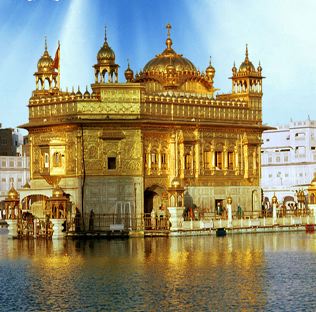
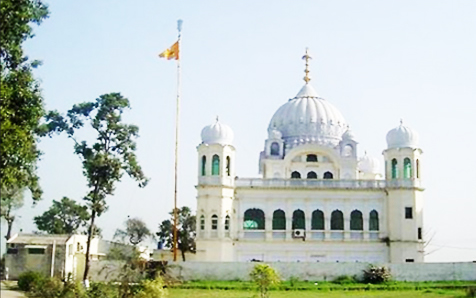
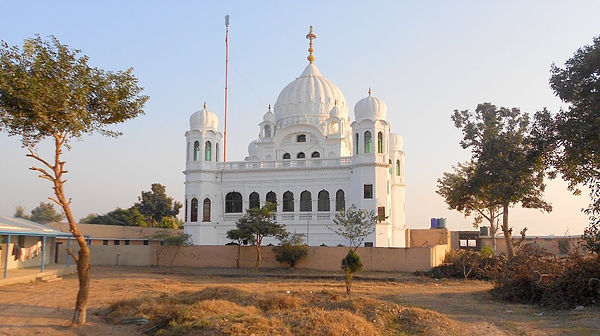
Guru Nanak Dev's First Gurdwara, 1521
Gurdwara Kartarpur Sahib
When the killings and cleansing of 1947 ended, not a single Sikh was visible in Lahore. Of course, Muslims too were chased out of the eastern parts of Punjab, but they were not losing their holy places of Mecca or Medina. Even though we Muslims despair the occupation of Jerusalem, we still have the comfort of knowing that Muslims still live in and around the Dome of the Rock and the Al-Aqsa Mosque.
But what about the Sikhs? To feel their pain, Muslims need to imagine how outraged we would feel if, God forbid, Mecca and Medina were cleansed of all Muslims and fell under the occupation of, say, Ethiopia. How can we Muslims ask for the liberation of Muslim lands while we institutionalize the exclusion and ethnic cleansing of all Sikhs from their holy sites inside an Islamic state? Muslims who cannot empathize with the loss of the Sikhs need to ask themselves why they don't.
Before 1947, Punjabi Muslims did not consider Sikhism as an adversarial faith. After all, from the Muslim perspective, Sikhism was the combination of the teachings of Sufism, which was rooted in Islamic thought and the Bhakti movement, an organic link to Hindu philosophy. It is true that Moghul emperors had been particularly vicious and cruel to the leaders of the Sikh faith, but these Moghuls were not acting as representatives of Islam. Not only that, the Moghuls inflicted even harsher punishments on their fellow Muslims.
With the creation of Pakistan, the Sikhs lost something even more precious than their holy places: diverse sub cultural streams. One such stream flourishing in Thal region (Sind Sagar Doab) in what is now Pakistan, near Punjab's border with Sind and Baluchistan, was known as the "Sewa Panthis."
The Sewa Panthi tradition flourished in southwest Punjab for nearly 12 generations until 1947. This sect (variously known as Sewa Panthis, Sewa Dassiey, and Addan Shahis), is best symbolized by Bhai Ghanniyya who, though himself a Sikh, aided wounded Sikh and Muslim soldiers alike during the Tenth Sikh Guru's wars with the Moghuls. Sewa Panthis wore distinctive white robes. They introduced a new dimension to the sub continental religious philosophies. They believed that sewa (helping the needy) was the highest form of spiritual meditation - higher than singing hymns or reciting holy books. The creation of Pakistan dealt a devastating blow to the Sewa Panthis and they never got truly transplanted in the new "East" Punjab.
The organic relationship between philosophies and land, indeed, requires native soil for ideas to bloom. Other such sects and dears (groups) that made up the composite Sikh faith of the 19th and early 20th centuries included Namdharis, Nirankaris, Radha Soamis, Nirmaley, and Sidhs - all were pushed to the margins, or even out of Sikhism, after the partition.
The tragedy of the division of Punjab is best captured in a moving poem by the first prominent woman Sikh/Punjabi poet, novelist, and essayist Amrita Pritam, "Ujj akhaan Waris Shah noo" (An Ode to Waris Shah), which she is said to have written while escaping in a train with her family from Pakistan to India.
Pritam wrote:
ujj aakhaN Waris Shah nuuN, kithoN kabraaN vichchoN bol,
tay ujj kitab-e ishq daa koii aglaa varkaa phol
ik roii sii dhii punjaab dii, tuuN likh likh maare vane,
ujj lakhaaN dhiiaaN rondiaN, tainuN WarisShah nuN kahen
uTh dardmandaaN diaa dardiaa, uth takk apnaa Punjab aaj bele
lashaaN bichhiaaN te lahu dii bharii Chenab
(Today, I beckon you Waris Shah, Speak from inside your grave. And to your book of love, add the next page. Once when a single daughter of Punjab wept, you wrote a wailing saga. Today, a million daughters cry to you, Waris Shah. Rise, O friend of the grieving; rise and see your own Punjab, Today, fields lined with corpses, and the Chenab flowing with blood.)
As I celebrate the birth anniversary of Guru Nanak I read some profound words of wisdom he left for his Muslim friends.
He wrote:
Make mercy your Mosque,
Faith your Prayer Mat,
What is just and lawful your Qu'ran,
Modesty your Circumcision,
And civility your fast.
So shall you be a Muslim.
Make right conduct your Ka'aba,
Truth your Pir,
And good deeds your Kalma and prayers. --
Islam vs. Sikhi: Why Guru Nanak Chose Sikhi (Special Notice: See Hukamnama at 50:26.)
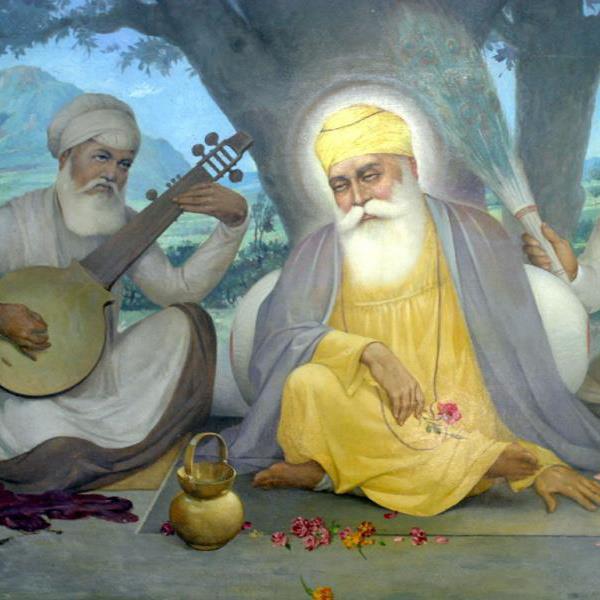
Manjit Singh Khalsa discovered this historic site (see photo above) 20 years ago. When Guru Nanak Dev visited Nepal, at Kathmandu, he stayed here near the Pashupatinath temple. While here, Guru Nanak Dev asked Bhai Mardana to play the rebac as he sang hymns and yogis and ascetic cult members gathered for discussions.
Five historical Gurdwaras are located in the region. The most famous is “Nanak Math” on the bank of the Bishnumati river. Guru Nanak Dev reportedly stayed here and meditated.
The Jathedar of the Akal Takhat has since authenticated that Guru Nanak Dev and Bhai Mardarna were invited here by the Prince of Nepal in 1510 and they remained here for a year. Guru Nanak Dev then asked Baba Siri Chand to remain while he and Mardarna traveled to Tibet and China.
Guru Nanak Dev purchased 200 acres of land in the center of Katmandu, which is still registered in his name, along with 300 acres on the border of Nepal and China. Banda Bahadur Singh, sent related documents, written and signed by Guru Gobind Singh, here for safe keeping out of reach of the Mughals in 1708. Maharaja Ranjit Singh also sent artifacts to the site.
Gurdwara Protocol What to know about visiting a Gurdwara
. Take your shoes off, and place them in the designated area.
. Wear modest and practical attire for you to sit on the floor.
. Wash your hands.
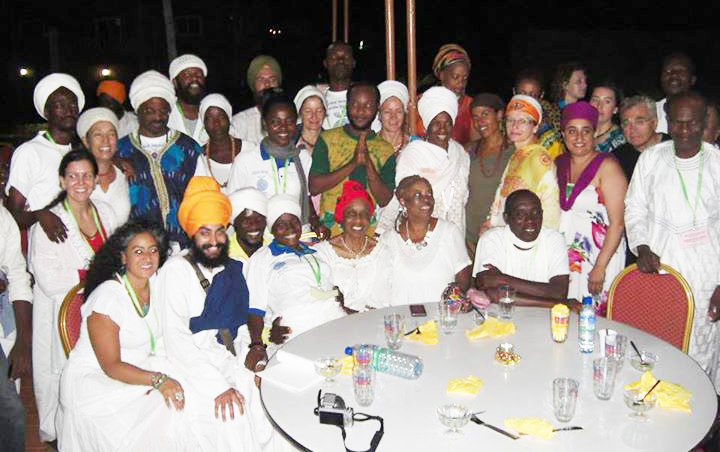
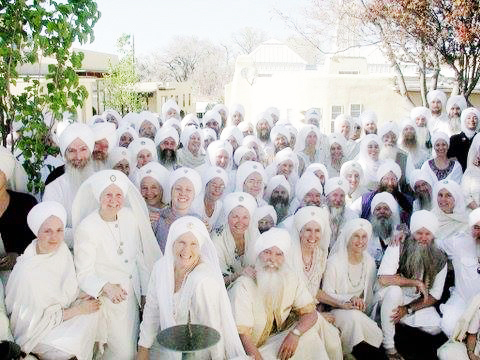
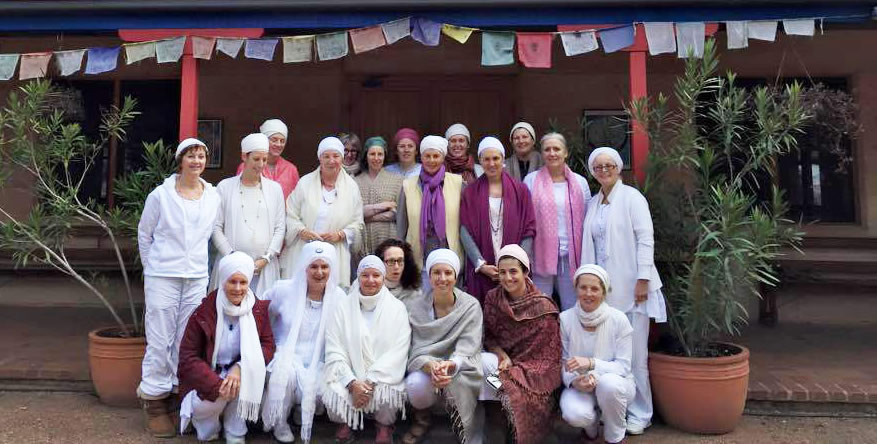
. We cover our heads in the main worship hall, the Diwan Hall. You should bring a head covering, or one will be provided for you.
. As we walk into the main hall, we walk towards the Guru, the Siri Guru Granth Sahib, the Sacred Sikh Text, which is always placed higher than the congregation.
. Sikhs will offer a prayer in front of the Guru, bow, and give a donation. You may, if you choose, do the same. To bow is to humbly bring your forehead to the floor, linking your third eye to the Divine Wisdom and Light that emanates from the Guru. As one bows, one's heart is higher than our head, allowing us to come from the heart rather than the head, and giving our head to God.
. Women and men sit on different sides, women mostly on the right side and men on the left side facing the Guru.
. We do not point our feet towards the Guru, the Siri Guru Granth Sahib.
. Sing along with the congregation, or meditate while listening to the sacred hymns.
. Humbly receive Prashad, a sweet tasting pudding, which is distributed at the end of the service. Prashad is served to remind us of God's sweetness.
. Langar, free food, is served in the Langar Hall, where everybody sits in rows.
Points To Ponder
A Gurdwara visitor must appropriately cover his/her head; a scarf or a large handkerchief is regarded as preferable to a hat or a cap for a non-turbaned visitor. Most Gurdwaras have a free supply of suitable scarves, which may be borrowed during the visit.
A visitor must take off his/her shoes and place them on the racks or space provided at the entrance.
Under no circumstances should any visitor have in their possession any tobacco product, alcoholic drink or drug; he/she should not have consumed any, or be under its influence, at the time of their Gurdwara visit.
It is obligatory for every Sikh, young and old, to show the utmost respect to the Guru Granth Sahib Ji on approaching the Manji Sahib (Guru's platform), who usually bow down on their knees, often touching the floor with their foreheads. However, it is regarded as dignified for a non-Sikh visitor to show respect to the Sikh “Holy Scriptures” by bowing, or standing still for a moment, and then moving away with a respectful nod. --
GURU NANAK DEV JI
THE CREATOR OF THE HOLY JAPJI
WHO IS THE BRIDGE FOR US
BETWEEN THIS WORLD AND THE HOLY CREATIVITY
FOR ‘NAAM’ IS ‘SAT’ AND ‘SAT’
IS ‘NAAM’
HE CHOSE TO GIVE US
THIS BEAUTIFUL BOND
AS WE GO THROUGH LIFE
OF NOW AND BEYOND.
GURU NANAK DEV JI, OUR GURU DIVINE
THE ONE, THE ONLY ONE
WHO TAUGHT THE BRAHAMANS
AND THE SHUDRAS
THAT A SOCIETY WITH CLASSES
WAS UNFAIR TO THE MASSES
OF THOSE UNTOUCHABLES
THAT WERE OUTCAST IN THE PAST
WERE THEN UPLIFTED
WITH THE GURU’S GRACE
ABOVE THE REALM OF CONTROL
FROM THOSE THAT TOLD THEM
THERE WAS NO HOPE...
MANKIND WAS IN A HELL OF DARKNESS AND UNCERTAINITY
AND GURUJI LIFTED US ABOVE THE ATROCITIES.
WHEN GURU NANAK SPOKE
THE WORLD LISTENED
FOR THE ‘BANI’ THAT PERMEATED
FROM THE GURU, CREATED
AN AURA OF PEACE AND LOVE
AND THE MESSAGE OF EQUALITY.
FOR THE GURU SAID, ESPECIALLY
TO THOSE THAT CRAVE
TRUTH, LOVE AND FAITH
TO GO ON UNRELENTLESSLY
IN SEARCH OF THEIR TRUE DESTINY.
IF IT WASN’T FOR THE CHANTING OF ‘TERA, TERA’
OR THE CRUSHED ARROGANCE OF ‘WALI KANTHARI’
OR EVEN THE EYE OPENER OF ‘RAIBULAR'...
AS HE SAW THE SNAKE
SLITHER AWAY, AFTER SHADING THE GURU’S FACE
AND SEEKED SOLACE IN THE FEET OF THE GURU
AND HIS GRACE...
FOR THE GURU
GUIDES THE DESCIPLE
INTO THE PATH AND INTO THE CYCLE
OF THE INSIGHTFUL, RECITAL OF GURBANI
LEADING TO THE REVIVAL
OF THE MIND, BODY AND SOUL.
THANKS TO THE ONE
A TRIBUTE TO THE GURU
FOR BLESSING US WITH ‘SIMRAN’
AND ‘SEWA’
AND TO MAKE US IN TUNE
WITH ‘WAHEGURU’.
CHANTING ‘WAHEGURU’S’ NAME
TO GET ABOARD THE HOLY SHIP
FOR GURU NAANK SAID, HIS SIKHS
WILL NOT SLIP...
FOR THEY HAVE THE ESSENCE OF FAITH
TO GO BEYOND THE STATE
OF WORLDLY THINGS
ON TO THE PATH THAT LEADS
TO THE HOLY PLACE
WHERE THERE IS ONE
‘NAAM’...
ONE FAITH,
THE ULTIMATE...
AND GURU NANAK WITH HIS GURBANI
GUIDES US
THROUGH THE PATH WE NEED TO TAKE. --







 Worship and






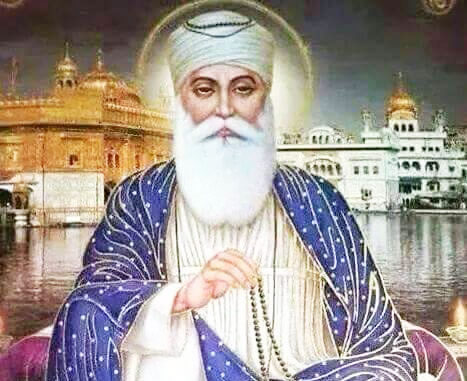

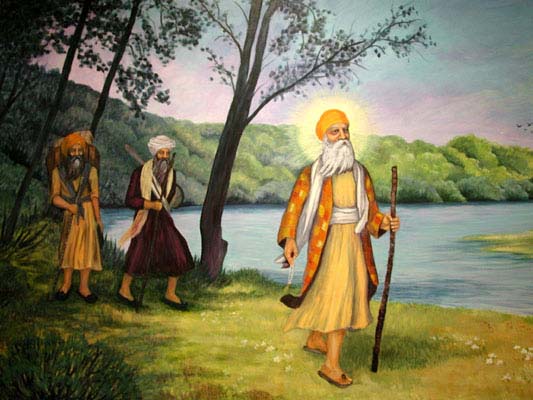
 We must do ourselves a favor. Guru Nanak gave us Jap Ji. Jap means repeated, reciprocal creative power. Jap means when we recite and what we recite, it takes mind, body, and soul to recite; Jap requires consciousness, intelligence, and personality; it requires soul, mind, and body.
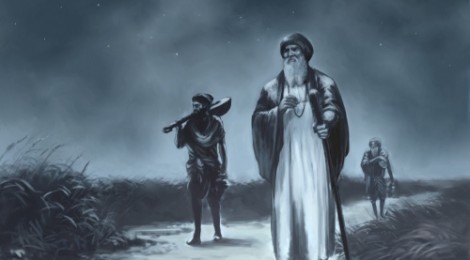

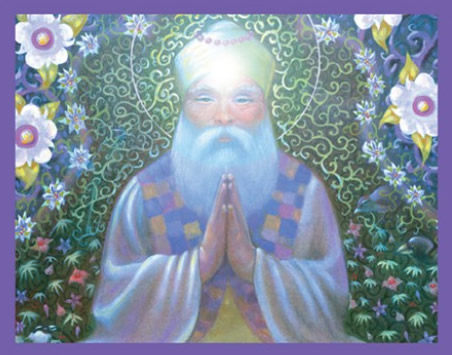





 Ek Ong
Kaar -
Ek Ong
Kaar - 



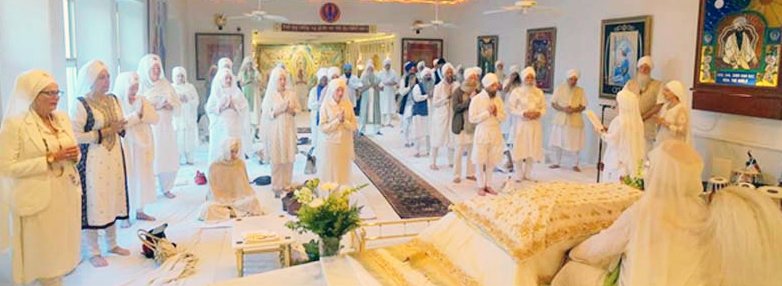
 . We cover our heads in the main worship hall, the Diwan Hall. You should bring a head covering, or one will be provided for you.
 . As we walk into the main hall, we walk towards the Guru, the
  . Sikhs will offer a prayer in front of the Guru, bow, and give a donation. You may, if you choose, do the same. To bow is to humbly bring your forehead to the floor, linking your third eye to the Divine Wisdom and Light that emanates from the Guru. As one bows, one's heart is higher than our head, allowing us to come from the heart rather than the head, and giving our head to God.
 . Women and men sit on different sides, women mostly on the right side and men on the left side facing the Guru.
 . We do not point our feet towards the Guru, the Siri Guru Granth Sahib.
 . Sing along with the congregation, or
  . Stand during the