| HairinLaysTheTruth.com The
truth about your hair...
"Each
part of the body has highly sensitive work to perform HAIRIN LAYS THE WISDOM
The bones in the forehead are porous and function to transmit light
to the pineal gland, which affects brain activity, as well as thyroid
and sexual hormones. Cutting the hair into bangs, which cover the
forehead impedes this process. When Genghis Khan conquered China,
he considered the Chinese to be a very wise, intelligent people
who would not allow themselves to be subjugated. He therefore required
all women in the country to cut their hair and wear bangs, because
he knew this would serve to keep them timid and more easily controlled.
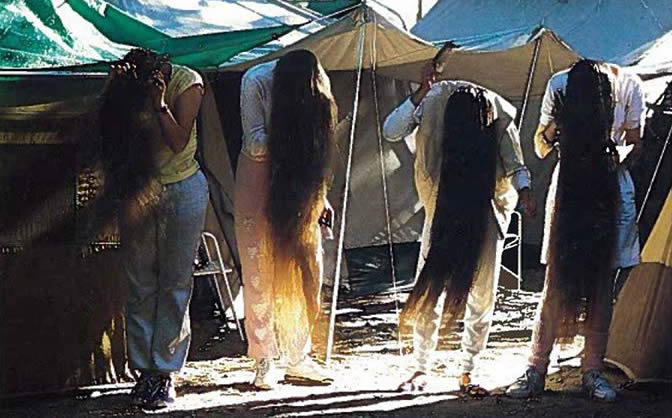
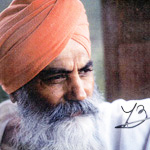
The science of hair was one of the first technologies given by Yogi Bhajan when he came to America. “When the hair on your head is allowed to attain its full mature length, then phosphorous, calcium, and vitamin D are all produced, and enter the lymphatic fluid, and eventually the spinal fluid through the two ducts on the top of the brain. This ionic change creates more efficient memory and leads to greater physical energy, improved stamina and patience.”
Yogi
Bhajan has explained that if you choose to cut your hair, you
not only lose this extra energy and nourishment, but your body must
then provide a greater amount of vital energy and nutrients to continually
re-grow the missing hair.
KUNDALINI HAIR CARE
“This activation of your pineal gland results in a secretion that is central to the development of higher intellectual functioning, as well as higher spiritual perception.” -- Yogi Bhajan During the day, the hair absorbs solar energy, but at night it absorbs
lunar energy. Keeping the hair up during the day and down at night
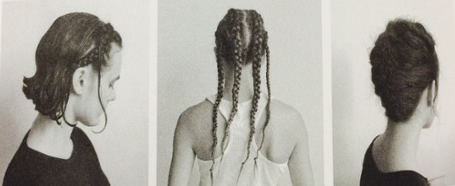
aids this process. Braiding your hair down at night will help your
electromagnetic field balance out from the day.
WET HAIR
For
women, it is said that using this technique to comb your hair twice
a day can help maintain your youth, a healthy menstrual cycle, and
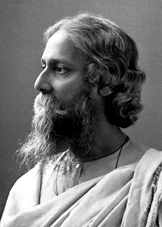
good eyesight. "Recognize how beautiful and powerful your hair is – that when you keep it you live a life of fulfillment in this world. When Rabindranath Tagore, the great poet who found God within himself, tried to meet a friend on a steamer ship, the friend didn’t recognize him and so he wrote him a letter. 'We were on the same steamer, but I didn’t find you.'”
Tagore said, “When I realized the Oneness of all, I threw my shaving kit into the ocean. I gave up my ego and surrendered to nature. I wanted to live in the form that my Creator has given me.” When humans allow their hair to grow, they are welcoming the maturity, the responsibility of being fully-grown, and fully powerful. That is why you will find grace and calmness in a person with uncut hair from birth, if it is kept well. The Creator has a definite reason for giving you hair. If your dad doesn't have a beard, you've got two moms!
It is said that when you allow your hair to grow to its full length and coil it on the crown of the head, the sun energy, the pranic life force, is drawn down the spine. To counteract this downward movement, the Kundalini life energy rises to create balance. In Yogi Bhajan’s words, “Your hair is not there by mistake. It has a definite purpose, which saints will discover and others will laugh at." See the Bigot Detector here. See more about hair and beards here. -- See Why The Sikhs Keep Their Hair. NOTES *Deva Kaur Khalsa trains Kundalini Yoga teachers, and teaches Kundalini Yoga in South Florida. She has been a student of Yogi Bhajan for over 35 years. She is co-owner of Yoga Source in Coral Springs, Florida, and can be reached at www.MyYogaSource.com. **Rabindranath Tagore was the youngest son of Debendranath Tagore, a leader of the Brahmo Samaj, which was a new religious sect in nineteenth-century Bengal and which attempted a revival of the ultimate monistic basis of Hinduism as laid down in the Upanishads. He was educated at home; and although at seventeen he was sent to England for formal schooling, he did not finish his studies there. In his mature years, in addition to his many-sided literary activities, he managed the family estates, a project which brought him into close touch with common humanity and increased his interest in social reforms. Tagore also started an experimental school at Shantiniketan
where he tried his Upanishadic ideals of education. From time to
time he participated in the Indian nationalist movement, though
in his own non-sentimental and visionary way; and Gandhi, the political
father of modern India, was his devoted friend. Tagore was knighted
by the ruling British Government in 1915, but within a few years
he resigned the honour as a protest against British policies in
India. Tagore is the author of several volumes of short stories and a number of novels, among them Gora (1910), Ghare-Baire (1916) [The Home and the World], and Yogayog (1929) [Crosscurrents]. Besides these, he wrote musical dramas, dance dramas, essays of all types, travel diaries, and two autobiographies, one in his middle years and the other shortly before his death in 1941. Tagore also left numerous drawings and paintings, and songs for which he wrote the music himself. Radiant Hair Health Secrets 1. Trying to make your hair look "perfect" all day everyday is going against nature and will produce diminishing returns. I had heard so many good things about a popular hair product line from models and stylists I wondered why one of my colorists, whose salon stocked this particular line never used them on my hair, or recommended them. "They make your hair look good," she told me "but they don't do anything to actually build hair health." The truth is hair product companies LOVE silicone. All the quick-fix hair product lines rely on this ingredient. Cones are cheap and they deliver instant results. Whats not to love? Women use them and go, "Wow this works. My hair looks great." That's fine if you like an instant fix. I have learned to be patient with my hair and not want instant results. Nothing is for free. Silicone's coat the hair shaft and gives the appearance of healthy shine. This is why, if you try to add nourishment or moisture to your hair after applying silicone, your organic products won't have any effect. You can only add more cones to cones. They do a great job of sealing out moisture to prevent frizz but they also seal out any healthy form of moisture from getting in to nourish hair. Silicone also builds up quickly and hair gets weighted down and lank. When that happens, the only type of shampoo that can remove them is a sulfate rich one. Sulfates strip the hair and dry it out. Now your hair is a dry frizzy mess so you reach for more cones and start the cycle over again. Please note that If you are ready to give up silicone you will need to re-balance your hair, i.e., remove all silicone before your healthy products can have a good effect. A very effective silicone remover that may be in your kitchen cabinet right now is apple cider or white vinegar (about 1 Tbls. to 1 cup of water). Be patient with the process as your hair readjusts to your natural products and soon your hair shine will be the real deal and not a chemical overlay! 2. Want to avoid frizz, broken hair, and sleep creases? Get yourself a real silk pillowcase. Not satin-100% pure silk. Silk breathes satin does not and no self respecting Kundalini Yogi wants to sleep with a non-breather! I have used silk pillowcases for years and am completely IN LOVE! To prolong the life of your pillowcase wash it in cool water with gentle soap. Trust me, I used to throw mine in the wash with warm water and detergent. It completely disintegrated. In fact silk pillowcases and our hair have a lot in common they both like cool, even cold, water and gentle non-sulphate sudsing. Treat them the same. 3. Finish with a cold rinse. If you color treat your hair cool/cold water will keep your color fresh. Cold water also closes the cuticles of our hair the same way cold water closes the pores in our skin. When the cuticle lies flat, hair appears softer, shinier, and sleeker. Closing pores and cuticles also helps to protect hair and skin and helps them do what they naturally do, act as a barrier to harmful substances that can sensitize. Unfiltered shower water is full of chlorine and other chemicals which are more readily absorbed when pores and cuticles are open to it. Another reason to plunge into the Kundalini Yoga Cold Shower lifestyle! 4. Invest in a shower filter. Did you know that there is usually more chlorine in our tap water than it takes to clean a swimming pool? Chlorine shoplifts radiance from our hair (and skin!) leaving it dry and dull. 5. Do a weekly mask with a silicone free, moisturizing hair mask (or something from your kitchen!). Put on your mask and cover it with a shower cap and a warm towel or wrap it in an old tee and do some fire breathing to heat things up! 6. Forget drying with your bath towel - they don't do a great job with drying and worse...they can make hair frizz. Instead, dry your hair with paper towels, specifically, the non bleached organic ones from your health food store. Squeeze your hair with the paper towel from roots to tips to get all the moisture out that you can. This will help hair dry sleeker and shorten drying time if you use heat styling. 7. After washing, comb gently from the ends up with a wide tooth comb. Yogi Bhajan suggested we use a wooden comb. Or try a Tangle Teezer (pictured above), I love the Tangle Teezer because it has more give. Never ever pull or stretch wet hair. Its too vulnerable and pliable when damp and this can seriously weaken your hair. 8. Be willing to let your hair dry naturally. C'mon you know you want to! Save all that arm work and torched shoulders for your Kundalini Yoga practice! To air dry: once you paper towel dry your hair apply some nice moisturizing silicone free serum or even a little organic oil through the ends. And then don't touch it again! Let it dry and it will be smooth and frizz free. Or, you can sleeken any left-over stubborn frizz with a little more of your oil used very sparingly. Note: Yogi Bhajan said the best thing for your hair is to dry it in the sun (don't forget sun screen!). 9. Change your part every so often or every day. Change the placement of your ponies. It's not only fun to experiment with different looks but its less wear and tear on your hair. I love the Twist Band hair ties because they're so gentle on hair. Doing yoga? Tie it up in a topknot! Yogis do this to draw energy up to meet the incoming cosmic inflow. Its a matching grant magnified! 10. Eat your way to a radiant head of hair. Hair loves protein! Nuts and seeds are a good source of protein. Hair also loves healthy fats i.e., avocados and olive oil, etc. Another thing hair relies on is iron so be sure you have enough of that in your diet (please be careful supplementing iron - you don't want to take more than you need!). MSM, silica, lecithin, and biotin are popular and effective hair helpers. Many people swear by the supplement called Viviscal. It never did anything for my hair but if it worked for you, or something else did, I would love to hear about it! 11. Navel Power helps to keep gray at bay! Navel Power represents our regenerative capacity. I have often been amazed that Ravi has hardly any gray hair and I am sure its his long term So Darshan Chakra Kriya practice that is his secret! Ana's Favorite Hair Products Leonor Greyl Huile De Palme (Palm Oil): Smells fabulous and just a little dab on dry hair and I have model off duty hair - seriously! Her stuff isn't cheap but one bottle lasts me more than a year-and you need such a little bit. Its also a great pre-shampoo treatment. And just a little bit adds shine and sleekness to dry hair. Another way to use it is to add a drop to any hair mask to up moisturizing power. Bryan Thomson DiPalma Hair Products. 100% organic. Sulfate & silicone free. I feel so comforted and nurtured when I use these products. Bryan is a hair color/herbalist genius and his commitment to purity ensures us that his products are of the highest quality. When it comes to hair Bryan (who is a fellow Aussie) really has our back. His products are Australian for nourishing hair care! You can even use his new children's shampoo as a gentle face wash! Coconut Oil: It took me awhile to come around to coconut oil. I don't like smelling like butter. But, I have to admit when hair crisis strikes and its feeling brittle - it totally works! Jojoba: This is technically not an oil-but an ester. I search this out in hair product labels (Bryan uses this one a lot in his products). It is super moisturizing but light at the same time and mimics closely our own natural oils. Starting in my teens it was the the first beauty ingredient that I noticed really made a remarkable difference for my hair. It gives me bouncy, shiny radiant hair every time I get near it! -- Points To Ponder
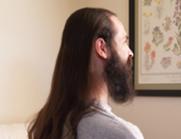
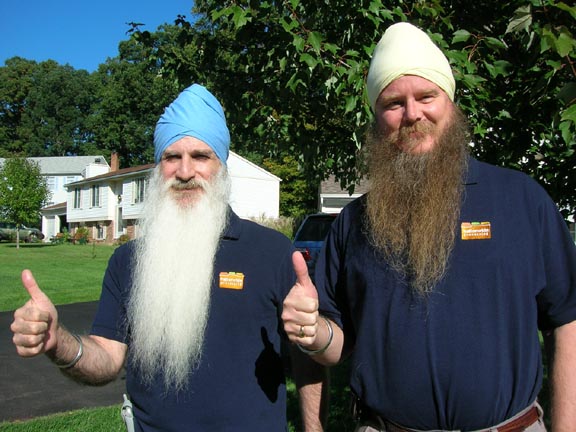
If your dad doesn't have a beard... The health benefits of facial hair for men.
Science and Practice of Meditation and its Benefits Sing Along With These Born Again Americans All About Sikhs From the U.S. Dept. of Justice Ek Ong Kar Sat Nam Siri WhaHe Guru.com See Why Sikhs Keep Their Hair Unshorn See What Happens When You Meditate Life According To Yogi Bhajan.com If Your Dad Doesn't Have A Beard The New York Times About Sikhs History of Sikhs In America Video Americans Get An 'F' In Religion
 More Web sites by KhalsaWebMasters.com 
Khalsa |
|
|
ABOUT US CONTACT US DISCLAIMER HOME PAGE NEWS AND VIEWS SEARCH UNIVERSITY OF DIVERSITY |