| One And One Equals Eleven FREE TRAINING COURSE
Today's
Course
From
'To Guide an Assembly of Persons' Part
One - The Rules Chapter
One There is a great need for more democratic policies on organization, communal and national levels. Since millions of men and women are banded together in hundreds of thousands of organizations, athletic, business, civic, cooperative, cultural, educational, ethnic, fraternal, labor, philanthropic, political, professional, recreational, religious, scientific, social, etc., etc. -- the faithful observance of democratic principles would become a major and impressive influence in shaping a stronger American democracy. Robert's
Rules of Order has been accepted throughout the United States
as the standard authority on parliamentary law and procedure.
Hundreds of books have been written to simplify, clarify, and
amplify these rules -- all based on Robert's Rules of Order,
rarely changing or superseding this approved work. General Robert said that if there were no rules or established customs to guide an assembly of persons, and if each could talk on any subject as long and as many times as he pleased, and if all could talk at the same time, it would be impossible in most cases to ascertain their deliberate judgment on any particular matter. Experience
has shown a necessity for... Chapter
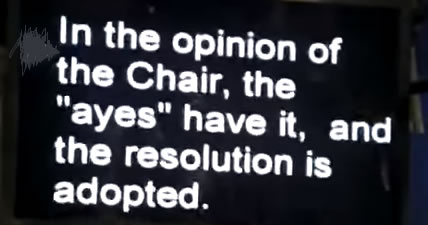
Two All business is brought before the meeting by way of 1) a motion or resolution, 2) a report of a committee, or 3) a communication. The terms motion, and question are synonymous; when first stated, it is a motion, and when repeated by the chairman, it is referred to as a question. Only one such motion can be considered at a time. It must be made by a member and seconded by another member. The maker of a motion must get the floor by rising, addressing the presiding officer and obtaining recognition. The motion should be worded in the affirmative whenever possible. The presiding officer restates the motion and asks, "Are there any remarks?" This opens debate on the question. The maker of the motion is entitled to speak first on the motion. All remarks must be addressed to the chairman. No member may speak a second time on the same question if another member desires to speak on the subject, but he may speak a second time if one who has not spoken is not seeking recognition. But in formal meetings, if anyone objects, he may not speak more often without permission from the assembly... When a main motion is before the assembly, it must be accepted or rejected or be disposed of in some way, before another subject can be introduced... When a group is prepared to accept a motion in its given form, nothing more is required but to take the vote and get the result... Secondary motions must be made after the main motion is stated and before the vote is taken... When
stating the motion, the chairman should make perfectly clear
what it is, and, after the vote is taken, state the result.
(BTW: We welcome your feedback.) Note: Click Cntrl and + to magnify chart (Windows).
One Is The Answer What Is The Question Guidelines For Community Facilitators Conscious Communication Guidelines The Case For Robert's Rules of Order The Case For Movers and Shakers
 More Web sites by
KhalsaWebMasters.com  Khalsa
|
|
|
ABOUT US CONTACT US DISCLAIMER HOME PAGE NEWS AND VIEWS SEARCH UNIVERSITY OF DIVERSITY |

 1 And 1 Equals 11.com
 .) A set of rules,
  .) A presiding officer
to enforce them and to preserve order, and
.) A presiding officer
to enforce them and to preserve order, and  .) A recording secretary
to keep a record of the business transacted by the assembly.
.) A recording secretary
to keep a record of the business transacted by the assembly.