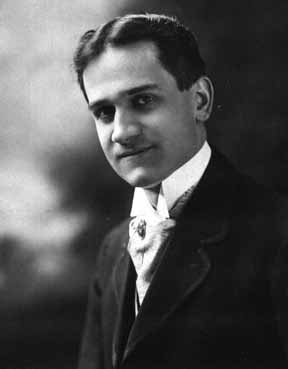
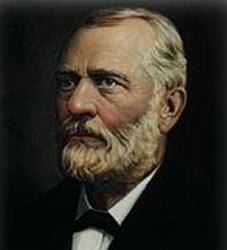
| Hermann H. Kaeuper
The School of Music opened its doors on September 5, 1903 with the
opening of Millikin University. The school had 5 instructors led by
Hermann Kaeuper, its first director.
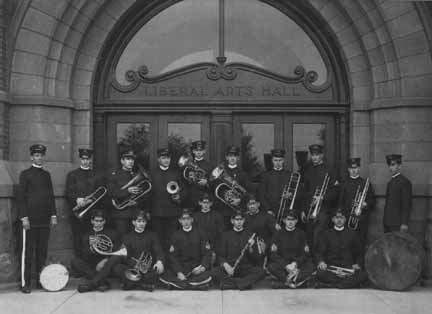
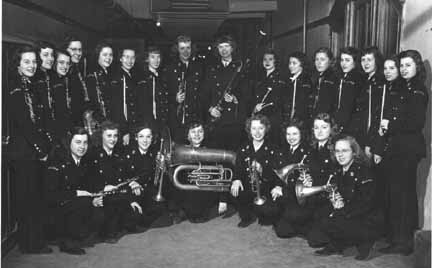
The Battalion Band was the first organized band on campus. They performed concerts on campus and marched in parades. The band was renamed in 1909.
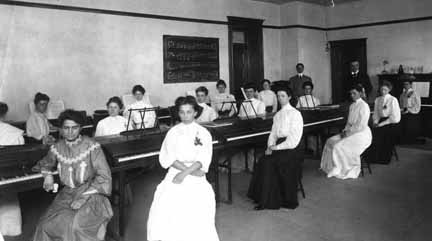
One of the first classes of Keyboard Studies Students in their Shilling Hall classroom. Hermann Kaeuper is standing in the back of the room.
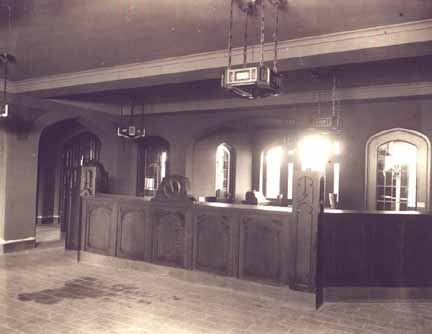
The new Conservatory of Music lobby area, February 1913. Many of the original architectural details were preserved and utilized in the building's renovation and expansion.
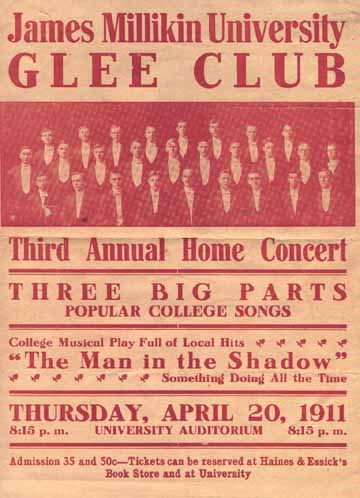
Men's Glee Club, the predecessor to the Millikin Men, was a popular performing group on campus until the 1930s.
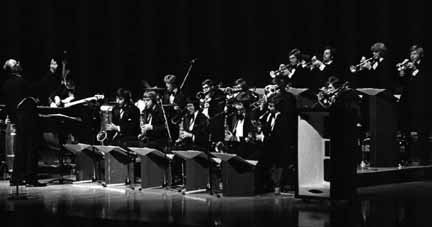
Roger Shueler joined the faculty in 1964 when the jazz studies department was in its infancy and the Jazz Band in its second year. Under his leadership the band toured the Middle East, South America, Central Europe, Central America, and Jamaica. It was also the first band to reach the finals of the National Intercollegiate Jazz Festival in two successive years. Schueler lead the group until his resignation in May 1986.
Construction on the Perkinson Music Center continues. Renovation of Kaeuper Hall can be seen on the right side of the photo.
An anonymous donation made it possible for the School of Music to become one of a small number of Steinway Schools in the country.
C.D. and Pat Perkinson, donors of $8,000,000 that made the renovation of the School of Music possible. Pat Perkinson was a member of the class of 1945. The renovations and expansion of the original music building began in 1998 and were completed in 2000 as part of the Advancing the Vision capital campaign. C.D. and Pat Perkinson donated $8 million towards the campaign, the largest single gift in university history. In recognition of their generous donation, the building was renamed the Perkinson Music Center. Millikin University
What
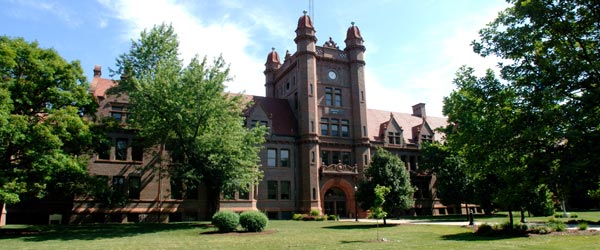
James Millikin envisioned when he founded Millikin University in Decatur,
Illinois, in 1901 was unique: a university that would embrace the
"practical" side of learning along with the "literary
and classical;" and, while affiliated with the Presbyterian Church,
it would not be narrowly "sectarian" and would remain open
to all.
The Desiderata GO PLACIDLY AMID THE NOISE AND HASTE, AND REMEMBER WHAT PEACE THERE MAY BE IN SILENCE. As far as possible without surrender be on good terms with all persons. Speak your truth quietly and clearly; and listen to others, even the dull and ignorant, they too have their story. Avoid loud and aggressive persons, they are vexations to the spirit. If you compare yourself with others, you may become vain and bitter; for always there will be greater and lesser persons than yourself. Enjoy your achievements as well as your plans. Keep interested in your own career, however humble; it is a real possession in the changing fortunes of time. Exercise caution in your business affairs, for the world is full of trickery. But let this not blind you to what virtue there is; many persons strive for high ideals; and everywhere life is full of heroism. Be yourself. Especially, do not feign affection. Neither be cynical about love; for in the face of all aridity and disenchantment it is perennial as the grass. Take kindly the counsel of the years, gracefully surrendering the things of youth. Nurture strength of spirit to shield you in sudden misfortune. But do not distress yourself with imaginings. Many fears are born of fatigue and loneliness. Beyond a wholesome discipline, be gentle with yourself. You are a child of the universe, no less than the trees and the stars; you have a right to be here. And whether or not it is clear to you, no doubt the universe is unfolding as it should. Therefore be at peace with God, whatever you conceive Him to be, and whatever your labors and aspirations, in the noisy confusion of life keep peace with your soul. With all its sham, drudgery and broken dreams, it is still a beautiful world. Be careful. Strive to be happy. FOUND
IN OLD SAINT PAUL'S CHURCH
 More Web sites by
KhalsaWebMasters.com  |
|
|
ABOUT US CONTACT US DISCLAIMER HOME PAGE NEWS AND VIEWS SEARCH UNIVERSITY OF DIVERSITY |